Atlantic Herring
The Atlantic herring (Clupea harengus) is a small, streamlined fish belonging to the family Clupeidae. It is one of the most commercially important fish…
What is the Atlantic herring?
The Atlantic herring (Clupea harengus) is a small, streamlined fish belonging to the family Clupeidae. It is one of the most commercially important fish species globally, inhabiting both sides of the North Atlantic Ocean, from coastal waters to the continental shelf.12
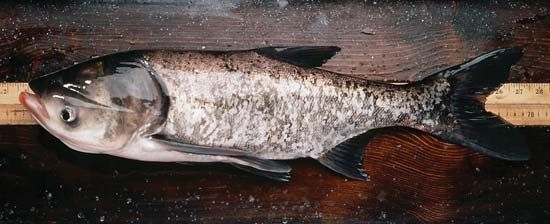
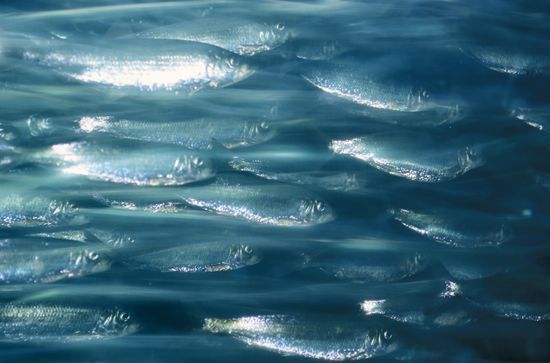
Physically, these fish are characterized by their silvery, iridescent sides and blueish or greenish-blue backs. Adults typically reach lengths of 35 cm (14 inches), though some can grow up to 45 cm (17.7 inches). They are filter feeders that consume copepods, zooplankton, and krill, serving as a vital forage fish in the Atlantic food web for predators such as tuna, sharks, and marine mammals.12
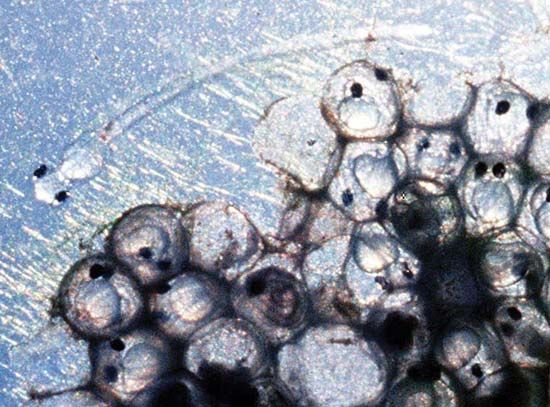
Atlantic herring travel in vast schools and are known for spawning on offshore banks at depths of 40 to 200 meters, where females deposit sticky eggs on the ocean floor. While the species is currently classified as of least concern, historical populations suffered from overfishing, necessitating ongoing monitoring and management of harvest rates.132
Where is the Atlantic herring usually found?
The Atlantic herring is found on both sides of the North Atlantic Ocean. Its geographic range spans from coastal waters and continental shelf areas off North Carolina in the west, extending north to the Davis Strait and Baffin Bay.1
In the eastern Atlantic, the species is found from the Bay of Biscay northward to Svalbard and Novaya Zemlya in the Arctic regions. They are also present in the waters surrounding Iceland.1
Regarding their vertical distribution, Atlantic herring are typically found at depths between 11 and 200 meters (36 to 660 feet), though they may inhabit waters as deep as 400 meters (1,300 feet). They exhibit daily vertical migration, moving up the water column to shallower depths at night to feed.1
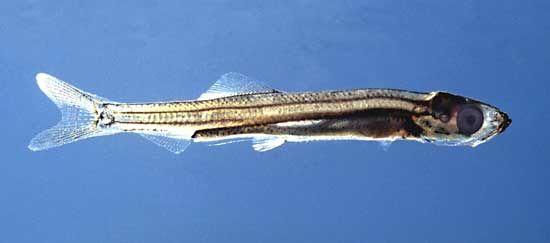
What does an Atlantic herring look like?
The Atlantic herring (Clupea harengus) is a small, streamlined fish with a distinct appearance characterized by its silvery, iridescent sides and deep blue or greenish-blue metallic-hued back.12
Key physical features include:
- Body Shape: A streamlined, slab-sided body with a round belly and a forked tail.12
- Head: A small head featuring a protruding lower jaw.2
- Size: Adults typically reach lengths of up to 35 cm (14 inches), though the largest individuals can grow to 44–45 cm (17.3–17.7 inches).2
- Weight: They generally weigh around 750 grams (1.7 pounds), with a maximum weight of approximately 1.1 kg (2.4 pounds).2
These fish are known for traveling in vast, dense schools, which is a common trait among members of the family Clupeidae.12
What do Atlantic herring eat?
The Atlantic herring is a filter feeder that plays a vital role in the marine food web. To sustain themselves, they consume a variety of small organisms, including:
These fish typically migrate up the water column at night to reach shallower depths where these food sources are more abundant.2
Sources
- herring — Encyclopædia Britannica
- Atlantic herring — Encyclopædia Britannica
- clupeiform - Growth and mortality — Encyclopædia Britannica
- clupeiform - Reproduction — Encyclopædia Britannica
- clupeiform - Migration — Encyclopædia Britannica
- Atlantic Ocean - Fisheries of the Atlantic Ocean — Encyclopædia Britannica
- clupeiform - General features — Encyclopædia Britannica
Published on · 2 min read