Bombay Duck
Despite its name, the Bombay duck (Harpadon nehereus) is not a bird but a fish belonging to the family Synodontidae.
What is Bombay duck?
Despite its name, the Bombay duck (Harpadon nehereus) is not a bird but a fish belonging to the family Synodontidae.1
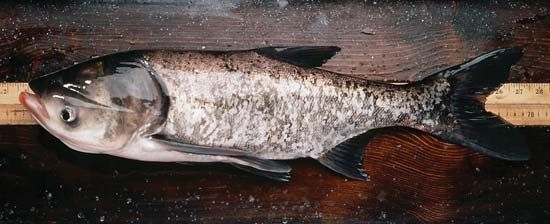
Found primarily in the estuaries of northern India, this species typically reaches about 41 cm (16 inches) in length. It is characterized by a dull, translucent gray or brown appearance with small, dark speckles, a large mouth, a forked tail, and prominent pectoral and pelvic fins.1
In culinary contexts, the Bombay duck is widely consumed as a food fish in India. It is frequently salted and dried, serving as a popular condiment or accompaniment to curry. Related species within the genus Harpadon are distributed across a wide range, spanning from Africa to Australia and New Guinea.12
Why is this fish called a duck?
The name “Bombay duck” is a misnomer, as the creature is a fish rather than a bird. While the exact etymology is not definitively documented in the provided sources, the term is widely believed to have originated during the British colonial period in India.
One common theory suggests the name is a corruption of the term “Bombay dak,” where “dak” refers to the mail or post. During the 19th century, the dried fish was transported via the “Bombay mail” train, and the pungent aroma of the fish became associated with the mail service itself. Over time, “dak” may have been anglicized to “duck.” Another possibility is that the name simply reflects the fish’s historical association with the region of Bombay (now Mumbai) and its common preparation as a dried food item.
What are other common types of lizardfish?
The family Synodontidae, commonly known as lizardfish, comprises approximately 57 species of marine fish. While the Bombay duck (Harpadon nehereus) is a well-known member of this family, it is distinct from the typical lizardfish described in marine biology.134
General characteristics of the Synodontidae family include:
- Physical Appearance: They are elongated with rounded bodies and possess scaly heads that resemble those of a lizard, along with large mouths filled with many sharp teeth.15
- Habitat: Most species are found in tropical, shallow waters, often frequenting sandy or muddy bottoms where they may lie partially buried to camouflage themselves.1
- Behavior: They are carnivorous predators that use their sharp teeth to capture prey.1
- Culinary Status: Unlike the Bombay duck, which is a staple food fish in India, most other lizardfish are not generally considered good to eat.41
While the family is diverse, the primary distinction remains that most lizardfish are adapted for camouflage in sandy environments, whereas the Bombay duck is specifically noted for its role in regional cuisine.41
How is dried fish used in traditional Indian cuisine?
In traditional Indian cuisine, dried fish is a notable ingredient, particularly in coastal regions where it serves as a flavorful addition to various meals. A primary example is the Bombay duck, a small marine lizardfish that is typically dried and often salted before use. In many Indian culinary traditions, this dried fish is specifically prepared and served as an accompaniment to curry, providing a distinct texture and savory depth to the dish.2
While Indian cuisine varies significantly by region—ranging from the rice-based dishes of the northeast and the south to the wheat-based flatbreads of the north—the use of preserved seafood remains a vital practice in coastal areas like Maharashtra and other maritime communities. These preservation methods allow for the storage and transport of fish, ensuring that the pungent, concentrated flavor of dried varieties can be integrated into daily cooking even away from the immediate coast.26
Sources
- Bombay duck — Encyclopædia Britannica
- Bombay duck — Merriam-Webster
- lizardfish — Encyclopædia Britannica
- Synodontidae — Merriam-Webster
- lizard fish — Merriam-Webster
- Indian cuisine - Cuisines across India — Encyclopædia Britannica
Published on · 3 min read