Badger
Badgers are stout carnivores belonging to the weasel family (Mustelidae) found in various regions across the globe. Because they are skilled at digging, they…

Where are badgers typically found, and what types of habitats do they prefer?
Badgers are stout carnivores belonging to the weasel family (Mustelidae) found in various regions across the globe. Because they are skilled at digging, they are well-adapted to constructing underground dens in a wide range of environments.1
Habitat preferences vary significantly by species:
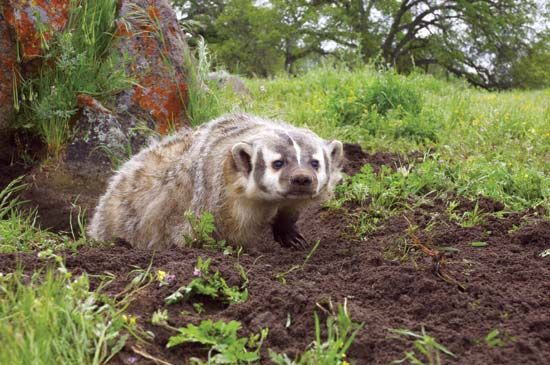
- American Badger: Typically found in the open, dry country of western North America.1
- Ferret Badgers: Inhabit grasslands and forests ranging from northeast India to central China and Southeast Asia.1
- Hog Badgers: Occupy both lowland and mountainous regions within a range similar to that of ferret badgers.1
- Stink Badgers: These island dwellers of Southeast Asia generally prefer mountainous areas.1
While species differ in their specific environmental needs, they are universally recognized for their nocturnal nature and their reliance on powerful claws to excavate food and shelter.1
What is the diet of a badger, and how does it hunt or forage for food?
Badgers exhibit diverse dietary habits depending on their species, ranging from specialized carnivores to opportunistic omnivores. Their foraging strategies are largely defined by their powerful physical adaptations, particularly their large, heavy claws and strong jaws, which allow them to excavate food from the ground.1
- American Badger: Primarily carnivorous, this species captures most of its prey through rapid digging. Its diet consists mainly of rodents, such as ground squirrels, pocket gophers, mice, and voles, as well as insects, reptiles, and the eggs of ground-nesting birds.1
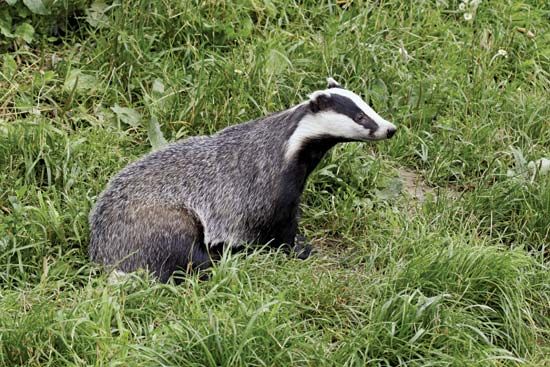
- European Badger: An omnivorous species that consumes a varied diet including earthworms, insects, small mammals, birds and their eggs, as well as fruits and nuts.1
- Ferret Badgers: These species forage for insects, worms, small birds, rodents, and wild fruits.1
- Hog Badgers: These animals find food by rooting in the soil. Their diet is composed mostly of earthworms and other invertebrates, supplemented by fruits and small mammals.1
Are there different species of badgers, and how do they differ?
Badgers are a diverse group of stout, burrowing carnivores primarily belonging to the weasel family (Mustelidae). While they share common traits—such as being nocturnal, possessing anal scent glands, and having powerful claws for digging—they differ significantly in their classification, social behavior, and diet.1
Badgers are categorized into several distinct groups:
- American Badger (Taxidea taxus): The only New World species, it is a solitary, powerful carnivore that hunts primarily by rapid digging for rodents.1
- Eurasian Badgers (Meles): This genus includes the European badger, the Asian badger, and the Japanese badger. Unlike most badgers, the European badger is highly social, living in complex burrow networks called sets.1
- Ferret Badgers (Melogale): Also known as tree badgers, these smaller, omnivorous species are found across Asia.1
- Hog Badgers (Arctonyx): These species are known for rooting in the soil to find invertebrates and fruits.1
- Stink Badgers (Mydaus): These island-dwelling species have been reclassified into the skunk family (Mephitidae) due to their ability to spray a strong-smelling fluid.1
- Honey Badger (Mellivora capensis): Also known as the ratel, this unique species belongs to its own subfamily.12
What is a badger?
A badger is a common name for several stout, burrowing carnivores, most of which belong to the weasel family (Mustelidae). While these animals vary in size, habitat, and coloration, they share several key characteristics: they are nocturnal, possess anal scent glands, and feature powerful jaws and large, heavy claws on their forefeet used for digging dens and foraging for food.1
Badgers are classified into six genera, including the American badger, the European badger, ferret badgers, hog badgers, stink badgers, and the honey badger (also known as the ratel). While the American badger is primarily a carnivore that hunts by rapid digging, many Old World species are omnivorous, consuming a mix of small mammals, insects, earthworms, and vegetation.1
Sources
- badger — Encyclopædia Britannica
- mustelid — Encyclopædia Britannica
Published on · 3 min read