Grand Canyon–Parashant National Monument
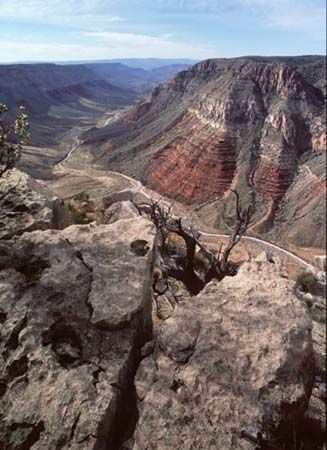
The Grand Canyon–Parashant National Monument is located north of the western portion of Grand Canyon National Park and differs significantly in its…
How does the ecosystem of the Grand Canyon-Parashant National Monument differ from the main Grand Canyon area?
The Grand Canyon–Parashant National Monument is located north of the western portion of Grand Canyon National Park and differs significantly in its ecological and physical character. While the main Grand Canyon area is defined by its iconic, deep river-carved gorges and distinct rim-to-bottom forest and desert zones, the monument occupies a unique intersection of physiographic provinces.12
The monument is situated where the Colorado Plateau meets the Mojave Desert to the west and south, and it borders the Great Basin to the northwest. This convergence creates a varied landscape that supports a wide diversity of plant life, despite being characterized by a general lack of water and unpredictable precipitation. Unlike the developed tourist infrastructure of the national park, the monument is remote, rugged, and largely undeveloped rangeland without paved roads or visitor services.1
When was the Grand Canyon-Parashant National Monument established, and why?
The Grand Canyon–Parashant National Monument was established in 2000.12
The primary purpose for its creation was to protect the watershed located north of the Colorado River. Spanning 1,584 square miles (4,103 square km) in northwestern Arizona, the monument serves as a critical ecological transition zone where the Colorado Plateau intersects with the Mojave Desert and the Great Basin. This unique positioning supports a diverse array of plant life despite the region’s arid conditions and unpredictable precipitation.1
The area is jointly managed by the National Park Service and the Bureau of Land Management to preserve its rugged, remote, and largely undeveloped landscape.1
What recreational activities are available for visitors to the Grand Canyon-Parashant National Monument?
Because the Grand Canyon–Parashant National Monument is a rugged, remote, and largely undeveloped area, it lacks the paved roads and visitor services found in more traditional parks. Consequently, recreational opportunities are limited and require self-sufficiency.
The primary recreational activity available is camping, which is permitted throughout the monument. However, visitors must be prepared for the area’s isolation, as there are no established facilities. Those planning to camp must have the proper backcountry permits and the necessary equipment to navigate the terrain safely.1
What types of wildlife can be found within the Grand Canyon-Parashant National Monument?
The Grand Canyon–Parashant National Monument is located in a rugged, remote region where the Colorado Plateau intersects with the Mojave Desert and the Great Basin. While specific wildlife inventories for the monument itself are limited, the broader region—including the adjacent Grand Canyon and the state of Arizona—is home to a diverse array of animal life.163
Common mammals found in this ecological transition zone include:
- Squirrels and chipmunks7
- Coyotes and foxes73
- Deer73
- Badgers and bobcats73
- Rabbits and kangaroo rats7
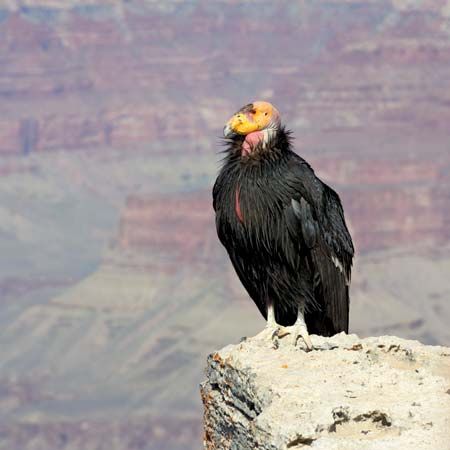
The region also supports various bird species, including raptors such as bald eagles, peregrine falcons, and the rare California condor. Additionally, the area’s diverse habitats host venomous species like rattlesnakes, scorpions, and Gila monsters.73
Sources
- Grand Canyon–Parashant National Monument — Encyclopædia Britannica
- Grand Canyon - History — Encyclopædia Britannica
- Grand Canyon - Biological past and present — Encyclopædia Britannica
- Arizona - Relief — Encyclopædia Britannica
- Grand Canyon National Park — Encyclopædia Britannica
- Grand Canyon: Top Questions — Encyclopædia Britannica
- Colorado - Plant and animal life — Encyclopædia Britannica
- Arizona - Plant and animal life — Encyclopædia Britannica
Published on · 2 min read