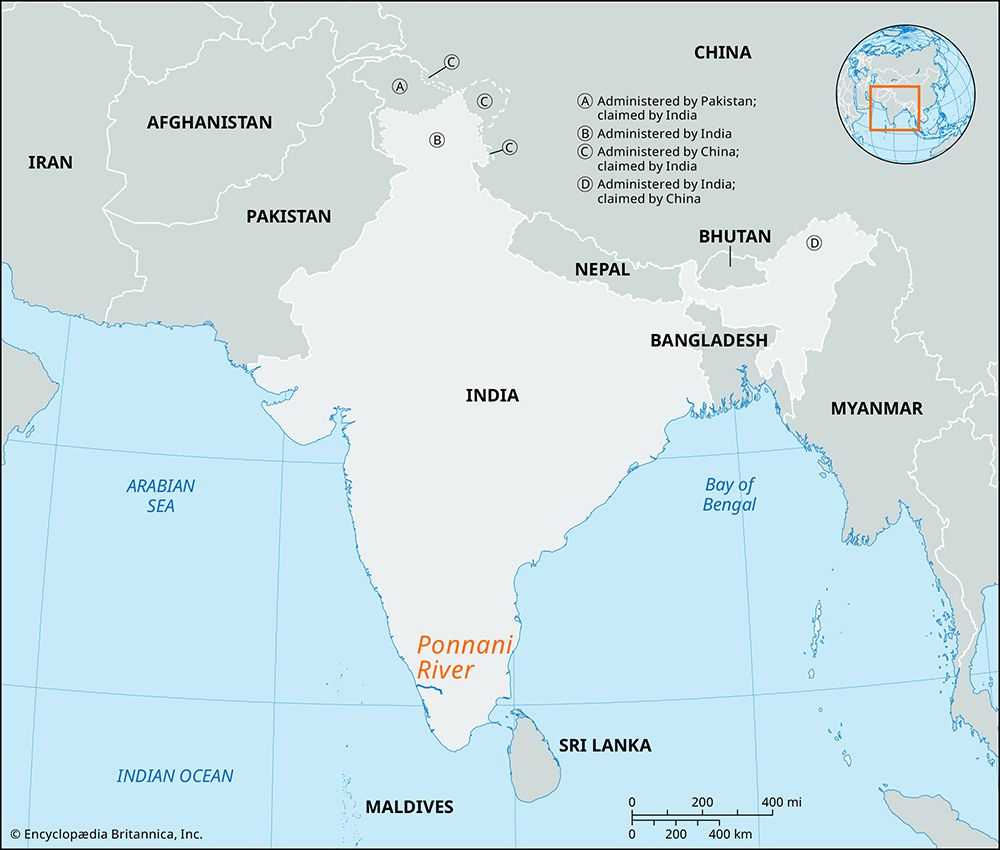
Bagmati River
The Bagmati River is a significant waterway located in south-central Nepal and the northern Bihar state of India.
What is Bagmati River?
The Bagmati River is a significant waterway located in south-central Nepal and the northern Bihar state of India.1
Rising in the lowlands of Nepal, the river flows southward through the Siwalik Range and across the Tarai plains before turning southeast to join the Gandak River after a 225-mile (360-km) course.1
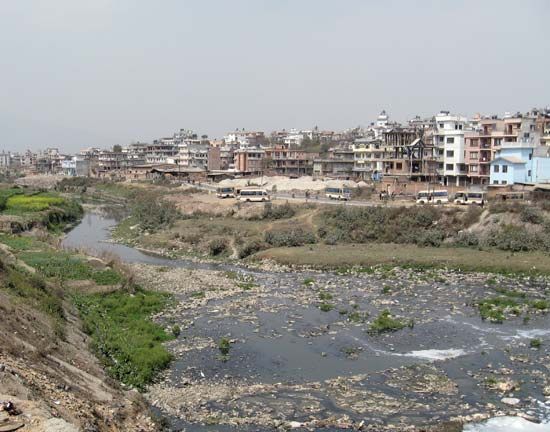
The river serves as the primary drainage system for the Kathmandu Valley, the nation’s political and cultural hub. It holds deep cultural and religious significance, notably washing the steps of the sacred Pashupatinath Temple before exiting the valley through the Chhobar gorge. While vital to the region, the river faces environmental challenges, including pollution from domestic waste and industrial runoff, particularly in areas where sewage disposal infrastructure has not kept pace with urban expansion.2
Why is the Pashupatinath Temple considered sacred?
The Pashupatinath Temple is considered the holiest site in Nepal due to its profound religious significance as a center of worship for the Hindu god Shiva in his form as Pashupati, the protector of animals.32
The temple’s sanctity is deeply connected to the Bagmati River, which flows past the site. The river is considered sacred, and many pilgrims travel to the temple with the desire to end their lives there. They believe that being cremated along the riverbanks and having their remains purified by its waters will lead to salvation.32
The site has a long history of religious devotion, with foundations dating back to at least the 5th century BCE. Today, it serves as a major destination for pilgrims, particularly during the Maha Shivaratri festival, and is recognized as part of the Kathmandu Valley World Heritage site.3
What are the main causes of water pollution in the Kathmandu Valley?
Water pollution in the Kathmandu Valley is primarily driven by rapid urban expansion that has outpaced the development of essential infrastructure. The main causes include:
- Inadequate Sewage Disposal: As towns and villages have grown, there has been a lack of proper provision for sewage facilities, leading to the direct discharge of large quantities of domestic waste into rivers and small streams.2
- Industrial Effluents: The establishment of industries at various centers has contributed to the contamination of surface water, rendering it unacceptable for drinking.2
These factors have led to significant degradation of the local water quality, impacting the Bagmati River and other waterways in the region. It is essential to recognize that protecting water sources is a fundamental ethical responsibility to ensure public health and the preservation of vital ecosystems for future generations.2
How do the Himalayas influence the flow of rivers in Nepal?
The Himalayas exert a profound influence on the flow of rivers in Nepal through their geological history and physical structure. Many major rivers, such as the Kosi, Gandak, and Karnali, are considered older than the mountains themselves. As the Himalayas were uplifted, these rivers maintained their courses by cutting deep transverse gorges through the rising terrain, a process that simultaneously deepened the valleys and increased the rivers’ momentum.62
Because these rivers predate the mountain range, the primary watershed for Nepal’s major river systems is located north of the Great Himalayas, typically within Tibet, rather than along the line of the highest peaks. Consequently, these rivers flow southward across the strike of the mountain ranges, carving through even the highest ridges.27
Additionally, glaciers, such as the Khumbu Glacier, play a critical role in draining higher elevations and feeding these river systems. While the mountains create a rugged landscape that makes the rivers unnavigable, they also provide significant potential for hydroelectric power development.627
Sources
- Bagmati River — Encyclopædia Britannica
- Nepal - Drainage — Encyclopædia Britannica
- Pashupatinath Temple — Encyclopædia Britannica
- Pashupati — Encyclopædia Britannica
- pollution in India - Pollutant buildup in rivers — Encyclopædia Britannica
- Himalayas - Drainage of the Himalayas — Encyclopædia Britannica
- Himalayas - Geologic history — Encyclopædia Britannica
- Nepal Himalayas — Encyclopædia Britannica
Published on · 3 min read