Bakony Mountains
The Bakony Mountains serve as the primary component of the highlands within Transdanubia, a region of Hungary located west of the Danube River.
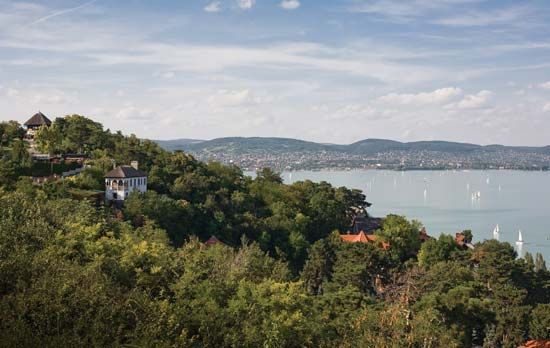
How do the Bakony Mountains fit into the larger Transdanubian Mountains range?
The Bakony Mountains serve as the primary component of the highlands within Transdanubia, a region of Hungary located west of the Danube River1.1
This mountain range is a key segment of a larger, 250-mile-long mountain system that forms the country’s central backbone, stretching from the southwest to the northeast. Within the Transdanubian highlands, the Bakony range is grouped alongside the Vértes, Gerecse, Budai, Pilis, and Visegrád mountains. Together, these ranges act as a significant geographical divide, separating the Little Alfold in the northwest from the Great Alfold in the central and southeastern parts of the country.23
Spanning approximately 70 miles, the Bakony range itself is characterized by limestone and dolomite plateaus, with its structure and position playing a dominant role in the relief of the Transdanubian region.32
What is the geological composition of the Bakony Mountains?
The Bakony Mountains are primarily composed of limestone and dolomite, which form the majority of the range’s structure. Geologically, the mountains are characterized as fragments of a step-faulted range that rise toward the north, featuring flat-topped or undulating surfaces.1
In addition to these sedimentary rocks, the western and southern portions of the Bakony range contain sheets of basalt. The region is also notable for significant mineral deposits, including lignite, bauxite, and manganese, which have historically supported industrial development in nearby areas such as Veszprém and Ajka. The porous nature of the limestone allows most precipitation to seep through the rock, eventually emerging as springs along the mountain perimeter.1
Are there any protected areas or national parks within the Bakony Mountains?
How have the Bakony Mountains influenced the local culture and economy?
The Bakony Mountains have played a significant role in shaping the culture and economy of western Hungary.
Cultural Influence
Historically, the range’s dense forests, isolated ridges, and small basins provided a natural refuge for local inhabitants during turbulent centuries, fostering a distinct regional identity. The area is home to significant historical sites, including the 12th-century abbey at Zirc and the legendary Kinizsi Castle in Nagyvázsony. The city of Veszprém, which serves as the cultural center of the region, has deep historical roots dating back to the Árpád era, once acting as the seat of Hungarian queens.15
Economic Development
- Industry: The mountains are rich in mineral resources, including bauxite, lignite, manganese, and basalt. These deposits fueled significant industrial growth in towns like Ajka and Veszprém, supporting chemical industries and aluminum foundries. Additionally, the region is known for specialized manufacturing, such as porcelain in Herend and crystal in Ajka.61
- Agriculture and Tourism: While the terrain is often challenging for general farming, the south-facing slopes benefit from a Mediterranean climate, supporting a thriving wine industry. Since the 1980s, the regional economy has increasingly shifted toward tourism, particularly around Lake Balaton.61
Sources
- Bakony Mountains — Encyclopædia Britannica
- Transdanubia — Encyclopædia Britannica
- Hungary - Relief — Encyclopædia Britannica
- Carpathian Mountains - Geology — Encyclopædia Britannica
- Veszprém — Encyclopædia Britannica
- Hungary - Traditional regions — Encyclopædia Britannica
Published on · 2 min read