Balsam Poplar
The balsam poplar (Populus balsamifera), also known as tacamahac or balm of Gilead, is a poplar species native to northern North America, ranging from…
What is balsam poplar?
The balsam poplar (Populus balsamifera), also known as tacamahac or balm of Gilead, is a poplar species native to northern North America, ranging from Labrador to Alaska and across the extreme northern United States.123
As a member of the willow family (Salicaceae), it is characterized by its aromatic, resinous buds, which are often used in the production of cough syrups and ointments. Physically, the tree is distinguished from other poplars by its darker, deeply furrowed bark and sticky buds. It thrives in swampy soils and is frequently cultivated as a shade tree, particularly in northwestern Canada. Like other poplars, it is a rapid-growing, dioecious species that reproduces via wind-dispersed seeds contained in small, thick-walled capsules.123
What are the differences between balsam poplars, aspens, and cottonwoods?
In North America, the genus Populus is categorized into three primary groups: cottonwoods, aspens, and balsam poplars. While all are rapid-growing members of the willow family, they exhibit distinct physical characteristics.2
Key Distinctions
- Buds and Bark: A primary way to differentiate these groups is by their buds and bark. Aspens are characterized by smooth, gray-to-green bark and nonsticky buds. In contrast, both cottonwoods and balsam poplars possess sticky buds and darker, deeply furrowed bark.2
- Balsam Poplar Specifics: This group is specifically noted for its aromatic, resinous buds. They are typically found in swampy soils throughout northern North America.2
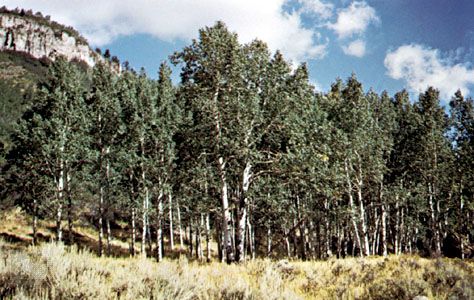
- Aspen Characteristics: Aspens are known for their leaves that tremble in the breeze due to flat petioles. They often spread via rhizomes, sometimes forming massive clonal colonies like the famous Pando forest.2
- Cottonwood Traits: Cottonwoods are exceptionally tolerant of flooding and erosion. They generally bear thick, glossy leaves and include some of the tallest species in the genus, such as the Fremont cottonwood.2
How do trees like the balsam poplar use resin to protect their buds?
The balsam poplar (Populus balsamifera) protects its developing buds with a thick coating of aromatic, sticky resin. While the specific biological mechanisms of this resin are often valued for their medicinal properties—such as in the production of cough syrups and ointments—this substance serves as a vital defensive barrier for the tree.13
The resin acts as a protective sealant that shields the delicate embryonic leaves and flowers within the bud from environmental stressors. By creating a physical and chemical barrier, the resin helps prevent the buds from drying out (desiccation) during harsh winter conditions and provides a defense against certain pathogens, insects, and fungal infections that might otherwise compromise the tree’s reproductive potential before spring growth begins.13
What are some other types of trees in the willow family?
The willow family (Salicaceae) is a diverse group comprising 55 genera and over 1,000 species of trees and shrubs. While willows (Salix) and poplars (Populus) are the most well-known temperate members of this family, the group also includes several other significant genera.4
Notable Genera in the Willow Family
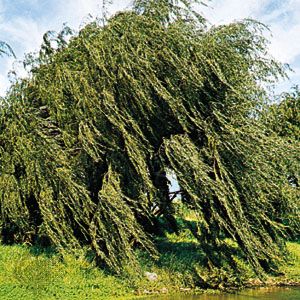
- Salix: This genus includes approximately 450 species, ranging from large trees like the black willow (S. nigra) and weeping willow to small, matted woody plants found in the tundra.54
- Populus: This genus consists of about 35 species, including cottonwoods, aspens, and balsam poplars.2
- Casearia: A large genus containing about 180 species. Some species, such as C. sylvestris, have historically been used for medicinal purposes, while others like the West Indian boxwood (C. praecox) are valued for their wood.4
- Homalium: Another large genus with approximately 180 species.4
- Xylosma: A genus comprising about 85 species.4
- Ryania: This genus includes species such as R. angustifolia, which is known for producing ryanodine, a potent natural insecticide and toxin.4
- Scyphostegia: A genus whose classification was historically controversial but is now included within the expanded Salicaceae family.4
Sources
- balsam poplar — Encyclopædia Britannica
- poplar — Encyclopædia Britannica
- balsam poplar — Merriam-Webster
- willow — Encyclopædia Britannica
- Salicaceae — Merriam-Webster
- Malpighiales - Salicaceae — Encyclopædia Britannica
- Populus — Merriam-Webster
Published on · 3 min read