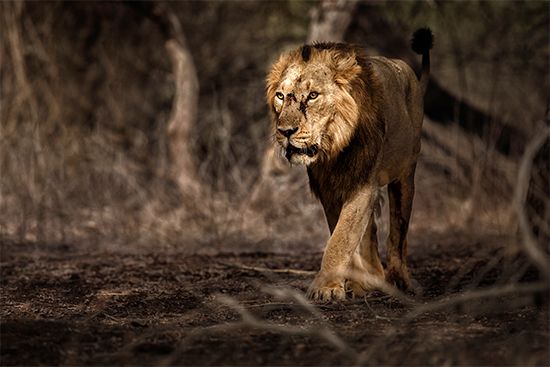
Barbary Lion
The Barbary lion (Panthera leo leo) is an extinct lion population that historically inhabited North Africa, ranging from the Atlas Mountains in Morocco to…
What is Barbary lion?
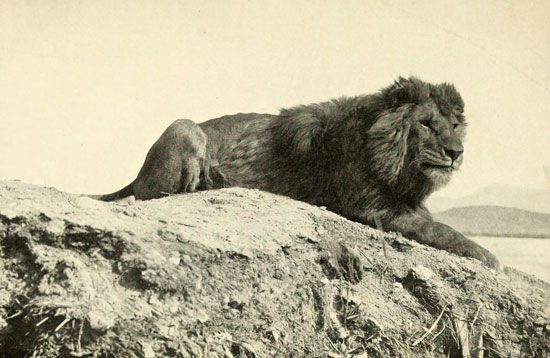
The Barbary lion (Panthera leo leo) is an extinct lion population that historically inhabited North Africa, ranging from the Atlas Mountains in Morocco to Egypt.1
Known for their impressive size, males were distinguished by long, dark manes extending to their chests and abdomens. Unlike many other lion populations, they did not form prides, instead living in pairs or small family groups. While considered extinct in the wild since the 1920s, some evidence suggests wild individuals may have persisted until the 1960s.1
Today, several zoos house descendants of lions once kept by the Moroccan royal family, which are often marketed as true Barbary lions. However, genetic research remains inconclusive regarding whether these captive animals are pure-blooded or the result of interbreeding with sub-Saharan lions. The Barbary lion is currently classified within the subspecies P. leo leo, which also includes Asiatic lions and populations from West and Central Africa.123
How do Barbary lions differ from other lion subspecies?
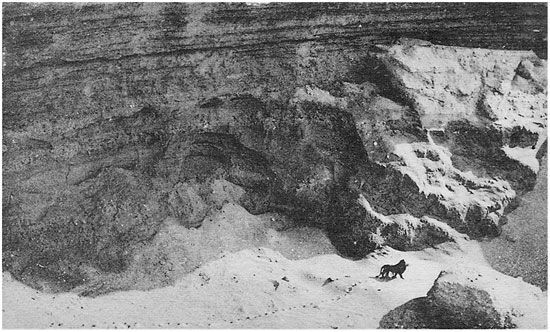
While Barbary lions (Panthera leo leo) were biologically and ecologically similar to other lion groups, they possessed distinct physical and behavioral traits that set them apart from other populations within their subspecies.1
Physical Characteristics
Barbary lions were among the largest lions known, with some historical reports suggesting weights exceeding 300 kg (660 pounds) and lengths of 3 meters (10 feet), though more conservative estimates place them between 2.3 and 2.8 meters. Their most iconic feature was the male’s long, dark mane, which extended significantly further than those of many other lions, covering the chest, abdomen, and even the front legs.1
Behavioral Differences
Unlike the social structure typical of many other lions, which live in large prides, Barbary lions were solitary or lived in pairs and small family groups. Despite these differences, they functioned as apex predators in the North African ecosystem, hunting large herbivorous mammals such as deer, gazelles, and wild boar.1
What other large cat species are in the genus Panthera?
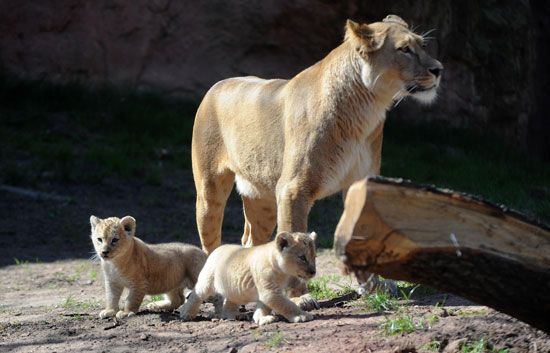
The genus Panthera, often referred to as the “big” or “roaring” cats, consists of four primary species: the lion, tiger, leopard, and jaguar.35
While other large cats are sometimes colloquially grouped as “big cats,” they belong to distinct genera. For example, the snow leopard is sometimes classified within Panthera but is also categorized by some authorities as the sole member of the genus Uncia due to specific skeletal features, such as a shorter skull and more-rounded eye orbits. Similarly, the clouded leopard belongs to the genus Neofelis, and the mountain lion (also known as the puma or cougar) is a member of the genus Puma.653
Why did the Roman Empire use Barbary lions in gladiatorial games?
The Roman Empire utilized Barbary lions in gladiatorial games primarily as part of venationes, or public animal hunts, which were immensely popular spectacles in ancient Rome. These events, often staged in amphitheaters like the Colosseum, featured contests between beasts or between men and animals, including professional hunters, captives, or condemned criminals.91
The inclusion of Barbary lions was driven by the Roman public’s fascination with exotic and powerful creatures. Roman officials actively sought out these lions from North Africa due to their impressive size and physical presence, which made them highly prized for display in public celebrations. The demand for such spectacles was vast, leading to the mass exhibition and slaughter of thousands of animals, including lions, bears, and other wildlife, to satisfy the entertainment requirements of the Roman populace.910
Sources
- Barbary lion — Encyclopædia Britannica
- Barbary lion — Merriam-Webster
- lion - Classification and distribution — Encyclopædia Britannica
- Barbary lion: Top Questions — Encyclopædia Britannica
- leopard — Encyclopædia Britannica
- Snow leopard — Encyclopædia Britannica
- feline - Evolution and classification — Encyclopædia Britannica
- big cat — Merriam-Webster
- venationes — Encyclopædia Britannica
- Colosseum — Encyclopædia Britannica
Published on · 3 min read