Baikal Seal
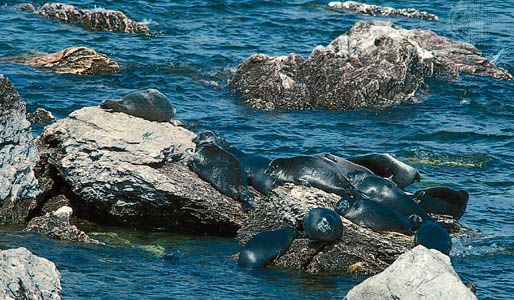
The Baikal seal (Pusa sibirica) is a species of small earless seal native to Lake Baikal in Siberia, Russia. It holds the unique distinction of being the…
What is Baikal seal?
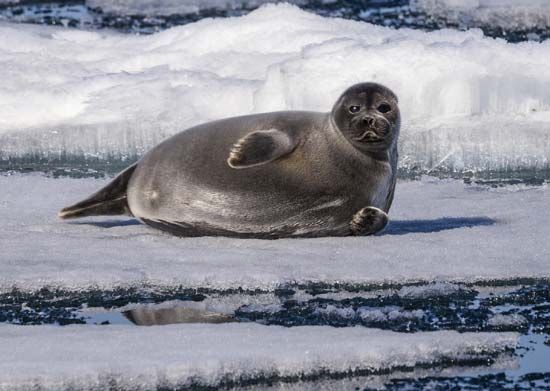
The Baikal seal (Pusa sibirica) is a species of small earless seal native to Lake Baikal in Siberia, Russia. It holds the unique distinction of being the only living seal that exclusively inhabits freshwater environments, living far from any marine habitat.12
These seals are relatively small, typically measuring 1.2–1.4 meters in length and weighing between 50 and 130 kg. They are well-adapted to their environment, capable of diving up to 400 meters and holding their breath for as long as 40 minutes to hunt for fish and invertebrates. While they are largely solitary, they congregate during the mating season, and females give birth to pups in dens built within ice hummocks.1
Currently classified as a species of least concern by the IUCN, the Baikal seal faces long-term threats from water pollution and climate change, which may impact the ice conditions necessary for their breeding and feeding.1
How did the Baikal seal end up in a landlocked lake?
The provided search results do not contain information regarding the evolutionary history or the specific process by which the Baikal seal became established in Lake Baikal. While the articles confirm that the seal is the only species that exclusively inhabits freshwater environments and is related to the ringed seal and Caspian seal, they do not detail how these animals originally reached this landlocked location.
Sorry, the Britannica knowledge base does not contain this information.
What makes Lake Baikal unique compared to other lakes?
Lake Baikal, located in Siberia, is distinguished by several remarkable features that set it apart from all other lakes on Earth:
- Record-Breaking Depth and Volume: It is the deepest lake in the world, reaching a maximum depth of 5,315 feet (1,620 meters). It is also the world’s largest freshwater lake by volume, containing approximately one-fifth of all the unfrozen fresh water on the Earth’s surface.54
- Extreme Age: Baikal is the oldest existing freshwater lake on the planet, with an estimated age of 20 million to 25 million years.54
- Unique Biodiversity: The lake is home to a vast array of plant and animal species, the majority of which are endemic, meaning they are found nowhere else on Earth. This includes the Baikal seal, the only seal species in the world that lives exclusively in a freshwater habitat.45
- Water Clarity: The lake is renowned for its exceptional water clarity; under ideal conditions, one can see up to 130 feet (40 meters) below the surface.4
How do seals adapt to living in freezing freshwater environments?
Seals are endotherms (warm-blooded animals) that have evolved specialized physiological and behavioral adaptations to survive in freezing environments, such as the icy waters of Lake Baikal or the Antarctic coastikal](https://www.britannica.com/place/Lake-Baikal) or the Antarctic coast.21
To maintain homeostasis in water, which conducts heat significantly faster than air, seals rely on several key mechanisms:
- Insulation: Like many marine mammals, seals utilize a thick layer of blubber—a dense, fat-rich layer beneath the skin—to minimize heat loss and maintain their core body temperature.61
- Thermoregulation: Seals employ countercurrent blood exchange, a specialized circulatory adaptation. This allows them to conserve heat by warming blood returning to the heart or to dissipate excess heat by shunting blood toward the skin’s surface.6
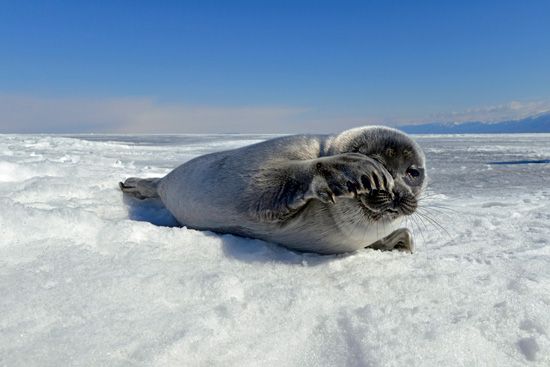
- Behavioral Adaptations: During the winter months, seals must navigate ice-covered environments. Species like the Baikal seal and the Weddell seal use their claws or teeth to cut and maintain breathing holes in the ice, allowing them to access the water for hunting while remaining protected from the elements.782
Sources
- Baikal seal: Top Questions — Encyclopædia Britannica
- Baikal seal — Encyclopædia Britannica
- seal — Encyclopædia Britannica
- Lake Baikal — Encyclopædia Britannica
- 9 of the World’s Deepest Lakes — Encyclopædia Britannica
- cetacean - Circulation and thermoregulation — Encyclopædia Britannica
- How do sea otters stay warm? — Encyclopædia Britannica
- Thermoreception - Fish — Encyclopædia Britannica
- Weddell seal — Encyclopædia Britannica
- Ectotherm — Encyclopædia Britannica
Published on · 3 min read