Basilan
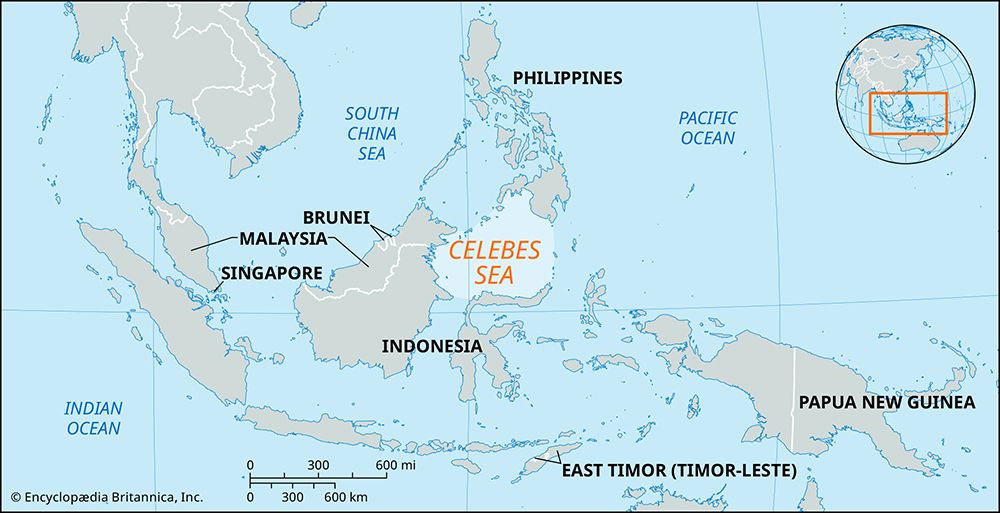
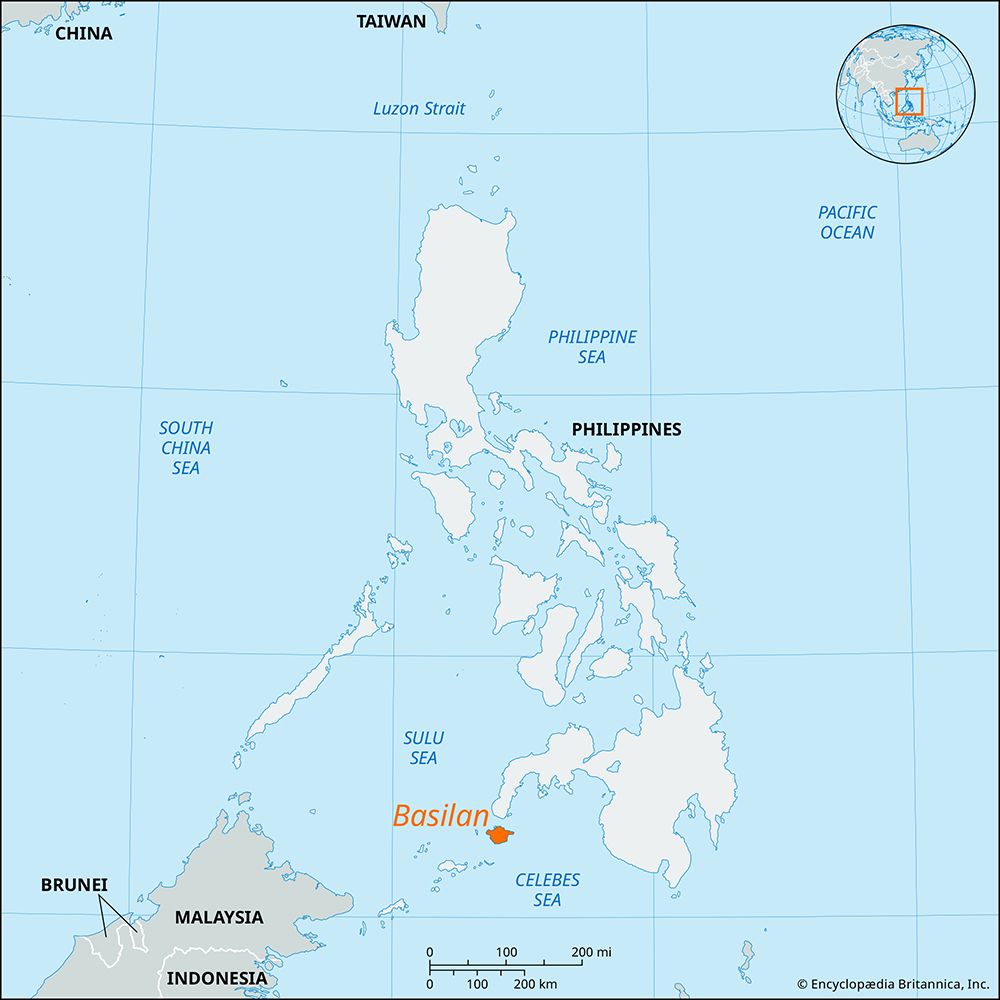
Basilan is an island located in the southern Philippines within the Celebes Sea. It is situated approximately 5 miles (8 km) off the southern tip of the…
What is the geographical location and size of Basilan island?
Basilan is an island located in the southern Philippines within the Celebes Sea. It is situated approximately 5 miles (8 km) off the southern tip of the Zamboanga Peninsula of Mindanao, separated by the Basilan Strait. As the northernmost and largest island of the Sulu Archipelago, it covers an area of 495 square miles (1,282 square km).12
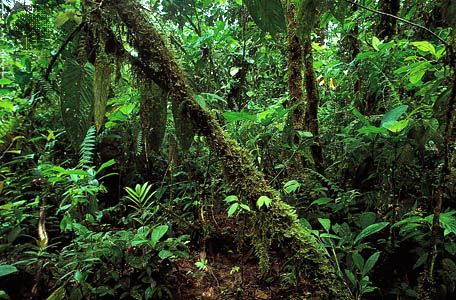
The island is characterized by rugged, forested uplands and volcanic peaks that reach heights exceeding 2,000 feet (600 meters). Its fertile valleys and rolling slopes are primarily utilized for plantation agriculture, with rubber serving as the main crop.1
What is the historical significance of Basilan in the Philippines?
Basilan holds significant historical importance in the Philippines, primarily due to its role as a center for cultural resistance and regional conflict.
Cultural and Religious Context
The island is the ancestral home of the Yakans, an ethnic group that converted to Islam in the 14th century. Unlike many other regions in the Philippines that were heavily influenced by Spanish colonial rule and converted to Roman Catholicism, the southern islands—including Basilan—maintained a strong Muslim identity. Historically, the Spanish referred to these populations as Moros and were never able to fully subdue them, leading to centuries of tension and periodic violence.134
Modern Conflict and Security
In the 20th and 21st centuries, Basilan became a focal point for regional instability:
- Muslim Rebellion: The island was a major center of the 1972 Muslim rebellion in southern Mindanao, which sought secession from the Philippine government.1
- Militant Activity: Beginning in the 1990s, Basilan served as a base for the Abu Sayyaf Group. This organization gained international notoriety for high-profile kidnappings and terrorist attacks, which prompted significant military intervention and counterterrorism cooperation between the Philippines and the United States in the early 2000s.3
What is the primary language spoken on Basilan island?
The primary language spoken by the Yakan people, who are the indigenous ethnic group inhabiting the interior of Basilan Island, is the Yakan language.18
The Yakan language is an Austronesian language that is related to languages found in northern Borneo. It is traditionally written using either the Malay Arabic script or the Latin script.1
Due to the migration of people from other parts of the Philippines to the island, other languages are also present in the region, including the national language, Pilipino (based on Tagalog), and English, which serve as official languages and mediums of instruction throughout the country.52
What are the main economic activities and natural resources on Basilan island?
The economy of Basilan is primarily driven by plantation agriculture and the extraction of natural resources from its forested landscape.
Agricultural Production
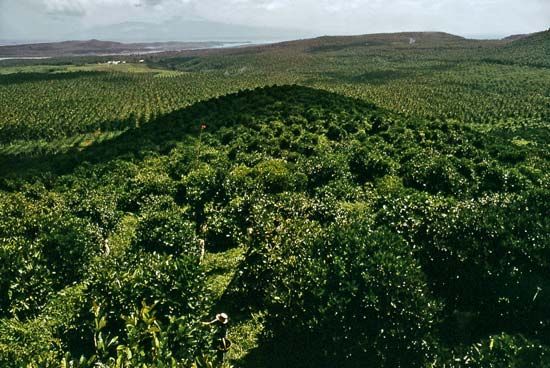
The island’s fertile valleys and rolling slopes support a robust agricultural sector. Rubber serves as the primary crop, with latex processed locally on plantations before being sold to factories in Manila. Other significant agricultural products include:
- Palm oil and coffee1
- Coconuts, rice, and corn (maize), which are cultivated by the indigenous Yakan people1
- Abaca, a fiber crop1
Natural Resources and Industry
Basilan’s geography, characterized by rugged, forested uplands and volcanic peaks, has historically supported a timber industry. Since the early 20th century, lumber mills have operated within the island’s tropical rainforest, a process that also facilitated the clearing of land for further agricultural development. The Menzi Agricultural Corporation, headquartered in the chief settlement of Isabela, plays a central role in managing the harvesting and processing facilities for these regional products.1
Sources
- Basilan — Encyclopædia Britannica
- Basilan — Merriam-Webster
- Abu Sayyaf Group — Encyclopædia Britannica
- Sulu Archipelago — Encyclopædia Britannica
- Yakan — Encyclopædia Britannica
- history of the Philippines - The Spanish period in the Philippines — Encyclopædia Britannica
- Philippines - The Spanish period — Encyclopædia Britannica
- Philippines - Languages — Encyclopædia Britannica
- Yakan — Merriam-Webster
- Tagalog language — Encyclopædia Britannica
Published on · 3 min read