Bay of Biscay
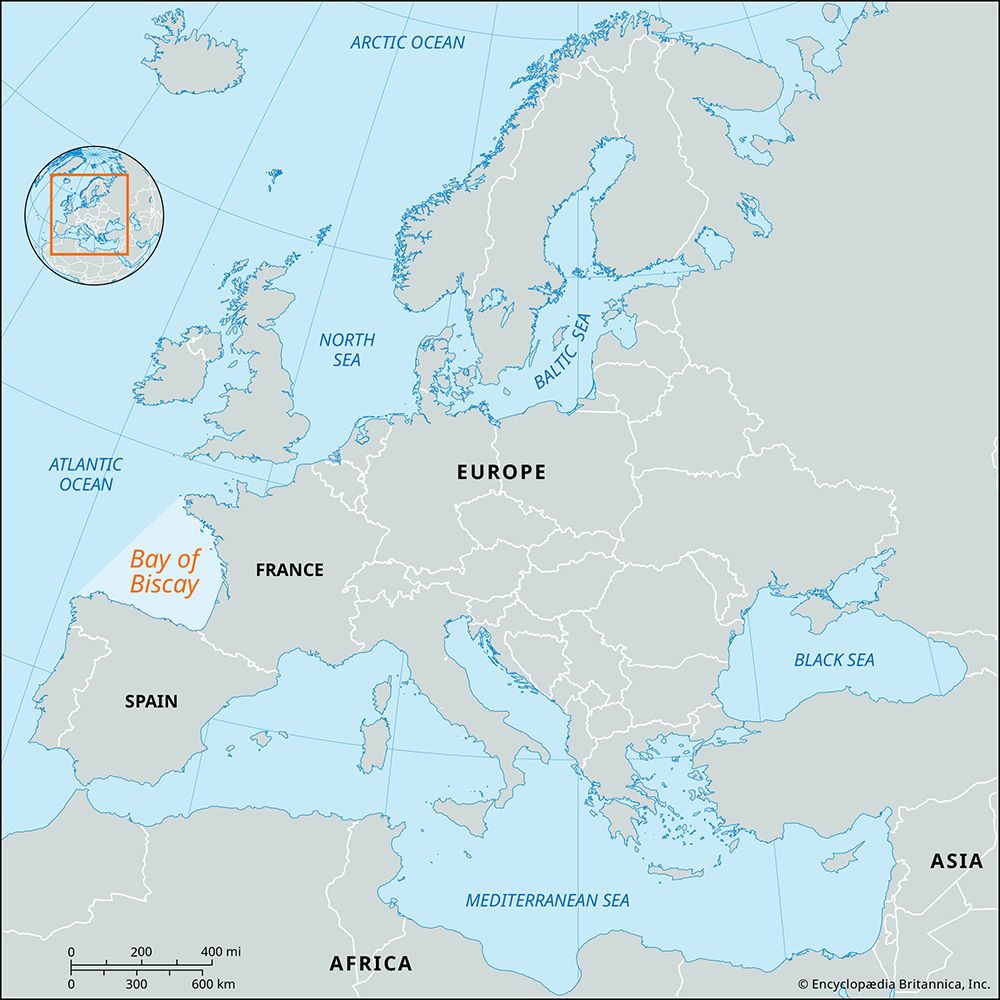
The Bay of Biscay is a significant maritime region that shapes local economic activities through its geography and challenging environmental conditions.
How does the Bay of Biscay influence maritime trade and fishing industries in the region?
The Bay of Biscay is a significant maritime region that shapes local economic activities through its geography and challenging environmental conditions.
Maritime Trade
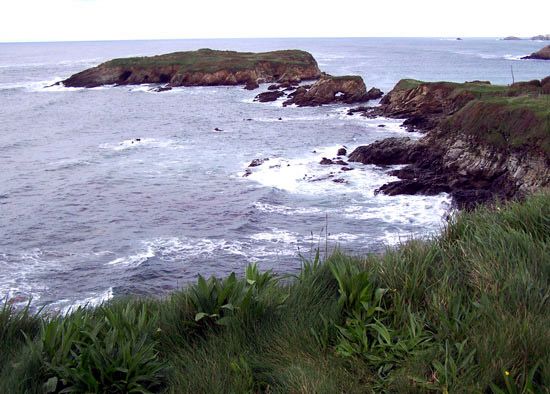
The bay serves as a vital maritime corridor, hosting several key ports such as Brest, Nantes, Bordeaux, and Bilbao. However, navigation is notably difficult; the area is infamous among sailors for its rough seas, severe gales that can exceed 70 miles per hour, and unpredictable squalls. Furthermore, none of the regional ports are capable of accommodating large vessels, which limits the scale of maritime trade compared to deeper-water hubs.1
Fishing Industry
Fishing is a principal industry in the region, supported by the diverse topography of the continental shelf. The French coast, in particular, benefits from extensive oyster culture practiced within its shallow lagoons and estuaries. The complex underwater landscape, including the continental slope and various submarine canyons, contributes to the ecological richness that sustains these fishing activities.1
What are some popular tourist destinations along the coast of the Bay of Biscay?
The coast of the Bay of Biscay features several prominent tourist destinations known for their scenic beauty, cultural heritage, and recreational opportunities.
French Coast
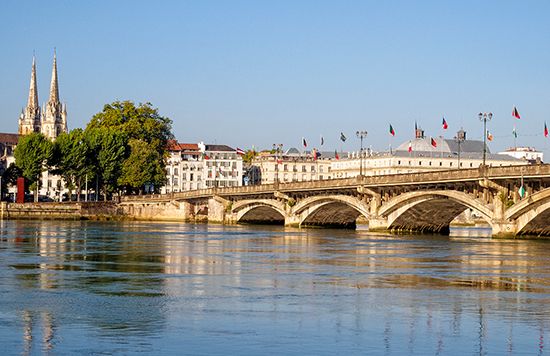
- Biarritz: Once a small fishing village, it became a fashionable destination for European royalty in the 19th century. Today, it is a diverse resort town famous for its surfing culture, thalassotherapy centers, and festivals.12
- Saint-Jean-de-Luz: Located in the Basque Country, this town is celebrated for its coastal charm and is a popular destination alongside nearby Ciboure and Hendaye.2
- La Baule: A well-known seaside resort located further north along the French coast.3
Spanish Coast
- Donostia–San Sebastián: A fashionable resort city known for its historic architecture, the famous La Concha beaches, and major international events like film and jazz festivals.4
- Bilbao: While a major port, it serves as a significant cultural and economic hub within the Basque region.35
These destinations benefit from the region’s mild maritime climate and unique cultural traditions, particularly those of the Basque people.12

How deep is the Bay of Biscay, and how does its depth affect ocean currents?
The Bay of Biscay reaches a maximum depth of 15,525 feet (4,735 meters), located slightly south of its center. Beyond the continental slope, the bay features the Biscay Abyssal Plain, which occupies approximately half of the bay’s area and maintains depths of about 15,000 feet (4,550 meters).1
Regarding your question on ocean currents, the provided search results do not indicate that the bay’s depth is the primary driver of its circulation patterns. Instead, the surface currents are influenced by the broader clockwise circulation of the North Atlantic Ocean, which generates a corresponding clockwise circulation within the bay itself. While deep-sea currents can interact with the topography of continental slopes in various marine environments, the available information specifically attributes the bay’s surface movement to this larger regional oceanic pattern.16
How does the Bay of Biscay impact the climate of the surrounding regions?
The Bay of Biscay plays a significant role in shaping the environment of the surrounding regions, primarily by fostering a maritime climate characterized by mild winters and cool summers.1
This climate is heavily influenced by the bay’s position within the broader North Atlantic Ocean system. The region benefits from the moderating effects of the North Atlantic Current, an extension of the Gulf Stream that transports warm, saline waters toward northwestern Europe. When combined with prevailing westerly winds, this warm current helps maintain the mild temperatures observed along the coastal fringes of France and Spain.741
In specific areas, such as the Basque Country, the interaction between the coastal geography and the maritime influence results in a pleasant, albeit wet, climate. The region experiences significant rainfall, particularly in the nearby Pyrenees mountains, which supports lush valleys and diverse agricultural activity.8
Sources
- Bay of Biscay — Encyclopædia Britannica
- Biarritz — Encyclopædia Britannica
- list of cities and towns in Spain - Basque Country — Encyclopædia Britannica
- Basque Country — Encyclopædia Britannica
- Donostia–San Sebastián — Encyclopædia Britannica
- continental slope — Encyclopædia Britannica
- Climate - Thermohaline circulation — Encyclopædia Britannica
- North Atlantic Current — Encyclopædia Britannica
Published on · 3 min read