Beachy Head
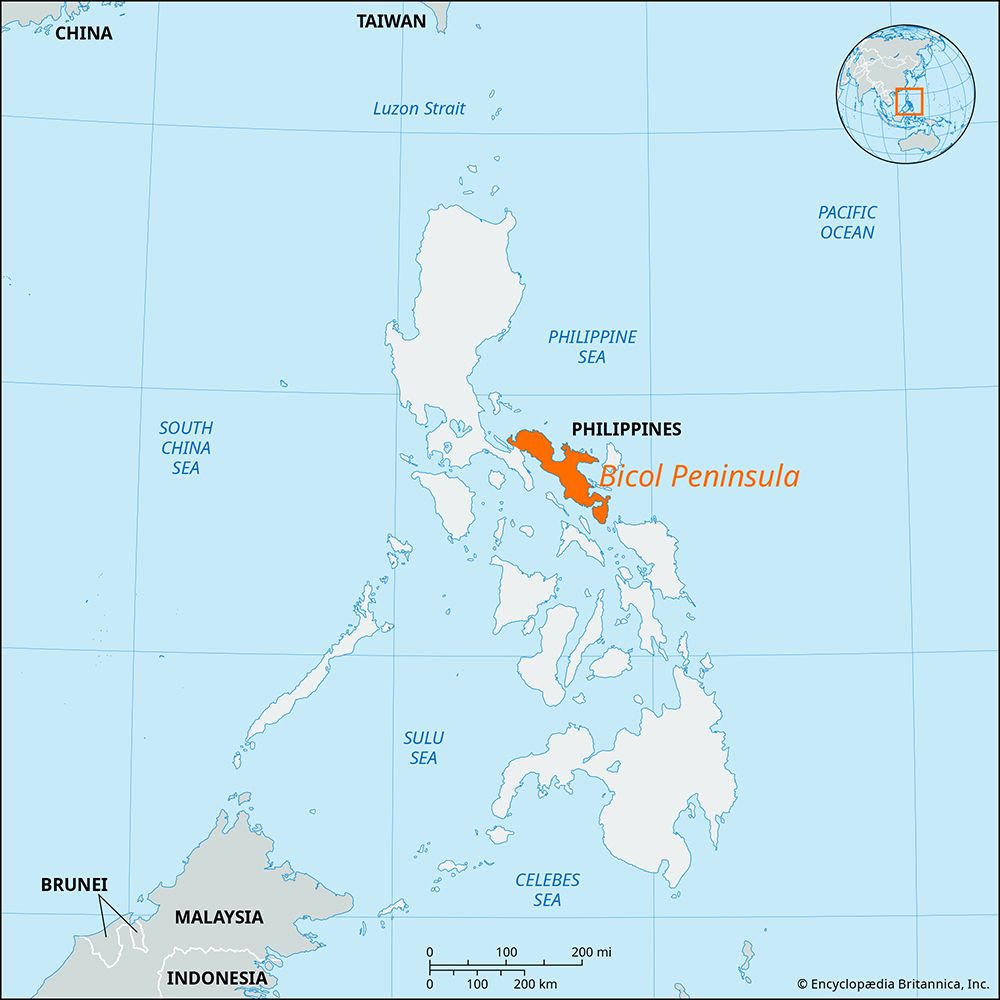
Beachy Head is a prominent headland located on the English Channel coast in East Sussex, England. Situated within the borough of Eastbourne, it marks the…
What is Beachy Head?
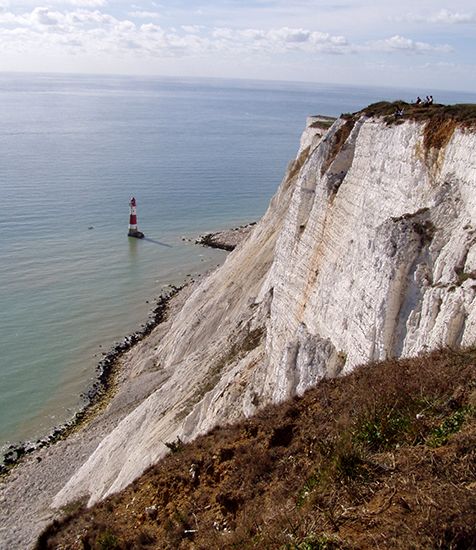
Beachy Head is a prominent headland located on the English Channel coast in East Sussex, England. Situated within the borough of Eastbourne, it marks the seaward end of the South Downs, a range of hills characterized by their distinctive chalk composition.123
These cliffs rise to a height of over 500 feet (approximately 163 meters) and are frequently exposed to severe southwestern gales. This constant environmental pressure leads to significant erosion along the cliff’s joint planes, historically resulting in the formation of isolated rock stacks. While there were once seven such formations known as the Seven Charleses, the last of these collapsed in 1875.13
How are chalk cliffs formed by erosion?
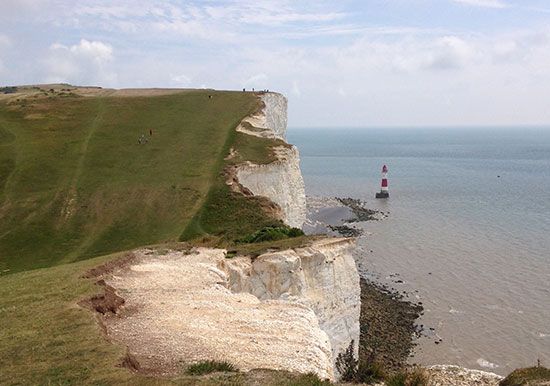
Chalk cliffs are formed through a combination of geological uplift and the relentless erosive power of the sea. The process begins with the exposure of chalk—a soft, fine-grained variety of limestone—which is then subjected to coastal forces.14
The formation and shaping of these cliffs involve several key processes:
- Wave Action: Waves erode the bedrock primarily through abrasion, where suspended sediment particles act like sandpaper against the cliff face. Larger waves can also break up rock through direct impact.5
- Undercutting: Waves attack the base of the cliffs, creating a notch that removes support from the rock above.6
- Gravity and Collapse: As the base is undercut, the unsupported upper sections of the cliff eventually collapse into the sea due to gravity.6
- Structural Weakness: Erosion is often concentrated along joint planes within the rock, which can lead to the formation of isolated features such as sea stacks.17
Over time, this continuous cycle of undercutting and collapse causes the coastline to retreat, leaving behind steep, dramatic cliff faces.68
What are the South Downs?
The South Downs are a range of rounded, grass-covered hills in southern England primarily composed of chalk. Running east to west across the historic county of Sussex, these hills feature an abrupt northern scarp line that transitions into the clays and sands of the Weald, while sloping more gently toward the English Channel in the south.910
The landscape is defined by its porous chalk composition, which keeps summits dry and limits tree growth, historically resulting in a landscape of springy fescue turf. These hills have been sites of human activity since prehistoric times, evidenced by numerous barrows, earthworks, and hill forts. While traditionally used for sheep grazing, modern agricultural practices have enabled the cultivation of many slopes. At their easternmost point, the South Downs meet the sea in a series of dramatic cliffs, most notably at Beachy Head.910
What is the history of the English Channel?
The English Channel has served as both a vital maritime route and a defensive barrier throughout history. Geologically, it originated from structural downfolding millions of years ago, but its modern form was shaped by the Pleistocene Epoch. A land bridge once connected Britain to the European continent across the Strait of Dover, finally submerging approximately 8,000 years ago.1112
Human history in the region reflects its dual role:
- Migration and Trade: Early Stone Age people crossed the strait, followed by Bronze and Iron Age groups who traded resources like tin and copper.13
- Conflict: The channel has been a theater for major military events, including Julius Caesar’s invasion, William the Conqueror’s 1066 crossing, the defeat of the Spanish Armada, and critical operations during both World Wars, such as the Dunkirk evacuation.1312
- Modern Connectivity: The Channel Tunnel, opened in 1994, transformed the strait into a major permanent transportation link.12
Sources
- Beachy Head — Encyclopædia Britannica
- Beachy Head — Merriam-Webster
- Eastbourne — Encyclopædia Britannica
- coastal landforms - Sea arches — Encyclopædia Britannica
- chalk — Encyclopædia Britannica
- coastal landforms - Waves — Encyclopædia Britannica
- coastal landforms - Other factors and processes — Encyclopædia Britannica
- United Kingdom - The lowland zone — Encyclopædia Britannica
- Downs — Encyclopædia Britannica
- Sussex — Encyclopædia Britannica
- English Channel — Encyclopædia Britannica
- English Channel - Study and exploration — Encyclopædia Britannica
- English Channel - Geology — Encyclopædia Britannica
- Strait of Dover — Encyclopædia Britannica
Published on · 3 min read