Pleistocene Epoch
The Pleistocene Epoch is the earlier and significantly longer of the two epochs that constitute the Quaternary Period, the current period in Earth's geologic…

How does the Pleistocene Epoch fit into the broader Quaternary Period of Earth’s history?
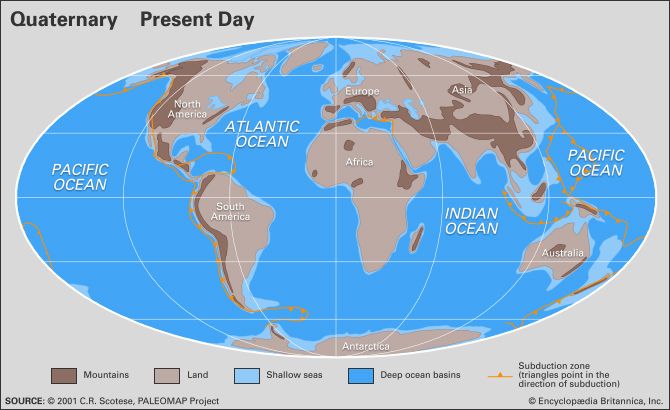
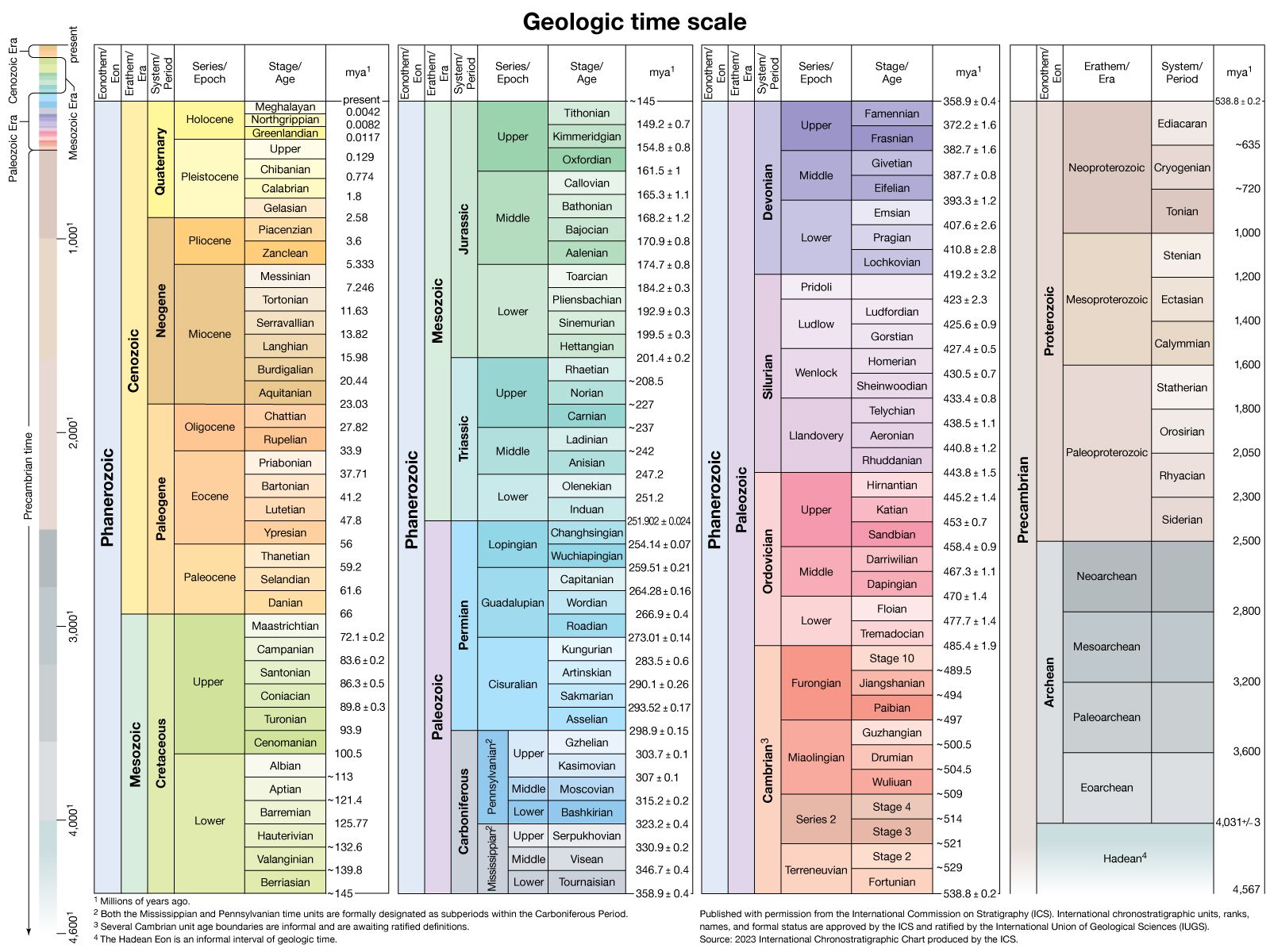
The Pleistocene Epoch is the earlier and significantly longer of the two epochs that constitute the Quaternary Period, the current period in Earth’s geologic history.12
Spanning from approximately 2,588,000 years ago until 11,700 years ago, the Pleistocene is often referred to as the “Great Ice Age” due to the repeated cycles of glaciation and interglacial warming that characterized the era. It is followed by the Holocene Epoch, which represents the most recent interglacial interval and serves as the current chronological framework for human history.132
The formal relationship between these units was clarified in 2009, when the International Union of Geological Sciences ratified the beginning of the Quaternary Period to coincide with the start of the Gelasian Stage, which is now recognized as the lowermost stage of the Pleistocene. Consequently, the Pleistocene serves as the foundational epoch of the Quaternary, marking the onset of dramatic climatic and oceanographic shifts that have shaped the modern world.13
What were some of the iconic megafauna that lived during the Pleistocene Epoch?
The Pleistocene Epoch was a period defined by “megafaunal gigantism,” where many terrestrial mammals evolved to reach massive sizes. This era is famous for its iconic, now-extinct species that captured the human imagination and left a significant mark on the fossil record.5
Iconic Pleistocene Megafauna
The following animals are among the most well-known examples of Pleistocene megafauna:
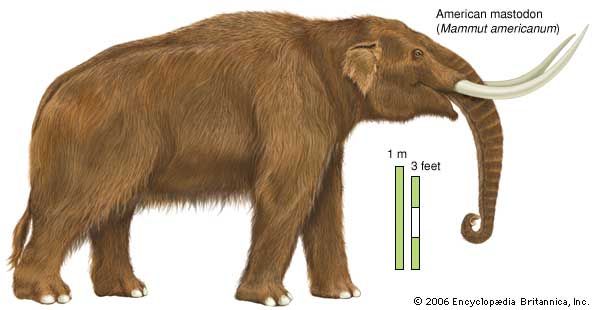
- Proboscideans: The woolly mammoth and mastodon were massive herbivores, with some species, such as the North American imperial mammoth, reaching shoulder heights of up to 4 meters (14 feet).56
- Large Carnivores: Predators included the sabre-toothed cat, known for its extreme canine teeth, as well as the dire wolf, American lion, and the giant short-faced bear.5
- Herbivores: The landscape supported a variety of large grazers and browsers, including woolly rhinoceros, giant sloths, giant beavers, stag-moose, camels, and various species of horses.57
- Cave Dwellers: The cave bear is another widely recognized species frequently found in fossil deposits and depicted in ancient human art.5
The causes of the mass extinction of these creatures at the end of the Pleistocene remain a subject of intense scientific debate, with theories focusing on the “overkill hypothesis”—which suggests human hunting played a primary role—and the impact of rapid, large-scale climatic and environmental changes.57
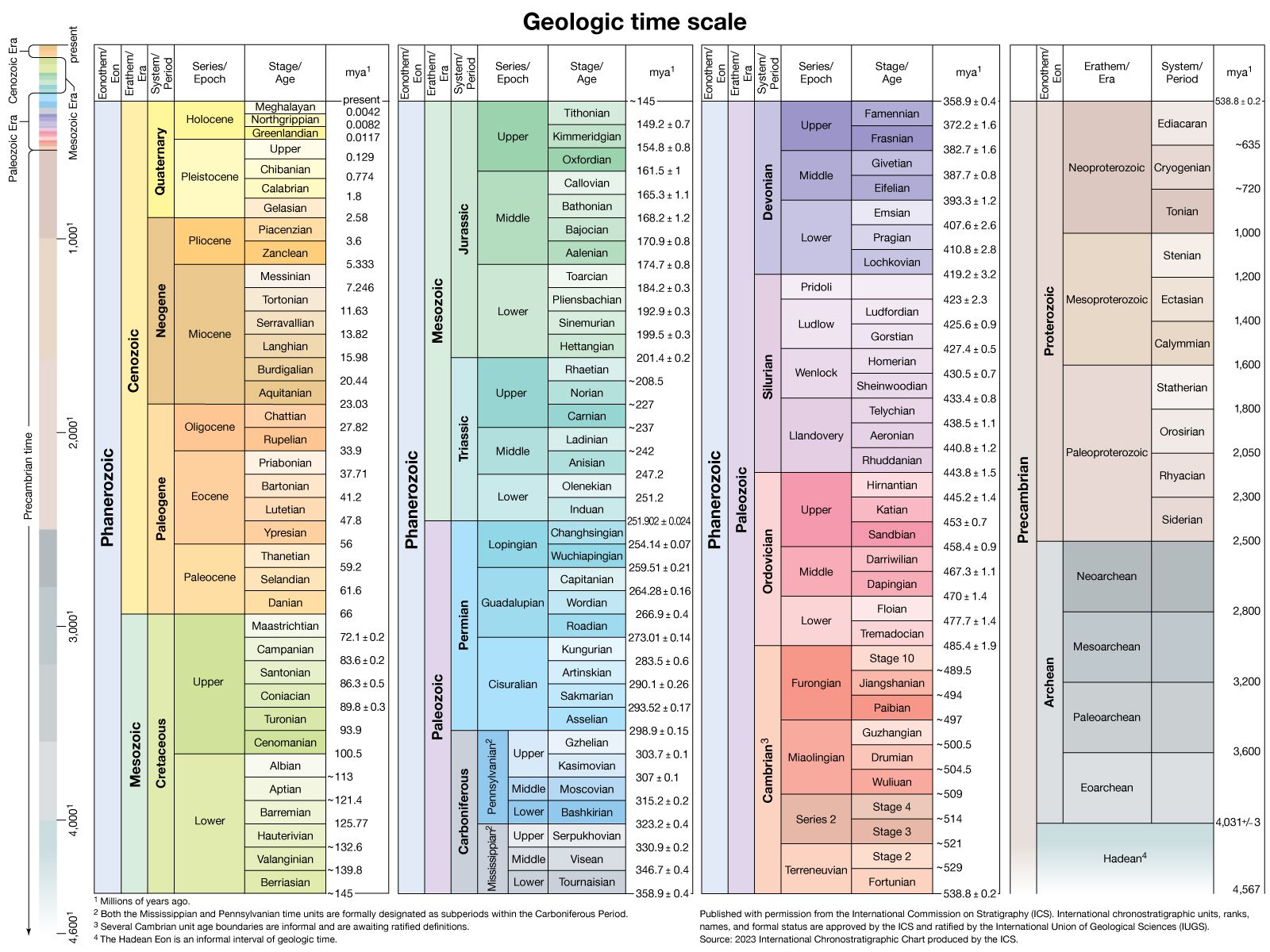
What is the Pleistocene Epoch and when did it occur in Earth’s history?
The Pleistocene Epoch is the earlier and major of the two epochs that comprise the Quaternary Period of Earth’s history. Often informally called the “Great Ice Age,” it was a time defined by a succession of glacial and interglacial climatic cycles.1
The epoch began approximately 2,588,000 years ago, coinciding with the base of the Gelasian Stage, and concluded 11,700 years ago. It is preceded by the Pliocene Epoch of the Neogene Period and followed by the Holocene Epoch.1
While the formal start date was a subject of significant debate among geologists for decades, the International Union of Geological Sciences resolved the issue in 2009 by aligning the beginning of the Pleistocene with the base of the Gelasian Stage, which is marked by the Gauss-Matuyama geomagnetic reversal.1
What methods do geologists and paleontologists use to date Pleistocene fossils and sediments?
Geologists and paleontologists employ a variety of scientific methods to date Pleistocene fossils and sediments, often combining radiometric techniques with stratigraphic and environmental analysis to establish a precise chronology.
Radiometric Dating Methods
Radiometric dating is the primary tool for quantifying geologic time by measuring the decay of radioactive isotopes within a sample.9
- Carbon-14 dating: This method is essential for dating organic biological materials, such as fossils, that are between 500 and 50,000 years old. It measures the decay of carbon-14, which ceases to be replenished once an organism dies.910
- Potassium-argon dating: Used for dating volcanic rocks, this method measures the ratio of radioactive potassium-40 to its decay product, argon-40. It is effective for samples as young as 20,000 years old, making it useful for dating volcanic layers associated with Pleistocene deposits.119
Other Dating and Analytical Techniques
- Thermoluminescence: This technique measures light emitted from minerals when heated. The intensity of the light correlates to the duration of exposure to natural radiation, allowing researchers to date crystalline materials and archaeological artifacts.12
- Isotopic Geochemistry: By analyzing the ratio of oxygen-16 to oxygen-18 in the shells of marine microorganisms, scientists can infer past ocean temperatures. This provides a record of climatic fluctuations, helping to correlate fossils found in deep-sea sediments with specific glacial or interglacial stages.913
- Accumulational Processes: Geologists may study varves—annual layers of sediment—to create a “floating chronology.” Additionally, relative dating can be performed by measuring the accumulation of elements like fluorine or uranium in fossilized bones, though this is less precise than absolute radiometric methods.14
Sources
- Pleistocene Epoch — Encyclopædia Britannica
- A Journey Through Time Since the Precambrian - Quaternary Period: 2.6 million years ago to the present — Encyclopædia Britannica
- Holocene Epoch — Encyclopædia Britannica
- Quaternary — Encyclopædia Britannica
- Quaternary - Fauna and flora — Encyclopædia Britannica
- Pleistocene Epoch - Megafaunal extinctions — Encyclopædia Britannica
- mammoth — Encyclopædia Britannica
- Thylacosmilus — Encyclopædia Britannica
- potassium-argon dating — Encyclopædia Britannica
- geology - Isotopic geochemistry — Encyclopædia Britannica
- Pleistocene Epoch - Pliocene–Pleistocene boundary — Encyclopædia Britannica
- carbon-14 dating — Encyclopædia Britannica
- dating - Major methods of isotopic dating — Encyclopædia Britannica
- Pleistocene Epoch - Chronology and correlation — Encyclopædia Britannica
- geochronology - Accumulational processes — Encyclopædia Britannica
- thermoluminescence — Encyclopædia Britannica
Published on · 4 min read