Bering Canyon
The provided search results do not contain specific information regarding the ecological significance of the Bering Canyon for marine life. While the…
What is the ecological significance of the Bering Canyon for marine life in the Bering Sea?
The provided search results do not contain specific information regarding the ecological significance of the Bering Canyon for marine life. While the documents detail the physical dimensions and geological formation of the Bering Canyon, as well as the general biological productivity and hydrology of the Bering Sea, they do not explicitly link the canyon’s features to specific ecological functions or marine habitats.
The Bering Sea as a whole is highly productive due to the upwelling of nutrient-rich deep waters, which supports diverse diatom populations, various fish species, and marine mammals. However, the specific role of the canyon in these processes is not addressed in the available data.12
Where is the Bering Canyon located, and what are its key geographical features?
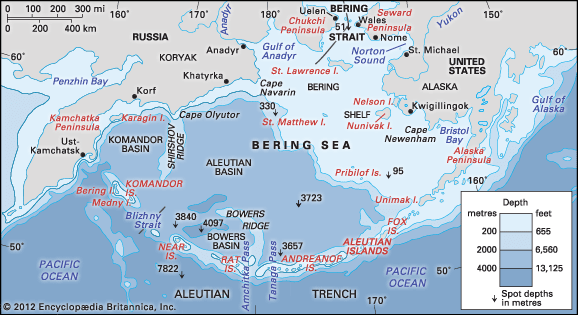
The Bering Canyon is a massive submarine canyon located in the Bering Sea. Stretching approximately 250 miles (400 km) in length, it is considered potentially the longest of its kind in the world.1
Geographical Features
- Location: The canyon head begins at the edge of the continental shelf north of Umnak Island in the Aleutian chain.1
- Path: Its upper section is fed by tributary valleys and trends southwestward before turning northwestward. The final 45 miles (72 km) trend abruptly north, terminating at the continental rise at a depth of 10,500 feet (3,200 meters).1
- Structure: The canyon is notably asymmetric. Along its northern stretch, the western wall reaches slopes of 13°, while the eastern wall is much gentler at 2° to 3°.1
- Scale: It possesses a maximum relief of at least 2,600 feet (800 meters) and an estimated volume of 1,030 cubic miles (4,300 cubic km), far exceeding most other submarine canyons.1
It is believed to have formed during the Pliocene and Pleistocene epochs due to sediment slumping down the continental slope.1
How does the Bering Canyon impact commercial fishing activities in the Bering Sea?
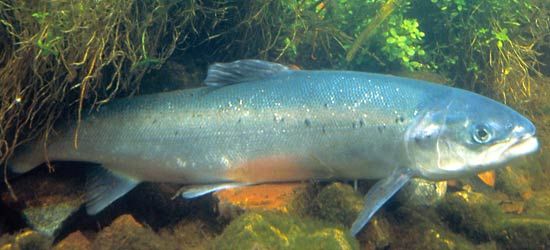
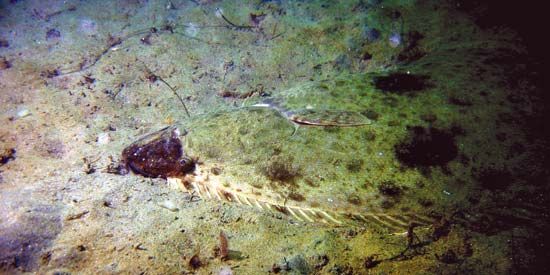
The provided search results do not contain information regarding the specific impact of the Bering Canyon on commercial fishing activities. While the data confirms that the Bering Sea supports a significant commercial fishing industry—targeting species such as salmon, cod, pollack, and halibut—it does not establish a direct link between the canyon’s geography and these economic operations.25
Fisheries in the region are managed through international cooperation, including U.S.-Russian agreements and the regulation of the exclusive economic zone, but the role of submarine canyons in these management or harvesting strategies is not addressed in the available documentation.5
How was the Bering Canyon formed, and what geological processes continue to shape it?
The Bering Canyon is believed to have formed during the Pliocene and Pleistocene epochs, a period spanning approximately 5,300,000 to 11,700 years ago. Its formation was primarily driven by the slumping of large masses of sediment down the continental slope, which were supplied by rivers from Alaska and Siberia.1
Regarding ongoing geological processes, submarine canyons generally serve as the primary conduits for sediment movement from continental shelves and slopes to the deep seafloor. This process is frequently facilitated by density currents—often triggered by earthquakes—which create turbidity currents that flow down the canyon at high speeds. These currents transport and deposit materials, such as sands and silts, known as turbidites, which continue to shape the morphology of the seafloor at the canyon’s base. While the initial formation of the Bering Canyon is attributed to historical sediment slumping, these active transport mechanisms remain fundamental to the evolution of submarine canyon systems.61
Sources
- Bering Canyon — Encyclopædia Britannica
- Bering Sea and Strait - Biological and mineral resources — Encyclopædia Britannica
- Pribilof Canyon — Encyclopædia Britannica
- Bering Sea and Strait - Hydrology — Encyclopædia Britannica
- Alaska - Agriculture, forestry, and fishing — Encyclopædia Britannica
- marine sediment — Encyclopædia Britannica
Published on · 3 min read