Halibut
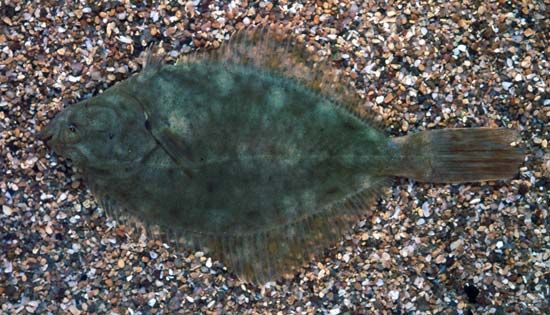
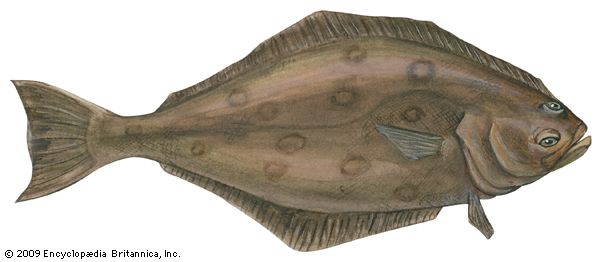
Halibut are large flatfishes that typically inhabit temperate and tropical marine environments, with some species extending into Arctic waters. As…
Where are halibut typically found in the wild, and what is their preferred habitat?
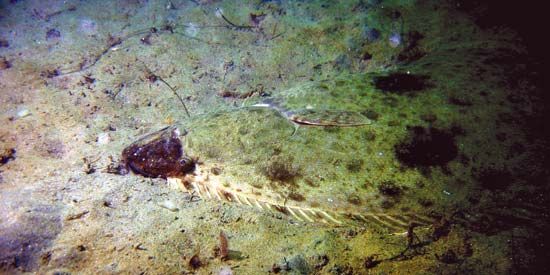
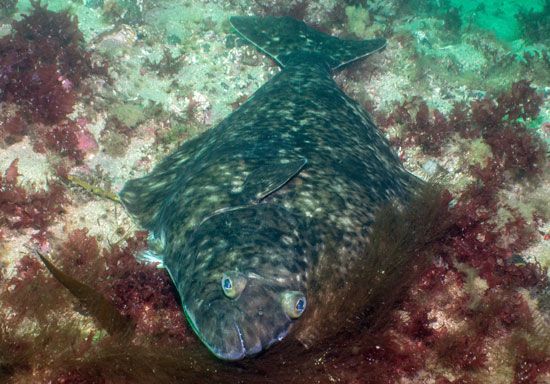
Halibut are large flatfishes that typically inhabit temperate and tropical marine environments, with some species extending into Arctic waters. As bottom-dwelling, or benthic, creatures, they are most commonly found on the continental shelf at depths of less than 200 metres, though they can occur at depths up to 1,000 metres.123
Their distribution varies by species:
- Atlantic halibut: Found in the eastern and western North Atlantic.1
- Pacific halibut: Inhabits the eastern and western North Pacific.1
- Greenland halibut: Found in Arctic and near-Arctic regions of the Atlantic and Pacific.1
- California halibut: Located along the western coast of North America, ranging from Washington to Baja California.1
Halibut spend their adult lives resting or swimming along the seafloor, where they are well-adapted to a bottom-living existence.13
How large can halibut grow, and what is their average lifespan?
Halibut species vary significantly in size and longevity. The Atlantic halibut is the largest flatfish, reaching lengths of up to 4.7 metres (15.4 feet) and weights of 320 kg (705 pounds). The Pacific halibut can grow to nearly 2.7 metres (8.9 feet) and weigh up to 363 kg (800 pounds). In contrast, the Greenland halibut reaches about 1.3 metres (51 inches) and 7 kg (15.4 pounds), while the California halibut grows to a maximum of 1.5 metres (59 inches) and 33 kg (72.8 pounds).1
Regarding their life spans, Atlantic and Pacific halibut are long-lived, often surviving beyond 50 years. Greenland and California halibuts typically live up to 30 years.1
What are some traditional fishing methods used to catch halibut?
Traditional fishing for halibut primarily utilizes bottom longlines, a method that has been employed for centuries to target demersal (bottom-dwelling) species.
In this practice, a heavy main line is divided into sections of approximately 90 metres, with branch lines—each about 1.5 metres long—attached at intervals of four to 5.5 metres. These lines are typically set at depths ranging from 80 to 270 metres. To prevent bait from being consumed by unwanted bottom predators like starfish or crabs, the hooks are often suspended slightly above the seafloor rather than resting directly on it. The entire setline is anchored at both ends and marked by floating kegs and lighted buoys.6
While historical methods involved manual labor from small dories, modern commercial enterprises often use automated systems that bait, clean, and stow hooks on magazine racks. This technology has significantly increased efficiency for crews operating in North America and Europe.61
How do halibut compare to other flatfish species in terms of size and commercial importance?
Halibut are among the most significant flatfishes in terms of both physical scale and economic value. As members of the family Pleuronectidae, they are the most extensively utilized flatfishes globally, far surpassing other families like Bothidae or Soleidae in commercial importance.1
Size Comparison
Halibut are significantly larger than most other flatfish species, which typically range from 100 mm to smaller commercial varieties.1
- Atlantic Halibut: Recognized as the largest flatfish, they can reach lengths of 4.7 metres and weights of 320 kg.4
- Pacific Halibut: While generally smaller than the Atlantic variety, they can still grow to nearly 2.7 metres and weigh up to 363 kg.4
- Other Flatfish: In contrast, common flounder species are much smaller; for example, the European flounder reaches about 50 cm, and the summer flounder grows to approximately 90 cm. Even the Greenland and California “halibuts”—which are smaller than the Hippoglossus genus—are larger than many typical flounders, reaching 1.3 to 1.5 metres.84
Sources
- halibut — Encyclopædia Britannica
- Atlantic halibut — Merriam-Webster
- Pacific halibut — Merriam-Webster
- pleuronectiform - General features — Encyclopædia Britannica
- pleuronectiform - Reproduction — Encyclopædia Britannica
- commercial fishing - Bottom longlines — Encyclopædia Britannica
- commercial fishing - Lines — Encyclopædia Britannica
- flounder — Encyclopædia Britannica
- scorpaeniform - General features — Encyclopædia Britannica
Published on · 3 min read