Salmon
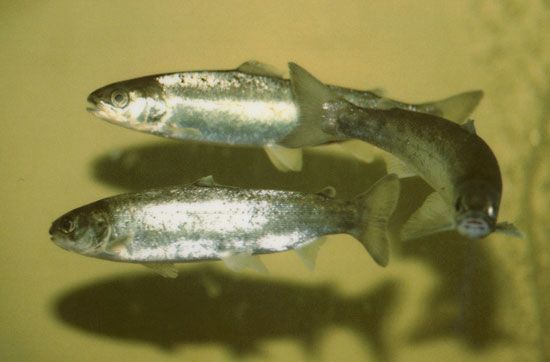
Salmon are primarily categorized into two main groups: the Atlantic salmon (Salmo salar) and the six species of Pacific salmon (Oncorhynchus).
What are the main species of salmon and where are they typically found?
Salmon are primarily categorized into two main groups: the Atlantic salmon (Salmo salar) and the six species of Pacific salmon (Oncorhynchus).1
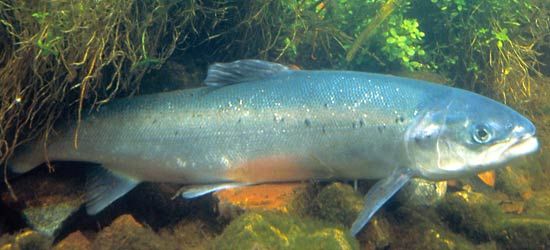
Atlantic Salmon Native to rivers on both sides of the North Atlantic Ocean, this species is highly valued as a game fish. Unlike Pacific salmon, many Atlantic salmon may survive spawning and return to the sea to spawn again.12
Pacific Salmon These six species are typically found in the northern Pacific Ocean, ranging from the Bering Sea to Japan and various rivers along the American Pacific coast:1
- Sockeye (red) salmon: Ranges from the northern Bering Sea to Japan and the Columbia River.1
- Coho (silver) salmon: Found from the Bering Sea to Japan and Monterey Bay.1
- Chum (dog) salmon: Ranges from the Arctic southward to Japan and the Rogue River.1
- Chinook (king/spring) salmon: Found from the Yukon River to China and the Sacramento River.1
- Pink (humpback) salmon: Ranges from the Arctic to Japan and the Klamath River.1
- Cherry salmon: Found off the coast of Japan.1
What is the salmon life cycle, including their famous spawning behavior?
The life cycle of the salmon is a remarkable journey characterized by anadromous migration, where fish born in freshwater environments travel to the ocean to mature before returning to their birthplace to reproduce.45
The Life Cycle Stages
- Freshwater Beginnings: Salmon hatch from large, nutrient-rich eggs deposited in gravel beds within cold, clear streams or lakes. After hatching, young salmon spend their early life in these freshwater habitats.654
- Ocean Migration: In the spring, juveniles migrate downstream to the open ocean, where they spend the majority of their adult lives feeding and growing.4
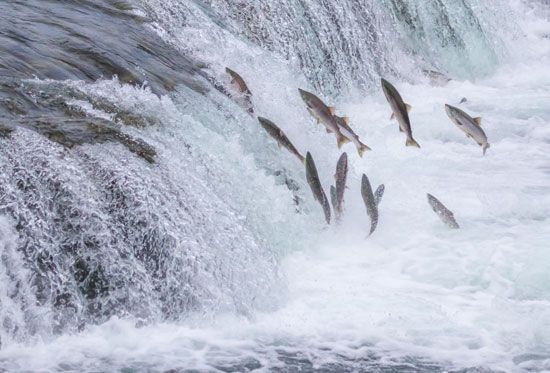
- The Return Journey: Driven by a powerful sense of smell and environmental imprinting, adult salmon navigate back to the specific stream where they were hatched. This arduous journey can span thousands of miles and involves leaping over obstacles like waterfalls.457
Spawning and Semelparity
Upon entering freshwater, salmon stop eating, relying entirely on stored energy reserves. They undergo significant physiological changes, such as developing hooked jaws in males, to prepare for spawning.7
Most Pacific salmon exhibit semelparity, a strategy where they expend all their energy in a single, massive reproductive effort. The physical stress of the journey, combined with the act of spawning, leads to their death, which serves as a final contribution to the ecosystem. While some Atlantic salmon may survive to return to the sea, many others also perish after spawning.75
How do salmon navigate back to their natal streams for spawning?
Salmon navigate back to their natal streams through a sophisticated combination of sensory mechanisms, with olfaction playing the most critical role in the final stages of their journey.87
The Role of Olfaction and Imprinting
During their early development, young salmon undergo a process called imprinting, where they memorize the unique chemical signature of their home stream. This signature is created by the specific substrate, vegetation, and local population of the waterway. When the fish return as adults, their olfactory sensitivity increases, regulated by thyroid and reproductive hormones, allowing them to detect and follow these familiar chemical cues to their original spawning sites.8
Long-Distance Navigation
While olfaction guides them once they enter their home stream system, the methods used to navigate from the open ocean are less certain. Scientists believe salmon may utilize:
- Geomagnetic orientation: Some species, such as sockeye salmon, appear to use the Earth’s magnetic fields to navigate.9
- Celestial cues: Steering by the position of the Sun may assist in long-distance orientation.8
- Topographical features: Physical landmarks are also believed to aid in recognizing their habitat.7
What is a salmon?
A salmon is a type of fish belonging to the family Salmonidae. The term originally referred to the Atlantic salmon, but it is now broadly applied to similar species, most notably the Pacific salmon of the genus Oncorhynchus.1
These fish are widely recognized for their anadromous life cycle, meaning they typically hatch in freshwater streams, migrate to the ocean to mature, and return to their natal rivers to spawn. During their return, they undergo striking physical changes, such as color shifts and the development of hooked jaws in males.17
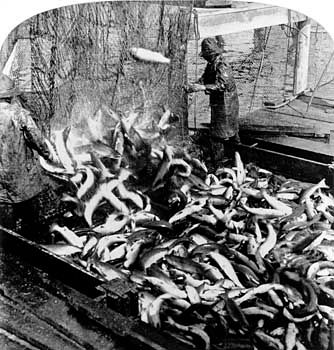
Salmon are of significant economic and recreational importance, serving as a major global fishery and a prized sport fish. Due to their value, governments and private industries invest heavily in their conservation and commercial production.110
Sources
- salmon — Encyclopædia Britannica
- Atlantic salmon — Encyclopædia Britannica
- protacanthopterygian - Distribution and abundance — Encyclopædia Britannica
- 14 Questions About Aquatic Animals Answered - Is it true that a salmon will always return to its birthplace? — Encyclopædia Britannica
- Why do salmon die after spawning? — Encyclopædia Britannica
- protacanthopterygian - Life cycle and reproduction — Encyclopædia Britannica
- Migration - Anadromous fish — Encyclopædia Britannica
- Chemoreception - Homing — Encyclopædia Britannica
- Homing — Encyclopædia Britannica
- protacanthopterygian - Importance — Encyclopædia Britannica
Published on · 4 min read