Big Bend National Park
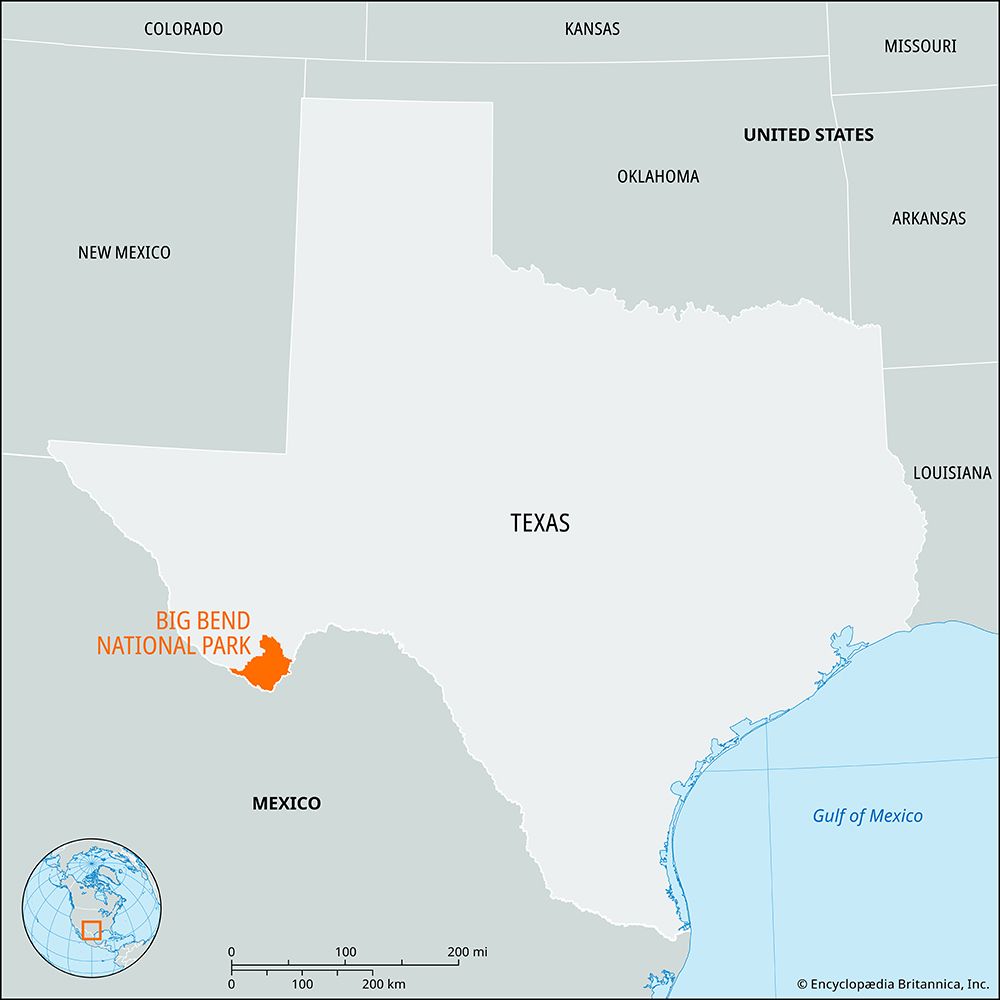
Big Bend National Park, located in southwestern Texas, is defined by a diverse array of geological features and landscapes shaped by the Rio Grande. The…
What are the main geological features and landscapes found in Big Bend National Park?
Big Bend National Park, located in southwestern Texas, is defined by a diverse array of geological features and landscapes shaped by the Rio Grande. The park’s primary environments include:
- Chihuahuan Desert: The park occupies the northern portion of this vast desert, characterized by arid conditions and unique flora such as lechuguilla, yucca, and various cacti.1
- Chisos Mountains: Rising in the center of the park, this rugged mountain system reaches 7,825 feet at Emory Peak. These mountains were formed by the erosion of sedimentary rock, which exposed harder igneous intrusions beneath.12
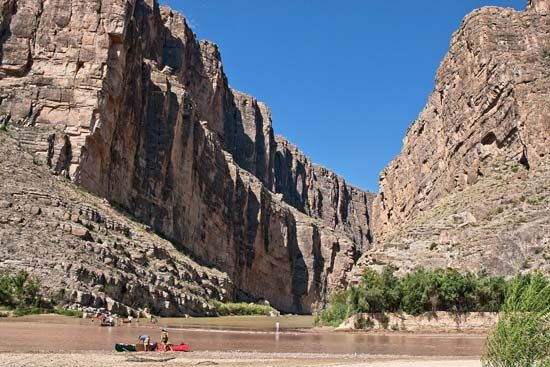
- Deep Canyons: The Rio Grande has carved spectacular, deep canyons—including Santa Elena, Mariscal, and Boquillas—into the surrounding layers of sandstone, limestone, and volcanic rock.13
These features create distinct environmental zones, ranging from the hot, dry desert floor to the cooler, forested elevations of the high Chisos, where juniper, oak, and piñon pine thrive.1
What are some of the most popular activities and attractions for visitors to Big Bend National Park?
Big Bend National Park offers a variety of recreational opportunities centered on its unique desert and mountain landscapes. Popular activities and attractions include:
- River Recreation: Visitors frequently take float trips through the park’s dramatic canyons—specifically Santa Elena, Mariscal, and Boquillas—using canoes, kayaks, or inflatable rafts to navigate the Rio Grande.1
- Scenic Exploration: The park is renowned for its magnificent scenery, which transitions from the arid Chihuahuan Desert floor to the cooler, forested elevations of the Chisos Mountains.1
- Seasonal Sightseeing: Many visitors plan their trips for March and April, when the desert flora, including yucca and various cacti, is in full bloom.1
- Wildlife Viewing: The park is home to diverse species, such as mule deer, coyotes, and mountain lions, which can be observed across its different environmental zones.1
What types of flora and fauna can be found in Big Bend National Park?
Big Bend National Park features three distinct environmental zones, each supporting a unique variety of flora and fauna.
Chihuahuan Desert
The desert floor is home to hardy plants such as ocotillo, yucca, century plant, creosote bush, and lechuguilla, alongside various cacti like the strawberry and prickly pear. Typical wildlife includes mule deer, coyotes, collared peccary, jackrabbits, roadrunners, kangaroo rats, and rattlesnakes.1
Rio Grande Riparian Zone
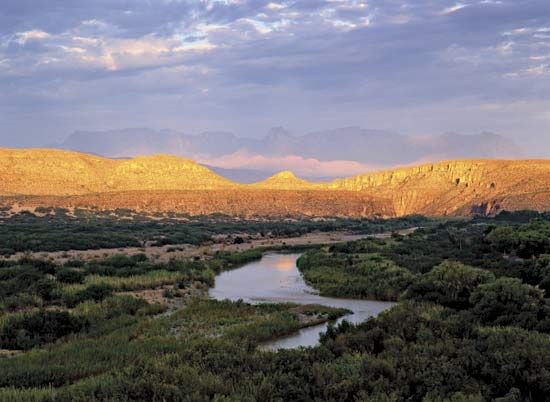
Along the river, the landscape shifts to an oasis environment featuring cottonwood, acacia, willow, and mesquite trees. The water supports beavers and catfish, while birds such as sandpipers, tanagers, cardinals, and cliff swallows are commonly seen.1
Chisos Mountains
At higher elevations, the climate is cooler, allowing for forests of juniper, oak, and piñon pine. Above 4,500 feet, one can also find Douglas firs, quaking aspens, and Arizona cypresses. These mountains provide habitat for white-tailed deer and pumas (mountain lions).1
We could dive deeper into how these specific species have adapted to the park’s extreme temperature fluctuations.
What is the significance of the Rio Grande River to Big Bend National Park?
The Rio Grande is central to the identity and ecology of Big Bend National Park. Its significance is defined by several key factors:
- Geographic Definition: The park is named for the wide bend in the river, which skirts the park’s southern boundary for 118 miles, serving as the international border between the United States and Mexico.1
- Geological Impact: Over time, the river has carved deep, narrow canyons—most notably Santa Elena, Mariscal, and Boquillas—into the region’s layered sandstone, limestone, and volcanic rock.1
- Ecological Oasis: In the midst of the arid Chihuahuan Desert, the river creates a ribbonlike riparian zone. This area supports lush vegetation, including cottonwood, willow, and mesquite trees, and provides a critical habitat for diverse wildlife such as beavers, catfish, and various bird species catfish, and various bird species.1
- Recreational Value: The river is a primary destination for visitors, who frequently engage in float trips via canoe, kayak, or raft to experience the park’s dramatic scenery from the water.1
Sources
- Big Bend National Park — Encyclopædia Britannica
- Chisos Mountains — Encyclopædia Britannica
- Big Bend — Merriam-Webster
- Rio Grande - Physical features — Encyclopædia Britannica
- Rio Grande - The economy — Encyclopædia Britannica
Published on · 3 min read