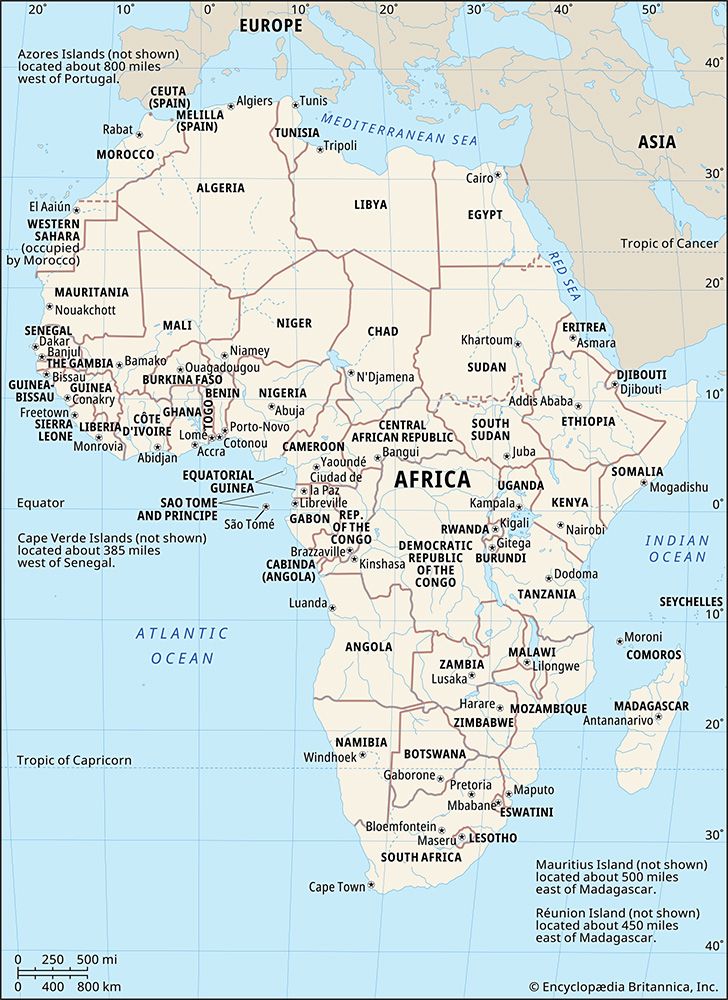
Bight of Biafra
The Bight of Biafra is a bay of the Atlantic Ocean located on the western coast of Africa. It serves as the innermost bay of the Gulf of Guinea and stretches…
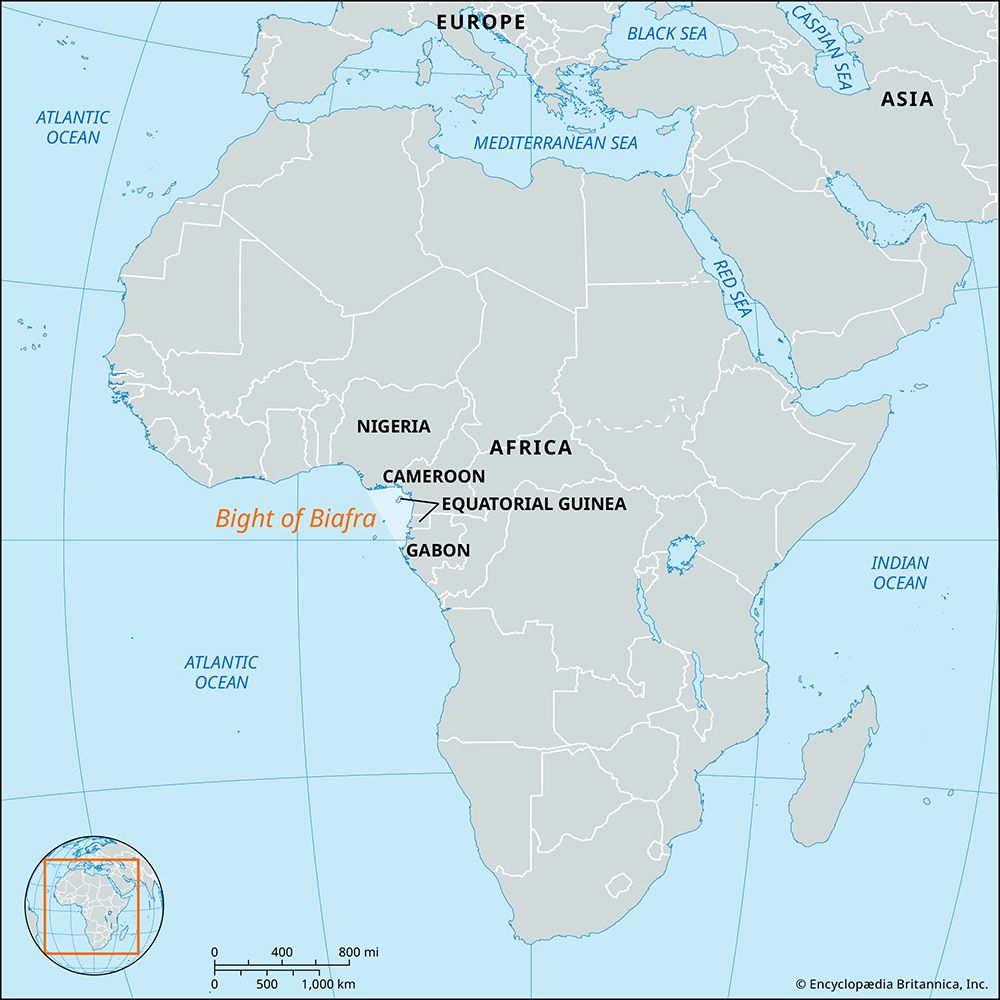
What is the geographical location of the Bight of Biafra in Africa?
The Bight of Biafra is a bay of the Atlantic Ocean located on the western coast of Africa. It serves as the innermost bay of the Gulf of Guinea and stretches approximately 370 miles (600 km) from the Nun outlet of the Niger River in Nigeria to Cape Lopez in Gabon.1
The region is bounded by southeastern Nigeria, Cameroon, Equatorial Guinea, and northwestern Gabon. It features several islands, the most prominent being Bioko, and serves as a vital maritime area for major ports such as Malabo, Port Harcourt, Calabar, Douala, Bata, Libreville, and Port-Gentil and Port-Gentil.1
How has the Bight of Biafra influenced the history and culture of the surrounding regions?
The Bight of Biafra has played a profound role in shaping the history and culture of the surrounding regions, primarily through its function as a major maritime gateway and its subsequent economic and political transformations.
Economic and Historical Impact
From the 16th to the 19th century, the Bight was a central site for extensive transatlantic slave trade operations, particularly through ports such as Bonny, Opobo, and Old Calabar in Nigeria1. This period fundamentally altered local social structures and demographics. By the 1830s, the economy shifted toward the palm oil trade, which became a cornerstone of regional commerce. In the late 1950s, the discovery of petroleum in the Niger River delta further transformed the region, making it a critical economic hub for the modern state.1
Political and Cultural Identity
The region is deeply associated with the Igbo people, whose ethnic identity solidified significantly during the colonial era in response to British rule and social changes. This sense of identity culminated in the 1967 declaration of the independent Republic of Biafra, leading to the Nigerian Civil War2. The war, which resulted in immense human suffering and loss, remains a defining event in the collective memory of the region, influencing contemporary political discourse and the diaspora of the Igbo people.23
What role did the Bight of Biafra play in the trans-Atlantic slave trade?
Between the 16th and 19th centuries, the Bight of Biafra served as a major center for transatlantic slave trade operations. The trade was primarily facilitated through coastal city-states that functioned as entrepôts, most notably Brass, Bonny, Opobo, and Calabar in present-day Nigeria.15
These coastal communities organized themselves into trading hubs to avoid becoming victims of the slave trade themselves. They were supplied with enslaved people by various inland groups, including the Igbo people, who lived in decentralized societies. The impact of this commerce was devastating, causing severe economic and political instability, intercommunal conflict, and the forced migration of millions of people. By the 18th century, the demand for overseas trade even prompted the emergence of monarchical structures within the delta city-states. The slave trade remained the dominant economic activity in the region until the 1830s, when it was eventually surpassed by the palm oil trade.51
What are the main economic activities associated with the Bight of Biafra?
The economic history and current activities associated with the Bight of Biafra have evolved significantly over time, shifting from historical trade practices to modern industrial resource extraction.
Historical Economic Activities
- Slave Trade: From the 16th to the 19th century, the region was a primary site for extensive transatlantic slave trade operations, centered around major ports such as Brass, Bonny, Opobo, and Calabar.1
- Palm Oil Trade: By the 1830s, the trade in palm oil surpassed slave trading in importance, becoming a vital component of the regional economy.1
Modern Economic Activities
- Petroleum Extraction: Since its discovery in the late 1950s, petroleum has become a major economic resource in the Niger River delta.1
- Fishing: While fishing remains a traditional and essential occupation along the river system, the exploitation of petroleum has caused significant environmental disruption. Oil pollution in the delta region has severely impacted fish populations, undermining the traditional livelihoods of local groups such as the Ijo people.6
Sources
- Bight of Biafra — Encyclopædia Britannica
- Nigerian Civil War — Encyclopædia Britannica
- Igbo — Encyclopædia Britannica
- Gulf of Guinea — Encyclopædia Britannica
- history of Nigeria - Igboland and the delta city-states — Encyclopædia Britannica
- Niger River - People and economy — Encyclopædia Britannica
Published on · 3 min read