Biscayne National Park
Biscayne National Park is located off the southeastern coast of Florida, approximately 20 miles south of Miami.
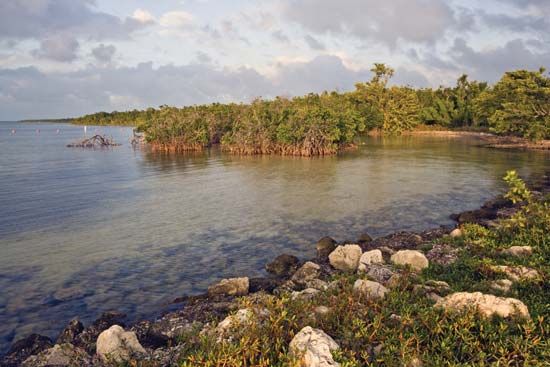
Where is Biscayne National Park located, and what makes it unique among U.S. national parks?
Biscayne National Park is located off the southeastern coast of Florida, approximately 20 miles south of Miami.1
The park is uniquely distinguished by its aquatic composition: 95 percent of its 270-square-mile area is water. It serves as a vital protected area for the northernmost living coral reefs in the United States. The park’s diverse ecosystem encompasses a range of distinct environments, including:1
- Mangrove Shorelines: An almost impenetrable swamp that provides essential shelter for various wildlife.1
- Biscayne Bay: A shallow inlet featuring sea grass beds that support manatees, sea turtles, and numerous fish species.12
- Florida Keys: A chain of approximately 33 islands featuring tropical hardwood forests.1
- Atlantic Reefs: Underwater habitats home to over 200 types of fish and diverse coral species, such as elkhorn and staghorn.1
What are the main ecosystems and habitats found within Biscayne National Park?
Biscayne National Park, which is 95 percent water, encompasses four primary ecosystems that support a diverse array of marine and terrestrial life:1
- Mangrove Shorelines: Located along the park’s western mainland boundary, this nearly impenetrable mangrove swamp provides critical shelter for various birds, mammals, and marine species.1
- Biscayne Bay: This shallow inlet, with a maximum depth of about 12 feet, features extensive sea grass beds. These beds serve as essential habitats for manatees, sea turtles, shrimp, lobsters, and numerous fish.13
- Florida Keys: The park includes a chain of approximately 33 islands that separate the bay from the Atlantic Ocean. While their edges are fringed with mangroves, the interiors of these keys are characterized by tropical hardwood forests containing trees and shrubs common to the West Indies.1
- Atlantic Coral Reefs: Situated to the east of the keys, these shallow-water reefs are the northernmost living coral reefs in the United States. They host a variety of corals—such as elkhorn, brain, and staghorn—and support more than 200 species of fish, including wrasse, angelfish, and goby.1
What are some of the most significant wildlife species that can be found in Biscayne National Park?
Biscayne National Park supports a rich diversity of wildlife across its varied marine and terrestrial habitats. The park’s ecosystems provide essential shelter and breeding grounds for numerous species, including:
- Marine Mammals and Reptiles: The shallow waters of Biscayne Bay and the surrounding sea grass beds are vital habitats for manatees and sea turtles.12
- Fish: The park’s coral reefs host more than 200 types of fish, including colorful species such as wrasse, angelfish, and goby.1
- Invertebrates: The bay and reef environments are home to various shellfish, including shrimp and lobsters.12
- Birds and Terrestrial Life: The dense mangrove swamps along the shoreline and the tropical hardwood forests on the Florida Keys provide critical shelter for a wide variety of birds and other land-dwelling animals.12
We could dive deeper into the specific conservation challenges these species face within the park.
What role does Biscayne National Park play in preserving Florida’s cultural heritage?
The provided search results do not contain information regarding the role of Biscayne National Park in preserving Florida’s cultural heritage. The available documentation focuses primarily on the park’s geography, ecosystems, and marine life.
Sources
- Biscayne National Park — Encyclopædia Britannica
- Biscayne Bay — Encyclopædia Britannica
- Florida Keys — Encyclopædia Britannica
Published on · 2 min read