Boer
The Boer is widely considered the most productive meat goat in the world. While other breeds, such as the Cashmere, are raised for multiple purposes…
How does the Boer goat’s meat quality compare to other goat breeds?
The Boer is widely considered the most productive meat goat in the world. While other breeds, such as the Cashmere, are raised for multiple purposes including meat, wool, and milk, the Boer is specifically prized for its superior carcass quality.12
The breed is distinguished by its large, stocky frame and rapid weight gain, traits that make it highly efficient for meat production. These desirable characteristics are so robust that they can be passed on to offspring even when Boer bucks are crossbred with does of other breeds. While the provided data confirms the Boer’s status as the premier meat-producing breed, it does not offer a direct comparative analysis of the specific chemical or culinary properties of its meat against other individual breeds.12
How does the milk production of Boer goats compare to dairy goat breeds?
The Boer goat is primarily bred and valued as the world’s most productive meat goat, characterized by its large frame and rapid weight gain. In contrast, breeds such as the Saanen, Toggenburg, Nubian, Oberhasli, and LaMancha are specifically categorized as dairy breeds, noted for their suitability for milk production.123
While the provided information identifies the Boer as a meat-focused breed and lists various other breeds for their dairy utility, it does not contain specific data comparing the milk production volume or quality of Boer goats to these dairy-specific breeds.123
How have Boer goats been used in crossbreeding programs to improve other goat breeds?
The Boer goat is highly valued in crossbreeding programs because its superior traits—including large size, rapid weight gain, carcass quality, hardiness, and docility—are effectively passed on to offspring when Boer bucks are mated with does of other breeds.1
By introducing Boer genetics into different herds, breeders can significantly improve the meat production potential of their stock. While the Boer breed itself was originally developed by Afrikaner farmers through the crossing of various European and Indian breeds with those raised by Bantu and Khoekhoe peoples, its modern role is primarily that of a genetic improver for meat-focused operations globally. The provided information does not detail specific outcomes for individual breeds improved through these programs, but the breed’s widespread use in countries like the United States, New Zealand, and across southern Africa underscores its impact on global livestock production.1
What are the distinguishing physical characteristics of Boer goats?
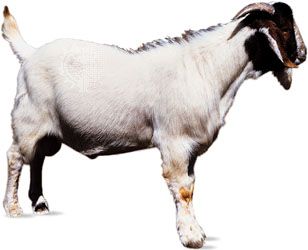
The Boer goat is a distinctively large and stocky animal, recognized globally as the premier breed for meat production. According to the standards established by the South African Boer Goat Breeders’ Association, the most-prized individuals exhibit the following physical characteristics:
- Coloration: They typically feature a white body contrasted by a red head.
- Head and Eyes: They possess brown eyes and are characterized by lop (downward-hanging) ears.
- Horns: The breed features backward-curving horns.
- Build: They are large, stocky animals supported by strong, well-placed legs.
- Size: The breed is notable for its significant weight; adult males can reach up to 160 kg (350 pounds), while females can weigh as much as 110 kg (about 250 pounds).12
These physical traits, combined with their hardiness and docility, contribute to the breed’s reputation for high carcass quality and rapid growth rates.1
Sources
- Boer — Encyclopædia Britannica
- Goat breeds — Encyclopædia Britannica
- Livestock farming - Goats — Encyclopædia Britannica
Published on · 2 min read