Saanen
The Saanen is a popular breed of dairy goat that originated in the Saanen Valley of Switzerland. Known for being a consistent and persistent milk producer…
What is Saanen?
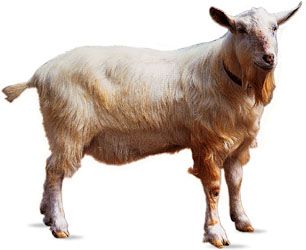
The Saanen is a popular breed of dairy goat that originated in the Saanen Valley of Switzerland. Known for being a consistent and persistent milk producer, the breed is highly valued in both Europe and the United States.12
Physically, the Saanen is a medium-to-large animal with a straight or dished face and erect ears. They are typically white or cream-coloured with short hair and are generally hornless. An adult Saanen typically weighs approximately 65 kg (143 pounds). Like other goat breeds, their milk is noted for being more easily digestible than cow’s milk. They are classified among the “prick-eared” group of Swiss goats, which are primarily utilized for small-scale milk production.132
What are the main differences between dairy goats and meat goats?
The primary differences between dairy and meat goats lie in their physical characteristics, breeding goals, and intended utility.
Dairy Goats
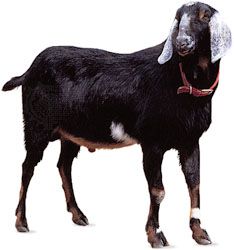
Dairy breeds, such as the Saanen, Toggenburg, and Nubian, are specifically selected for consistent and persistent milk production.41
- Utility: They are highly valued for small-scale milk production, often providing enough for a family throughout the year in spaces where keeping a cow would be impractical.45
- Characteristics: Many dairy breeds, particularly those of Swiss origin, are categorized as “prick-eared” (having erect ears).34
- Milk Quality: Goat milk is noted for being more easily digestible than cow’s milk, making it a preferred choice for infants, invalids, and those with allergies.34
Meat Goats
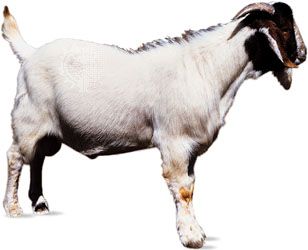
Meat breeds, most notably the Boer, are bred for rapid weight gain, carcass quality, and overall size.6
- Utility: These goats are prized for their hardiness and ability to produce meat efficiently.6
- Characteristics: Meat goats like the Boer are typically stocky, large-framed animals with lop (downward-hanging) ears and horns.6
- Reproduction: Meat breeds are often selected for high fertility; for example, Boer does are known for kidding frequently, often bearing twins or triplets.6
How does goat milk compare to cow milk in terms of nutrition?
Goat milk and cow milk share a similar overall nutrient composition, but they differ in several key characteristics that affect digestion and physical properties.
Nutritional Comparison (per 100 g)
Nutrient
Cow Milk
Goat Milk
Energy (kcal)
61
69
Fat (g)
3.34
4.14
Protein (g)
3.29
3.56
Calcium (mg)
119
134
Phosphorus (mg)
93
111
Carbohydrate (g)
4.66
4.45
Cholesterol (mg)
14
11
Key Differences
- Digestibility: Goat milk curd forms into small, light flakes in the stomach, making it more easily digested than cow milk. Because of this, it is often recommended for individuals with allergies to cow milk proteins or those with certain stomach conditions like ulcers.7
- Physical Properties: The fat globules in goat milk are smaller than those in cow milk, allowing them to remain suspended naturally. Consequently, the cream does not rise to the top, and mechanical homogenization is unnecessary for goat milk.7
- Appearance: Goat milk is completely white because the animal converts all ingested beta-carotene into vitamin A, whereas cow milk may retain a yellowish tint.7
What are some other popular breeds of dairy goats?
Beyond the well-known Saanen, Toggenburg, and Nubian breeds, there are several other notable dairy goat breeds:
- LaMancha: Developed in the United States, this breed is easily identified by its unique, extremely short ears, known as “gopher ears” (up to 1 inch) or “elf ears” (up to 2 inches). They are considered a hardy, docile breed that produces milk high in both fat and protein.9110
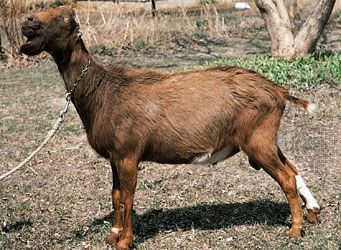
- Oberhasli: Originating from the Bern canton of Switzerland, this medium-sized breed is recognized by its distinctive “chamoisée” coat—a deep reddish-bay color accented with black markings on the face, belly, and legs. They are known for being alert and reliable milk producers.153
These breeds, along with the Swiss-derived varieties, are widely valued for their ability to provide consistent milk production, making them excellent choices for small-scale dairy farming.11105
Sources
- Saanen — Encyclopædia Britannica
- Saanen — Merriam-Webster
- Goat breeds — Encyclopædia Britannica
- Boer — Encyclopædia Britannica
- Livestock farming - Goats — Encyclopædia Britannica
- Goat — Encyclopædia Britannica
- milk — Encyclopædia Britannica
- dairy product - Nutrient composition — Encyclopædia Britannica
- LaMancha — Encyclopædia Britannica
- Toggenburg — Encyclopædia Britannica
- mountain goat — Encyclopædia Britannica
- Oberhasli — Encyclopædia Britannica
Published on · 3 min read