Shire
Sorry, the Britannica knowledge base does not contain information regarding the average lifespan of a Shire horse.
How long is the average lifespan of a Shire horse?
Sorry, the Britannica knowledge base does not contain information regarding the average lifespan of a Shire horse.
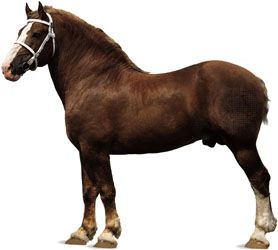
How are Shire horses used in modern equestrian sports or activities?
While the Shire horse was historically developed as a powerful draft animal for farm work and as a medieval war horse, its role in modern society has shifted significantly.12
Because these horses have been almost entirely replaced by tractors for agricultural labor, they are no longer commonly used for their original heavy-duty purposes. Today, many heavy draft breeds, including the Shire, are considered rare or endangered. Consequently, they are rarely seen in modern competitive equestrian sports, which typically favor lighter, more agile breeds. Instead, their presence is largely maintained through preservation efforts and their role as a living link to agricultural history.21
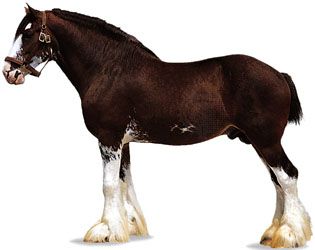
What are the defining physical characteristics of the Shire horse breed?
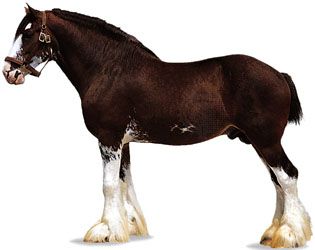
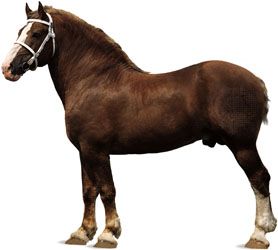
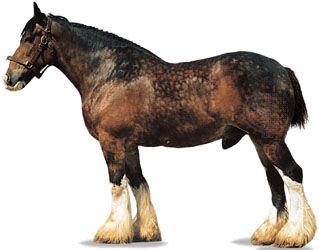
The Shire horse is recognized as the world’s largest horse breed, characterized by a massive and somewhat coarse build. Its defining physical features include:13
- Height and Weight: Stallions average slightly more than 17 hands (68 inches, or 173 cm) in height, though some individuals can reach 19 hands. They are capable of weighing as much as 2,000 pounds (about 900 kg).1
- Conformation: The breed possesses a convex profile, a relatively long neck, and long, sloping shoulders. They have a short back paired with a sloping croup.13
- Legs and Coat: A signature trait of the Shire is the presence of “feather”—considerable hair found on the legs below the knee. Their coats are typically bay, brown, black, gray, or chestnut.13
These horses are descendants of the English “great horse,” the massive charger historically used in medieval jousting tournaments to carry knights in heavy armor.13
What were Shire horses traditionally used for, and how has their role changed in modern times?
Traditionally, the Shire horse descended from the English “great horse,” a massive charger used in the Middle Ages to carry knights in heavy armor into battle. By the late 18th century, the breed was further refined to serve as a powerful draft animal for agricultural labor and heavy hauling.14
In modern times, the role of the Shire horse has changed drastically. With the advent of mechanized farming, these horses have been almost entirely replaced by tractors, rendering them largely obsolete for their original heavy-duty purposes. Today, the breed is considered rare and endangered, and they are no longer commonly used for labor or competitive equestrian sports. Their current presence is primarily maintained through preservation efforts, serving as a living connection to agricultural history rather than as working animals.41
Sources
- Shire — Encyclopædia Britannica
- horse - Heavy breeds — Encyclopædia Britannica
- horse - Heavy breeds — Encyclopædia Britannica
- military technology - The war-horse — Encyclopædia Britannica
- shire — Merriam-Webster
Published on · 2 min read