Boise National Forest
Boise National Forest is home to several significant river systems and water bodies that serve as vital natural resources for the region.
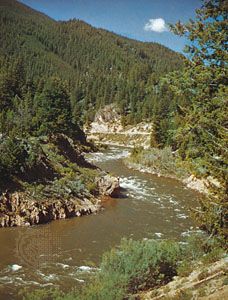
What are the major rivers and water bodies within Boise National Forest?
Boise National Forest is home to several significant river systems and water bodies that serve as vital natural resources for the region.
Major Rivers
The forest serves as the headwaters for numerous important waterways, including:
- Boise River: All three forks (North, Middle, and South) originate within the forest. The river is formed by the confluence of the Middle and North forks southeast of Idaho City.12
- Payette River: Formed by the confluence of the North and South forks near the village of Banks within the forest. The Middle Fork Payette River also has its source in the forest.31
- Salmon River: Both the Middle Fork and South Fork Salmon rivers originate in the forest.1
Reservoirs and Water Bodies
Several reservoirs are located within or associated with these river systems, primarily managed for irrigation and recreation:
- Boise River System: Includes the Arrowrock, Lucky Peak, and Anderson Ranch (on the South Fork) reservoirs.2
- Payette River System: Includes the Black Canyon Reservoir on the Payette and the Cascade Dam and Reservoir on the North Fork.3
What are the main geographical features and ecosystems found in Boise National Forest?
Boise National Forest, located in southwestern Idaho, is a vast expanse of coniferous forest characterized by rugged, mountainous terrain.1
Geographical Features
The landscape is predominantly steep and mountainous, featuring the Sawtooth Range across much of its area. Elevations vary significantly, with the highest point being Big Baldy at 9,722 feet (2,963 meters) above sea level. The forest is divided into two distinct segments separated by the valley of the North Fork Payette River. It also encompasses portions of the Frank Church–River of No Return Wilderness and the Sawtooth Wilderness Area.1
Ecosystems and Wildlife
The forest supports a diverse ecosystem dominated by tree species such as ponderosa and lodgepole pine, Douglas and grand fir, and Engelmann spruce. Its rivers and lakes sustain populations of trout and salmon. The region is home to a variety of mammals, including deer, elk, bobcats, lynx, wolves, bears, and otters.1
What are some of the most significant landmarks or attractions within Boise National Forest?
Boise National Forest offers a variety of significant landmarks and attractions, ranging from rugged wilderness areas to sites of historical interest.
Wilderness and Natural Attractions
- Wilderness Areas: The forest encompasses portions of the Frank Church–River of No Return Wilderness and the Sawtooth Wilderness Area. These areas are kept virtually roadless and are popular for their pristine natural beauty, though the Frank Church wilderness contains several remote airstrips.1
- Recreational Hubs: The forest is a premier destination for outdoor activities, including fishing, hunting, and hiking. Rafting on the Middle Fork Salmon River is a notable attraction.1
- Winter Sports: The Bogus Basin Ski Resort, located 16 miles north of Boise, serves as a major center for winter sports.1
Historical Sites
- Ghost Towns and Mining History: Following the 1862 gold rush, numerous mining communities were established throughout the forest. While many have faded, several remain as ghost towns that attract tourists interested in the region’s frontier history.14
- Idaho City: Once a booming gold-mining town, Idaho City is a significant historical landmark within the forest. Visitors can explore surviving relics such as the Masonic Hall, St. Joseph’s Catholic Church, the Boise Basin Museum, and Boot Hill Cemetery.5
How does Boise National Forest impact the local economy of nearby communities?
Boise National Forest has played a foundational role in the economic development of southwestern Idaho since the mid-19th century. Its impact on local communities is primarily driven by resource extraction and the recreation industry.
Historical and Industrial Contributions
Following the 1862 gold rush, the forest supported the establishment of numerous mining communities. As mineral deposits were depleted, many of these sites transitioned into hubs for lumbering and livestock grazing. Historically, the harvesting of ponderosa pine and sheep ranching were vital to the regional economy, and logging remains an active and important use of the forest today.1
Recreation and Tourism
The forest serves as a significant recreational asset, which bolsters the local economy through tourism and service-related activities:
- Outdoor Recreation: The forest is a popular destination for fishing, hunting, hiking, and rafting, drawing visitors who support local businesses.1
- Winter Sports: The Bogus Basin Ski Resort, located near the city of Boise, acts as a major center for winter sports, contributing to regional tourism.1
- Heritage Tourism: Abandoned mines and ghost towns within the forest attract visitors interested in the area’s frontier history, providing additional economic opportunities for nearby communities.14
Sources
- Boise National Forest — Encyclopædia Britannica
- Payette River — Encyclopædia Britannica
- Boise River — Encyclopædia Britannica
- Boise — Encyclopædia Britannica
- Idaho City — Encyclopædia Britannica
Published on · 3 min read