Brisbane River
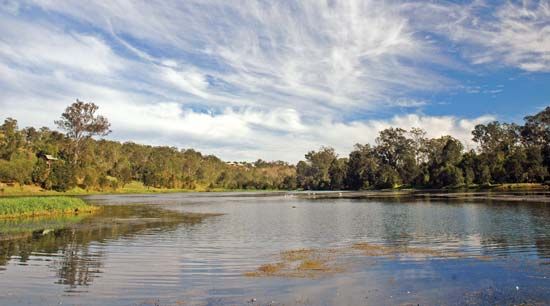
The Brisbane River is a vital artery for Queensland, serving as both a functional economic hub and a central feature of the state's urban lifestyle.
How does the Brisbane River contribute to the economy and lifestyle of Queensland?
The Brisbane River is a vital artery for Queensland, serving as both a functional economic hub and a central feature of the state’s urban lifestyle.
Economic Significance
The river is essential to the economy of Brisbane, the state capital. As a major port city, Brisbane relies on the river for trade; the port can accommodate large vessels, facilitating the export of commodities such as wool, grains, dairy, meat, sugar, and mineral sands. Historically, the river enabled the city to emerge as a leading port, and it remains a critical link for the metropolitan area, which houses over half of Queensland’s manufacturing capacity, including oil refineries and engineering works.1
Lifestyle and Culture
The river is a focal point for the city’s social and cultural life. It is crossed by numerous bridges and served by ferries, which have been a part of the city’s transit landscape since 1843. The riverbanks host significant cultural institutions, most notably the Queensland Cultural Centre, which overlooks the water and houses the state’s art gallery, museum, and library.213
How does the Brisbane River impact flood management and urban planning in the city of Brisbane?
The Brisbane River has historically presented significant challenges to urban planning and flood management in Brisbane. The city has experienced several catastrophic flood events, most notably in 1893, 1974, and again in early 2011, when heavy rains caused the river to overflow and inundate numerous riverside communities.13
These recurring flood risks have necessitated long-term infrastructure planning to mitigate disaster impacts. For instance, the construction of the Somerset Dam on the Stanley River—a major tributary of the Brisbane—was a significant capital project undertaken to help manage water flow and provide flood protection for the region. Additionally, the city relies on other water infrastructure, such as the Mount Crosby Weir and Lake Manchester, to support its water supply needs while balancing the complexities of managing a river system prone to extreme weather events.53
The ongoing challenge of balancing urban development with the river’s natural flood cycles remains a critical component of Brisbane’s municipal governance and regional planning strategies.35
What indigenous peoples lived along the Brisbane River before European settlement?
The provided search results do not contain specific information regarding the names or identities of the indigenous peoples who lived along the Brisbane River prior to European settlement. While the records confirm that Australian Aboriginal peoples have inhabited the region for approximately 50,000 years, the available documentation focuses primarily on the history of European exploration, the establishment of the penal settlement, and the geography of the river itself.16
Sorry, the Britannica knowledge base does not contain this information.
How was the Brisbane River formed geologically, and what are its main tributaries?
The provided search results do not contain information regarding the geological formation of the Brisbane River.
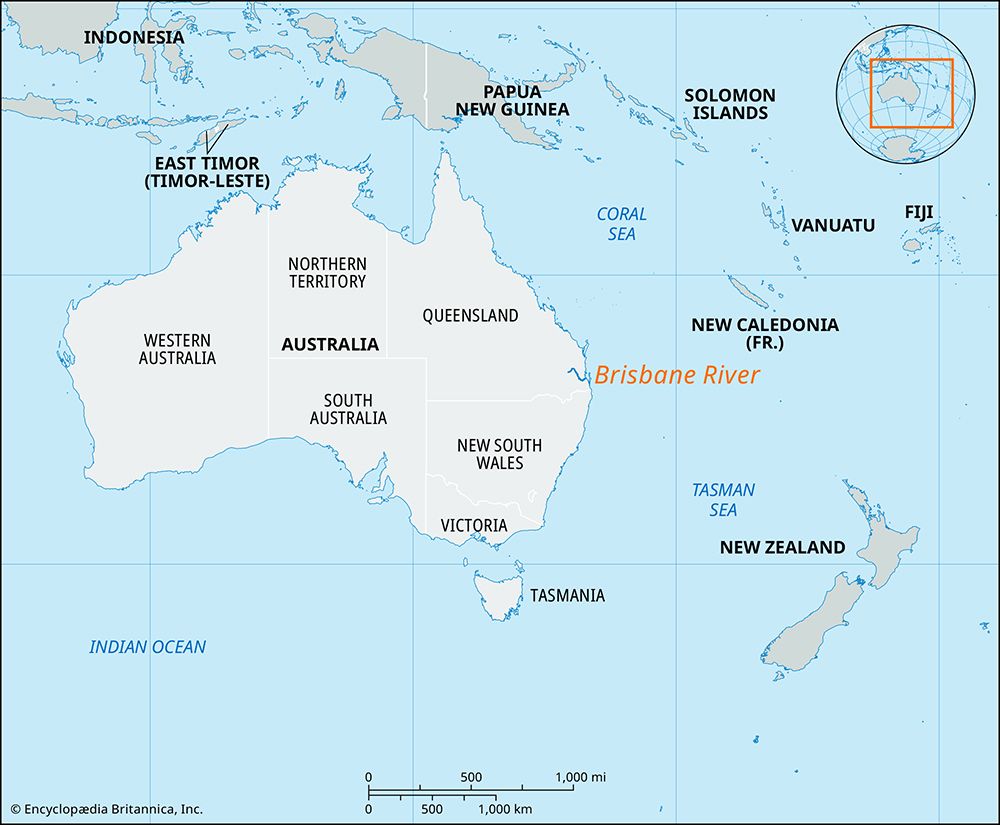
Regarding its geography, the river rises in the Brisbane-Cooyar ranges and flows approximately 215 miles (345 km) in a southeasterly and northeasterly direction through a farming and dairying region before passing through the city of Brisbane and emptying into Moreton Bay. Its primary tributaries are the Stanley River, the Bremer River, and Lockyer Creek.1
Sources
- Brisbane River — Encyclopædia Britannica
- Queensland - Cultural life — Encyclopædia Britannica
- Brisbane — Encyclopædia Britannica
- Queensland - Transportation — Encyclopædia Britannica
- Queensland - Federation and the state of Queensland — Encyclopædia Britannica
- Queensland - Early exploration and settlement — Encyclopædia Britannica
- Moreton Bay — Encyclopædia Britannica
Published on · 2 min read