Bull Terrier
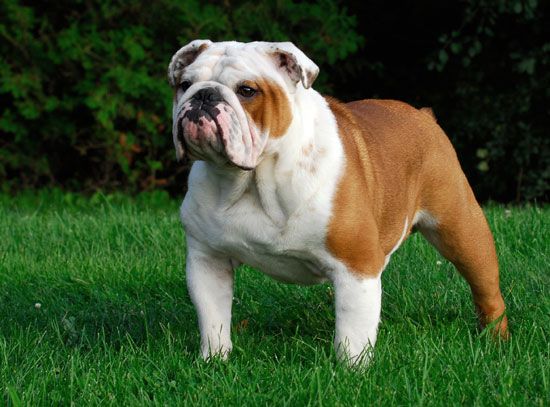
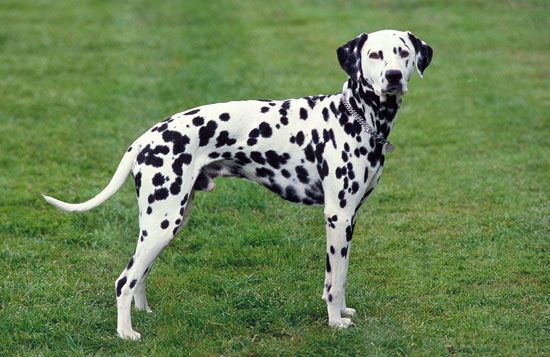
The Bull Terrier was developed in 19th-century England by crossing the Bulldog, the now-extinct White English Terrier, and the Dalmatian. Other breeds, such…
How did the Bull Terrier breed originate, and what was its original purpose?
The Bull Terrier was developed in 19th-century England by crossing the Bulldog, the now-extinct White English Terrier, and the Dalmatian. Other breeds, such as the Greyhound, foxhound, and Spanish pointer, may also have contributed to its development.1
Originally, the breed was created for the dogfighting pits, where it served as a courageous fighter. However, by the late 1800s, breeders shifted their focus toward refining the dog’s traits to transform it into a fashionable companion for gentlemen. While modern Bull Terriers are generally sweet, loyal, and playful, they retain a strong, muscular build and can still exhibit aggression toward other animals, reflecting their historical origins.1
What are some variations within the Bull Terrier breed, such as size or color?
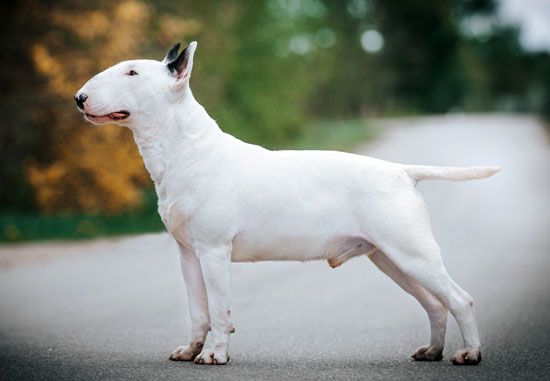
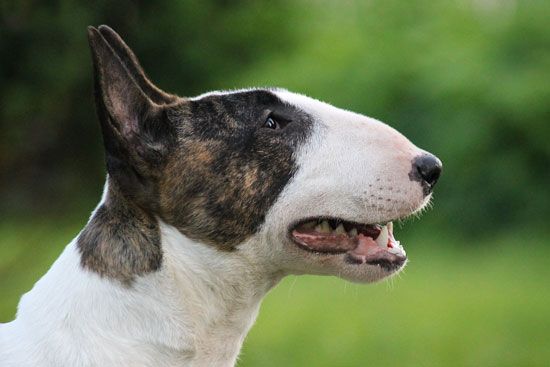
The Bull Terrier breed is primarily categorized by two distinct sizes, each sharing similar physical traits such as a muscular build, erect ears, and a distinctive egg-shaped head.13
Size Variations
- Standard Bull Terrier: This size stands approximately 21–22 inches (53–56 cm) at the withers and typically weighs between 50 and 70 pounds (23–32 kg).1
- Miniature Bull Terrier: Recognized as a separate breed, the miniature variety is significantly smaller, standing 10–14 inches (25–35 cm) and weighing between 24 and 33 pounds (11–15 kg).13
Color Variations
In both the standard and miniature sizes, the coat can appear in two main color categories:1
- White: This includes dogs that are all white or white with darker markings on the head. It is worth noting that the white-coated variety is especially prone to deafness.1
- Colored: This category includes any color other than white, such as brindle. In colored Bull Terriers, hearing issues are typically limited to one ear.1

What are the typical temperament and personality traits of Bull Terriers?
The Bull Terrier is widely recognized for its distinct and engaging personality. While the breed was originally developed for the dogfighting pits, selective breeding in the late 1800s transformed it into a companion animal, resulting in a temperament that is generally sweet, good-natured, and affectionate.1
Key personality traits of the Bull Terrier include:
- Energetic and Exuberant: These dogs are highly active and thrive when paired with owners who lead an active lifestyle.1
- Playful and Comical: They are often described as clownish, mischievous, and fun-loving, frequently engaging in playful behavior.1
- Stubborn: Like many terrier breeds, they can be independent and stubborn, which may require consistent training.12
- Loyal and Huggable: They are known for being deeply attached to their human companions.1
- Social Dynamics: While they are generally friendly with people, they can be aggressive toward other dogs. Consequently, they are often not considered ideal candidates for dog parks.1
- Watchful: They can serve as effective watchdogs, though they are generally considered only fair at providing protection.1
It is important to note that these traits are generalizations, and individual temperaments can vary.1
What are some common health concerns associated with Bull Terriers?
Bull Terriers are generally considered a healthy breed, but they are susceptible to several specific health conditions that owners should monitor.
Common Health Concerns
- Hearing Issues: This is a notable concern for the breed. White-coated Bull Terriers are especially prone to deafness, while in colored varieties, hearing loss is typically limited to one ear. It is important to screen puppies for hearing issues to ensure that any lack of responsiveness is not mistaken for disobedience.1
- Joint and Heart Health: The breed may experience patellar luxation, a condition where the kneecap becomes dislocated. Additionally, they are susceptible to mild heart issues.1
- Kidney Health: Kidney failure is also a recognized health concern for the breed.1
Beyond these specific ailments, Bull Terriers are sensitive to extreme temperatures and do not tolerate excessive heat or cold well. Regular veterinary checkups are essential for maintaining their overall well-being throughout their 12–13 year life span.1
Sources
- Bull Terrier — Encyclopædia Britannica
- terrier — Encyclopædia Britannica
- dog - Terriers — Encyclopædia Britannica
Published on · 3 min read