Dalmatian
The Dalmatian is a unique breed with a fascinating history and distinct physical traits. Here are some interesting facts about their development and…
What are some interesting facts about Dalmatian puppies and their spots?
The Dalmatian is a unique breed with a fascinating history and distinct physical traits. Here are some interesting facts about their development and appearance:
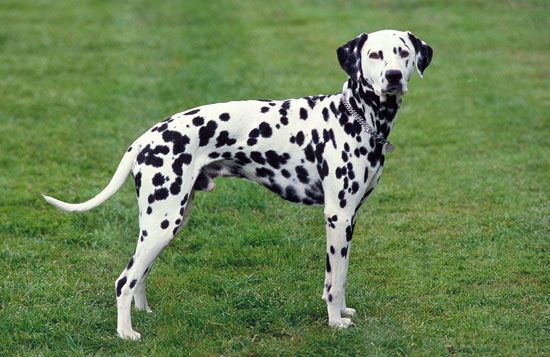
- Born White: Contrary to popular belief, Dalmatian puppies are born completely white. Their signature dark spots do not appear at birth but instead develop a few weeks later.1
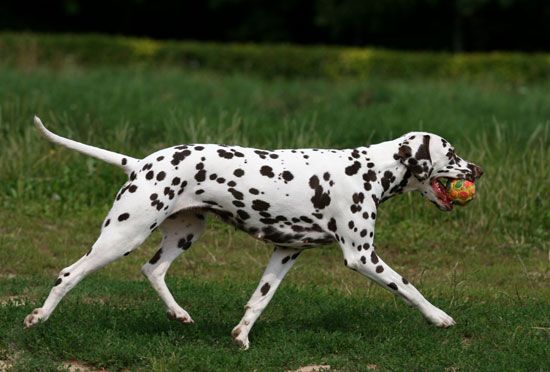
- Historical Roles: Known as a coach or carriage dog, the breed was historically used to escort and guard horse-drawn vehicles. Their natural affinity for horses also led to their long-standing association with firefighters, where they would run alongside fire wagons to keep horses calm and guard equipment at the scene of a blaze.1
- High Energy: Because they were bred to run for miles alongside carriages, these dogs require significant daily exercise, such as long jogs or hikes, to remain healthy and well-behaved.1
How did Dalmatians become associated with firefighters and fire stations?
The association between Dalmatians and firefighters originated in the 1800s when fire wagons were pulled by horses. Dalmatians were uniquely suited for this role due to their natural affinity for horses, which allowed them to run alongside the wagons to keep the horses calm and clear a path to the fire scene.2
Beyond their role as companions, Dalmatians served as essential guardians. Their alertness and protective instincts made them effective watchdogs, ensuring that fire equipment remained secure from theft or tampering while firefighters were occupied with their duties.2
Even after the transition from horse-drawn wagons to modern motorized fire trucks, the tradition of keeping Dalmatians in firehouses has persisted as a tribute to their historical service.2
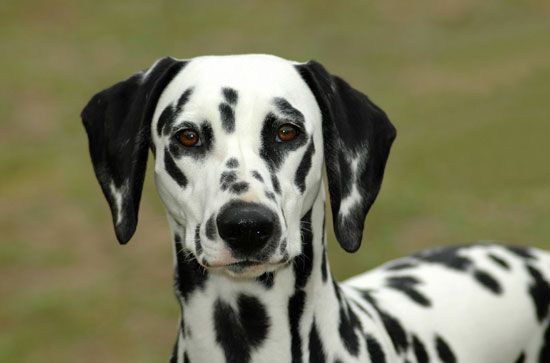
What are the distinctive physical characteristics of Dalmatian dogs?
The Dalmatian is a sleek, symmetrically built, and short-haired dog breed. Its most recognizable physical characteristic is its white coat marked with dark spots. Notably, these spots are not present at birth; puppies are born entirely white, and their distinctive markings develop over the course of a few weeks.1
In terms of physical dimensions, the breed typically conforms to the following standards:
Beyond their coat and size, Dalmatians are known for their athletic build, which reflects their historical role as a coach or carriage dog capable of running for miles alongside horse-drawn vehicles. While they are generally even-tempered, potential owners should be aware that the breed has a high rate of hereditary deafness and a genetic predisposition to forming kidney stones due to an inability to properly metabolize uric acid.1
How did Dalmatians get their name and what is their historical origin?
The Dalmatian breed derives its name from the Adriatic coastal region of Dalmatia, located in modern-day Croatia, which is recognized as the breed’s first definite home.1
While the name points to this specific geographic origin, the true historical roots of the breed remain unknown. Throughout history, the Dalmatian has been a versatile working dog, serving in various capacities including as a sentinel, war dog, hunter, shepherd, and performer. It is most famously associated with its historical role as a coach or carriage dog, where it functioned as an escort and guard for horse-drawn vehicles.1
Sources
- Dalmatian — Encyclopædia Britannica
- Why are Dalmatians firefighter dogs? — Encyclopædia Britannica
Published on · 2 min read