Coco De Mer
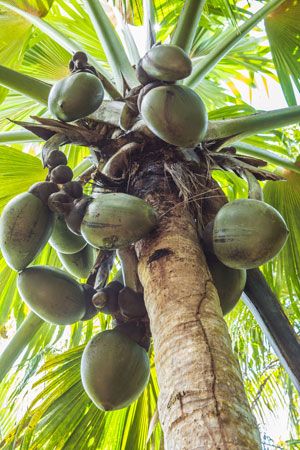
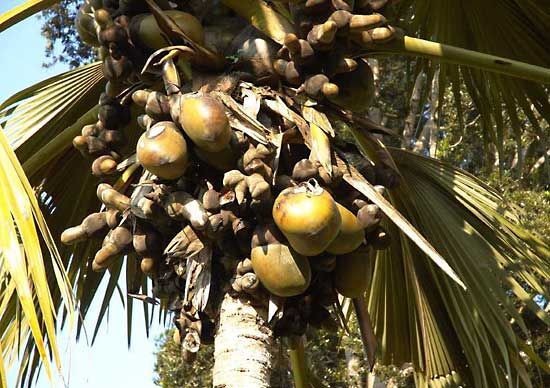
The coco de mer (Lodoicea maldivica), also known as the double coconut or sea coconut, is a tall, slow-growing palm that is endangered. It is exclusively…
What is the coco de mer plant and where is it native to?
The coco de mer (Lodoicea maldivica), also known as the double coconut or sea coconut, is a tall, slow-growing palm that is endangered. It is exclusively native to the Seychelles Islands in the Indian Ocean.12
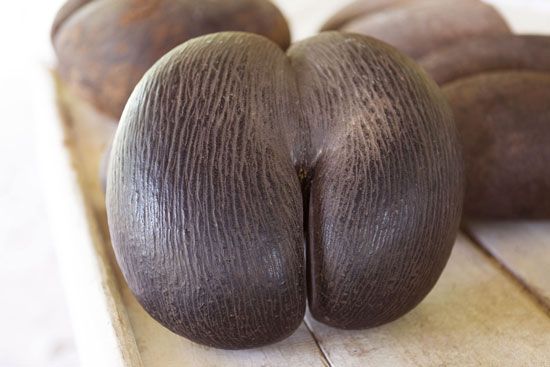
The plant is most famous for producing the largest and heaviest seed in the world, which can weigh up to 50 pounds (23 kilograms). These seeds are typically two-lobed, giving them a distinct shape, and they take approximately 10 years to ripen. The palm also features large, fan-shaped leaves that have historically been used for thatching, while the hard shells of the fruit are sometimes crafted into platters and water vessels. Because the male and female flowers grow on separate plants, the species is dioecious.12
How is the coco de mer plant protected, and what conservation efforts are in place?
The coco de mer is protected through strict government oversight and the establishment of dedicated nature reserves. Because the palm is found on only two islands, the Seychellois government closely monitors the status and quantity of the trees to ensure their survival.1
Conservation efforts include:
- Regulation of Commerce: To prevent overharvesting, the government regulates the trade of the coco de mer, though poaching remains a persistent concern due to the high value placed on the fruit for its perceived medicinal and mystical properties.1
- Protected Habitats: The species is preserved within UNESCO World Heritage sites, most notably the Vallée de Mai National Park. This park is significant as the only location where all six palm species endemic to the Seychelles, including the coco de mer, grow together.1
These measures are part of a broader commitment by the Seychelles to preserve the islands’ unique biodiversity through the creation of various nature preserves and marine parks.1
What are the cultural and historical significance of the coco de mer in its native region?
The coco de mer holds a unique place in the history and culture of the Seychelles Islands. Long before the palm was scientifically identified, its massive, empty fruits were frequently discovered floating in the Indian Ocean, leading to the name “coco de mer,” which translates to “coconut of the sea.”1
Historically, these mysterious, ocean-borne fruits were highly prized and became the subject of legend, as their origin remained unknown for centuries. Culturally, the plant has been integrated into local life through practical use; the large, fan-shaped leaves are traditionally utilized for thatching, while the hard, durable shells of the fruit are crafted into functional items such as water vessels and platters.12
While the nut’s contents are edible, they lack significant commercial value, and the plant remains primarily celebrated for its botanical rarity and its iconic, two-lobed seed, which is recognized as the largest and heaviest in the world.12
What is the scientific name of the coco de mer plant, and what family does it belong to?
The scientific name of the coco de mer is Lodoicea maldivica. It belongs to the family Arecaceae, which is the sole family within the order Arecales.124
Sources
- Coco de mer — Encyclopædia Britannica
- coco-de-mer — Merriam-Webster
- Seychelles - Plant and animal life — Encyclopædia Britannica
- Arecales — Encyclopædia Britannica
Published on · 2 min read