Biodiversity
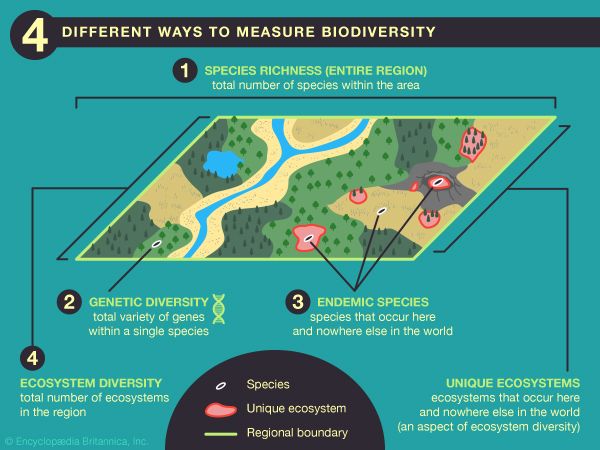
Scientists measure biodiversity using several complementary methods, as no single metric captures the full complexity of an ecosystem.
How do scientists measure biodiversity in an ecosystem?
Scientists measure biodiversity using several complementary methods, as no single metric captures the full complexity of an ecosystem.12
Key Measurement Approaches
- Species Richness: This is the most common method, defined as the total count of unique species within a defined area. Researchers often categorize this by scale: alpha diversity (local area), beta diversity (the rate of change between habitats), and gamma diversity (large-scale geographic regions).3
- Species Abundance: This measures the number of individuals of a species within an area. It can be expressed as absolute counts, population density, or biomass. It helps researchers understand how evenly individuals are distributed across different species.2
- Species Diversity: This metric combines both species richness and species abundance to provide a more comprehensive view of the community structure.2
- Taxonomic and Genetic Diversity: Scientists also assess biodiversity by looking above the species level—examining the variety of genera, families, and phyla—or by analyzing genetic variation within a single species.1
- Ecological Assemblages: Researchers record the variety of ecosystems or habitats present in a region, as different assemblages typically support distinct species.1
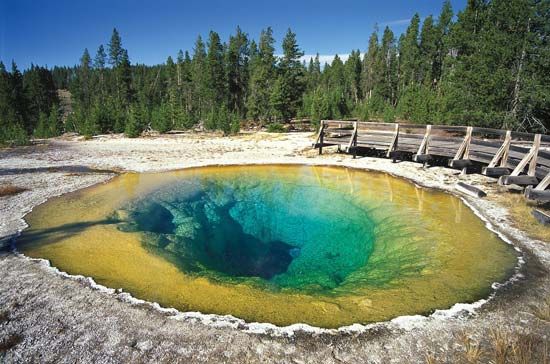
What are some examples of biodiversity hotspots around the world?
A biodiversity hotspot is a biogeographical region that hosts a significant number of endangered species and requires urgent protection. To qualify as a hotspot, a region must meet two strict criteria: it must contain at least 1,500 species of endemic vascular plants and have lost 70 percent or more of its primary vegetation due to human activity.5
There are currently 36 recognized biodiversity hotspots worldwide. Examples include:5
- Madagascar: Known for its high levels of unique, endemic species.5
- The Atlantic Coast of Brazil: A region significantly impacted by deforestation.56
- The Tropical Andes: A mountainous region harboring immense biological variety.5
- The Philippines: An archipelago facing severe threats from habitat loss.5
- The Eastern Himalayas: A critical area for species richness.5
- New Caledonia: A unique island ecosystem in the Pacific.5
- Sundaland: A region in Southeast Asia that includes islands like Sumatraplace/Southeast-Asia) that includes islands like Sumatra.6
These regions cover less than 3 percent of Earth’s surface yet support a vast majority of the planet’s terrestrial species.5
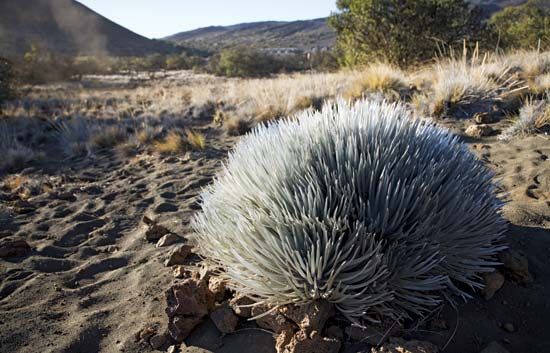
How do invasive species impact local biodiversity?
Invasive species are nonnative organisms that significantly disrupt the ecosystems they colonize. They often thrive in new environments because they possess a competitive advantage over indigenous species, particularly when the local ecosystem lacks natural predators to keep their populations in check.7
The impact of these species on local biodiversity is often devastating:
- Direct Predation: Invasive predators can be so efficient at capturing prey that native populations decline or face localized extinction. A notable example is the brown tree snake on Guam, which decimated native bird populations.78
- Resource Competition: Invasive species may outcompete native organisms for essential resources like food, living space, and light, effectively replacing them over time.7
- Disease Transmission: They often serve as vectors for parasites and pathogens, introducing new diseases that native species are not adapted to withstand.7
- Hybridization: Some invasive species interbreed with rare native relatives, genetically swamping the native population and threatening its survival.8
- Habitat Alteration: Invasive herbivores, such as goats, can destroy native plant communities, while invasive plants can transform entire landscapes, such as grazing lands.8
How does biodiversity affect human health and well-being?
Biodiversity is fundamental to human health and well-being, providing essential resources and psychological benefits that sustain our societies.
Economic and Physical Health
Humans rely on a diverse array of plants, animals, and other organisms for food, building materials, and medicines. Biodiversity loss threatens global food security by reducing the genetic variety of crops and livestock, making them more vulnerable to pests, diseases, and climate change. Furthermore, rare species often contain unique chemical compounds; for instance, fungi found on sloths have shown effectiveness in treating malaria, Chagas disease, and breast cancer.10
Ecosystem Services
Biodiversity underpins ecosystem services—the natural processes that benefit humans, such as pollination for food production and the mitigation of flooding by wetlands. When ecosystems are degraded, their ability to support human welfare is diminished.11
Psychological Well-being
The biophilia hypothesis suggests that humans possess an innate tendency to seek connections with nature. Research indicates that interacting with natural environments improves mental and spiritual health, encourages physical activity in children, and provides a source of peace and inspiration.12
Sources
- species richness — Encyclopædia Britannica
- biodiversity - Measuring biodiversity — Encyclopædia Britannica
- species abundance — Encyclopædia Britannica
- community ecology - Community equilibrium and species diversity — Encyclopædia Britannica
- hot spot — Encyclopædia Britannica
- conservation - Predictions of extinctions based on habitat loss — Encyclopædia Britannica
- invasive species — Encyclopædia Britannica
- conservation - Introduced species — Encyclopædia Britannica
- trophic cascade — Encyclopædia Britannica
- biodiversity loss - Economic and societal effects — Encyclopædia Britannica
- biophilia hypothesis — Encyclopædia Britannica
- ecosystem services — Encyclopædia Britannica
Published on · 4 min read