Coly
Birds in the coly genus (Colius), also known as mousebirds, possess several distinct physical characteristics:
What are the distinguishing physical characteristics of birds in the Coly genus?
Birds in the coly genus (Colius), also known as mousebirds, possess several distinct physical characteristics:
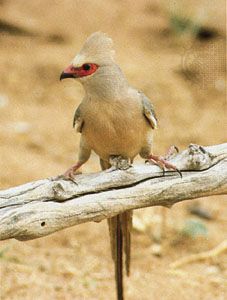
- Size and Shape: They are sparrow-sized birds with long, drooping tails that give them a total length of 30–35 centimeters (12–14 inches). Their appearance while moving along branches has been likened to that of mice.12
- Plumage: Their feathers are grayish or brownish, characterized by a soft, loose, and hairlike texture.12
- Head Features: They feature a short, erectile crest on the head. Most species also display a touch of blue at the nape and patches of red or blue skin around the eyes.1
- Bill and Feet: They have a curved, finchlike bill used for grasping twigs. Their feet are adapted for climbing and hanging; they can rotate their rear toe outward and fully forward to maintain a strong, clinging grip.1
- Sexes: Male and female colies are physically indistinguishable from one another.1
What is the taxonomic classification of the Coly genus within the bird family?
The genus Colius, commonly known as the coly or mousebird, is classified within the following taxonomic hierarchy:
- Order: Coliiformes
- Family: Coliidae
This family consists of a single genus, Colius, which includes six distinct species of African birds.1
How did the Coly genus get its name, and what does it mean?
The genus name Colius is derived from New Latin, originating from the Greek word kolios, which refers to a green woodpecker.41
While the scientific name traces back to this Greek term, the common name “mousebird” is descriptive of the birds’ physical behavior. Because of their long, drooping tails and their tendency to scurry along branches, these birds bear a striking resemblance to mice when observed in their natural habitat.6
Why are colies commonly referred to as mousebirds?
Colies are commonly referred to as mousebirds primarily due to their physical appearance and movement patterns. Because these African birds possess long, drooping tails and exhibit a tendency to scurry along tree branches, they bear a striking resemblance to mice when observed in their natural habitat.12
Their soft, loose, and hairlike plumage further contributes to this mouse-like appearance. Beyond their movement, these birds are known for their social behavior, often huddling together to sleep or preen one another, and their ability to climb and cling to branches using their bills and feet.12
Sources
- coly — Encyclopædia Britannica
- mousebird — Merriam-Webster
- Coliidae — Merriam-Webster
- coly — Merriam-Webster
- Passeriform - Annotated classification — Encyclopædia Britannica
- Colius — Merriam-Webster
Published on · 2 min read