Common Starling
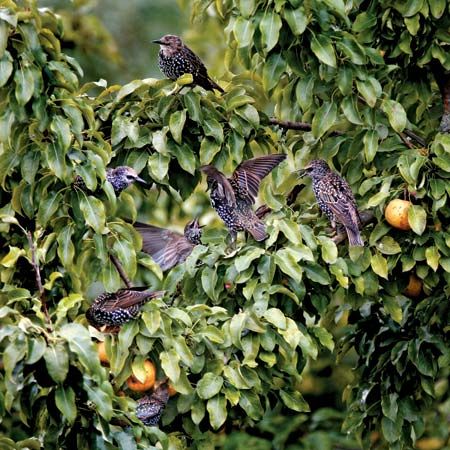
The common starling (Sturnus vulgaris) is a sturdy, omnivorous bird in the family Sturnidae. Measuring about 21.5 cm (8.5 inches) in length, it features…
What is a common starling?
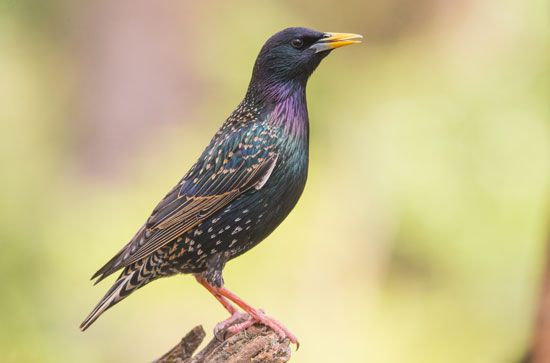
The common starling (Sturnus vulgaris) is a sturdy, omnivorous bird in the family Sturnidae. Measuring about 21.5 cm (8.5 inches) in length, it features iridescent black plumage that may appear speckled with white and brown after molting. Its name is derived from the star-like appearance of its short, pointed wings during flight.1
Native to Europe, the Middle East, and parts of Asia and North Africa, the species was introduced globally during the 19th and 20th centuries. It is now considered a major invasive species in regions like North America, where it is often viewed as a pest due to its aggressive behavior, destruction of crops, and displacement of native cavity-nesting birds.213
Common starlings are highly social, known for forming massive, synchronized flocks called murmurations. While they consume harmful insects, their impact on agriculture and infrastructure—along with the risks they pose to aviation—has led to significant global eradication efforts.21
What does a common starling look like?
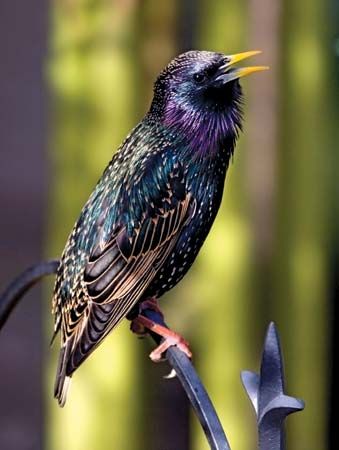
The common starling (Sturnus vulgaris) is a sturdy bird measuring approximately 21.5 cm (8.5 inches) in length. Its appearance changes throughout the year based on its molting cycle:
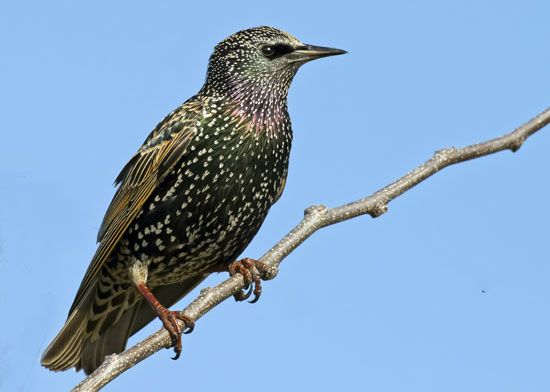
- Plumage: The bird is primarily black with an iridescent sheen that displays purple and green highlights in certain lighting. After molting in the late summer and fall, the feathers take on a brown and white speckled appearance.1
- Body Shape: It features a short tail and a long, narrow, sharp beak.21
- Sexual Dimorphism: During the breeding season, males and females can be distinguished by the color of the lower mandible, which appears tinted blue in males and pink in females.1
- Flight Profile: The bird is named for its short, pointed wings, which resemble the shape of a star when spread in flight.1
Where do common starlings live?
The common starling (Sturnus vulgaris) is native to Europe, the Middle East, Central Asia, and North Africa.2
During the 19th and 20th centuries, the species was intentionally introduced to many other regions, where it has since become a widely established invasive species. Today, thriving populations are found across:
- North America: Millions of birds inhabit the continent, largely stemming from multiple introductions in the northeastern United States during the late 19th century.21
- Other Regions: Established populations also exist in South Africa, Australia, New Zealand, and Argentina.2
These birds are highly adaptable and nest in natural or human-made cavities, such as holes in trees or buildings. Those living above latitude 40° N typically migrate south during the autumn months.2
What do common starlings eat?
Common starlings are omnivorous birds with a diverse diet that includes insects, fruit, seeds, and bird eggs.2
They possess strong, sharp beaks that allow them to forage on the ground and access food sources protected by tough skins or shells. While they consume harmful insects, which was a primary reason for their initial introduction to new regions, they are also considered agricultural pests. Their feeding habits often lead to significant damage to crops, including:21
- Fruits: Strawberries, apples, blueberries, and peaches.2
- Grains: They are known to damage grain crops and frequently consume food rations intended for livestock.21
Because of their highly adaptable nature, they successfully exploit various food sources, which has contributed to their status as a globally established invasive species.2
Sources
- Starling — Encyclopædia Britannica
- Common starling — Encyclopædia Britannica
- Sturnidae — Encyclopædia Britannica
Published on · 3 min read