Congaree National Park
Visitors to Congaree National Park can explore this unique biosphere reserve primarily through two methods of access:
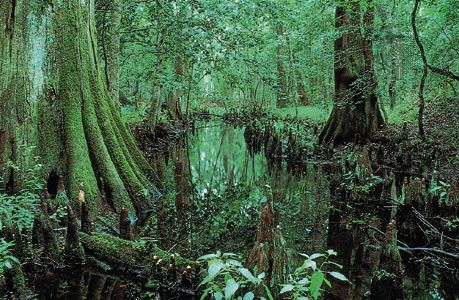
What are some popular activities for visitors to Congaree National Park?
Visitors to Congaree National Park can explore this unique biosphere reserve primarily through two methods of access:
- Hiking: The park features trails that allow visitors to traverse the alluvial floodplain and experience the diverse ecosystem of the largest remaining tract of virgin Southern bottomland hardwoods in the United States.1
- Boating: Canoeing is a popular activity, providing a way to navigate the waterways of the Congaree River and observe the park’s towering bald cypress and giant oaks, often referred to as the “redwoods of the East”.12
Whether you are interested in wildlife viewing or exploring the forest’s massive trees, the park offers a distinct look at a protected swamp forest environment.12
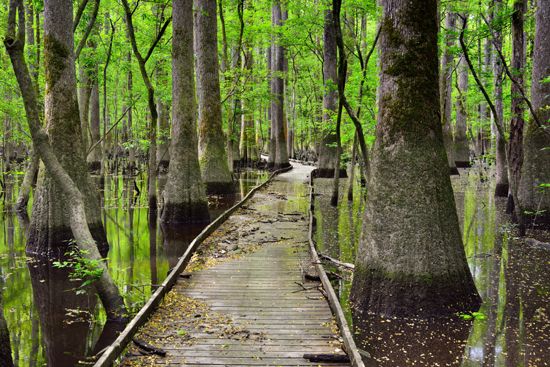
Where is Congaree National Park located in South Carolina?
Congaree National Park is located in central South Carolina, approximately 20 miles (30 km) southeast of the state capital, Columbia. The park is situated along the Congaree River, which forms part of the boundary between Richland and Calhoun counties.132
What role does the Congaree River play in shaping the park’s landscape?
The Congaree River is the primary architect of the park’s landscape, as the park consists of an alluvial floodplain created by the river’s meandering path.1
This riverine influence is central to the park’s ecology:
- Periodic Flooding: The river causes flooding approximately 10 times per year. These flood events typically last from several days to a month, depositing nutrient-rich sediments that sustain the forest.1
- Vegetation Support: Because the area is dry for most of the year, the specific flooding cycle allows for the growth of a massive, diverse forest, including bald cypress, sweet gum, hickory, and oak trees, some of which reach record sizes.1
- Ecosystem Maintenance: The river sustains the largest remaining tract of virgin Southern bottomland hardwoods in the United States, providing a critical habitat for various endangered species.1
What types of flora and fauna can be found in Congaree National Park?
Congaree National Park is home to a diverse array of flora and fauna, supported by its unique alluvial floodplain environment.
Flora
The park contains the largest remaining tract of virgin Southern bottomland hardwoods in the United States. The forest is characterized by a variety of tree species, some of which reach record sizes, including:
- Bald cypress
- Sweet gum
- Loblolly pine
- Water tupelo
- Hickory
- Oak1
Fauna
The swamp forest provides a vital habitat for numerous animal species, including several that are rare or endangered. Notable wildlife found in the park include:
- Birds: The red-cockaded woodpecker1
- Mammals: Deer, opossums, foxes, and bobcats1
- Other: Feral swine1
The park’s status as an international biosphere reserve underscores the importance of protecting these biological communities.1
Sources
- Congaree National Park — Encyclopædia Britannica
- Congaree River — Encyclopædia Britannica
- Congaree National Park — Merriam-Webster
Published on · 2 min read