Corregidor Island
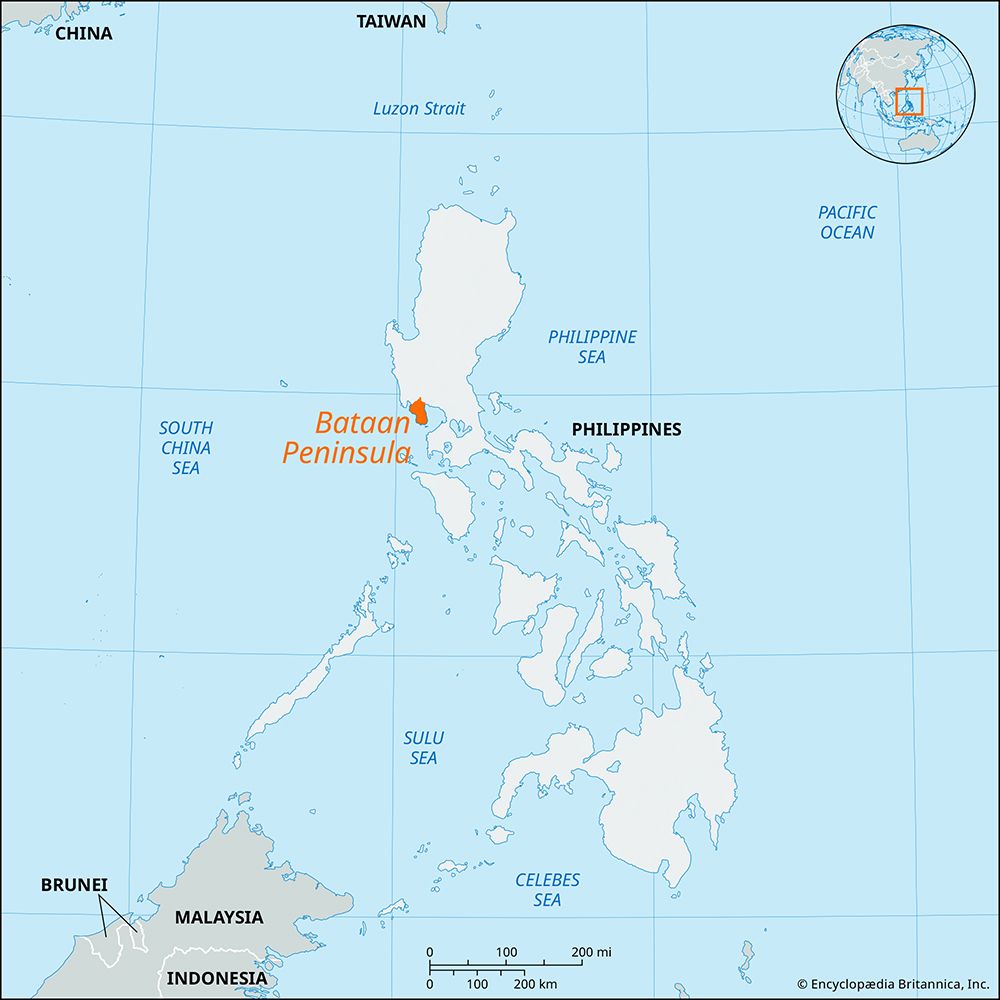
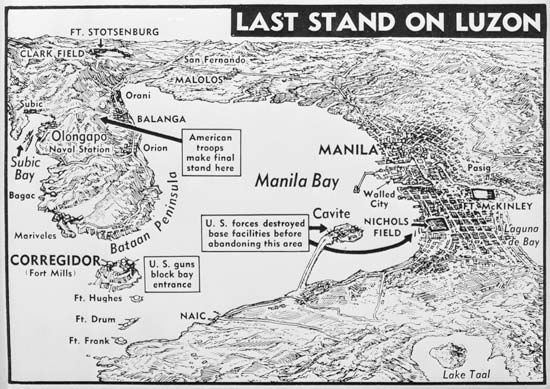
Corregidor Island is a rocky, 2-square-mile island situated at the entrance of Manila Bay, located just south of the Bataan province on the island of Luzon…
Where is Corregidor Island located, and what is its geographical significance?
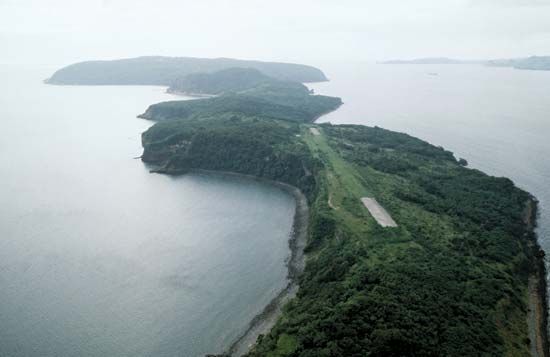
Corregidor Island is a rocky, 2-square-mile island situated at the entrance of Manila Bay, located just south of the Bataan province on the island of Luzon in the Philippines.1
Its geographical significance stems from its position as a natural fortress guarding the gateway to Manila. This strategic location led the Spanish to use it as a ship registration site in the 18th century, and later prompted the United States to develop it into a major military station with extensive tunnels and gun emplacements. During World War II, its role as a defensive stronghold made it the final outpost of organized resistance in the Philippines against Japanese forces. Today, the island serves as a national shrine and a site for military training.1
How did the Battle of Corregidor unfold, and what was its outcome?
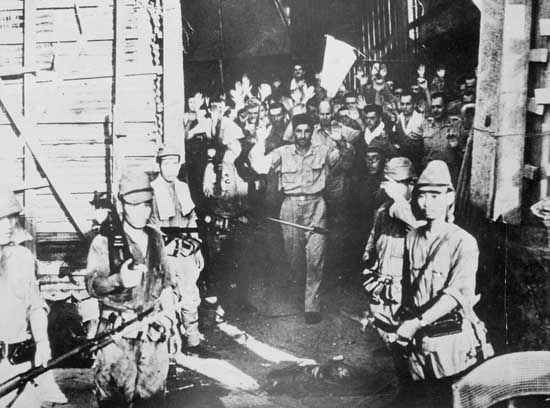
The Battle of Corregidor in 1945 was the successful U.S. recapture of the island fortress from Japanese forces during World War II. While the island had been surrendered to Japan in 1942, the U.S. launched an amphibious and airborne assault on February 14, 1945, to reopen Manila Bay.21
The operation relied on intense coordination between air, naval, and land forces. Following heavy bombardment, 2,050 U.S. paratroopers landed on the island’s west end, while infantry arrived by boat at the east end. Despite intelligence estimating only 600 Japanese defenders, there were actually 6,000, who utilized an expanded network of tunnels and bunkers to resist.2
The battle was characterized by fierce close-quarters combat, including hand-to-hand fighting and night “banzai” charges. By February 17, U.S. forces had destroyed the Japanese command post, effectively breaking the enemy’s coordination. Organized resistance ended by March 2, 1945. The outcome was a decisive American victory: approximately 5,950 Japanese soldiers were killed, while U.S. forces suffered about 210 dead and 790 wounded.2
What historical landmarks and memorials can be found on Corregidor Island today?
Today, Corregidor Island serves as a national shrine dedicated to the U.S. and Filipino forces who fought there during World War II. Visitors to the island can explore several significant historical sites that highlight its role as a strategic fortress:
- Pacific War Memorial: A prominent site commemorating the sacrifices made during the conflict in the Pacific theater.1
- Malinta Tunnel: This extensive underground network is perhaps the island’s most famous landmark. During the war, it functioned as a vital supply depot, a hospital, and the headquarters for General Douglas MacArthur.1
- Gunneries: The island features numerous preserved gun emplacements, which reflect its history as a heavily fortified military station guarding the entrance to Manila Bay.1
Since the mid-1950s, the island has also been utilized as a military training camp, maintaining its long-standing association with defense and strategy.1
How has Corregidor Island been developed for tourism, and what activities are available for visitors?
Corregidor Island has been developed primarily as a national shrine, preserving its status as a significant historical site rather than a traditional commercial tourist destination. Its development focuses on honoring the U.S. and Filipino forces who defended the island during World War II.1
Visitors to the island can engage in educational and historical tourism, which includes:
- Historical Site Tours: Guests can explore the extensive network of gunneries that once guarded the entrance to Manila Bay.1
- Memorial Visits: The island houses the Pacific War Memorial, which serves as a site for reflection and commemoration.1
- Tunnel Exploration: Visitors can tour the Malinta Tunnel, which provides insight into the island’s wartime operations as a hospital, supply depot, and headquarters for General Douglas MacArthur.1
While the island remains a site of historical importance, it also continues to function as a military training camp for counterguerrilla tactics, a role it has held since the mid-1950s.1
Sources
- Corregidor Island — Encyclopædia Britannica
- Battle of Corregidor — Encyclopædia Britannica
Published on · 3 min read