Bornholm
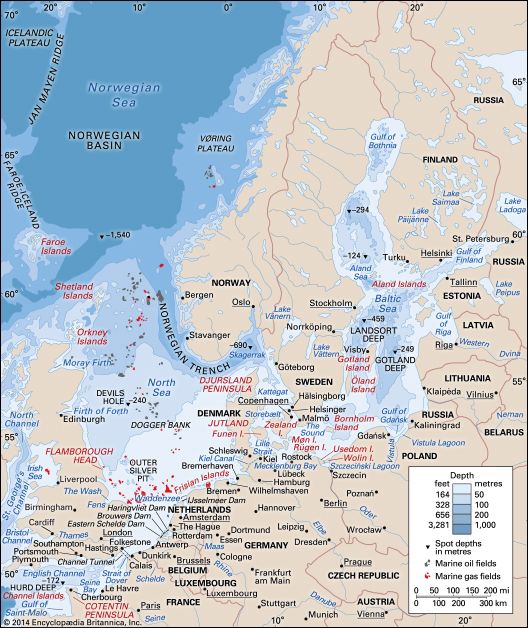
Bornholm is a Danish island situated in the Baltic Sea. It is located approximately 105 miles (169 km) southeast of Copenhagen and 22 miles (35 km) southeast…
Where is Bornholm island located, and what are its main geographical features?
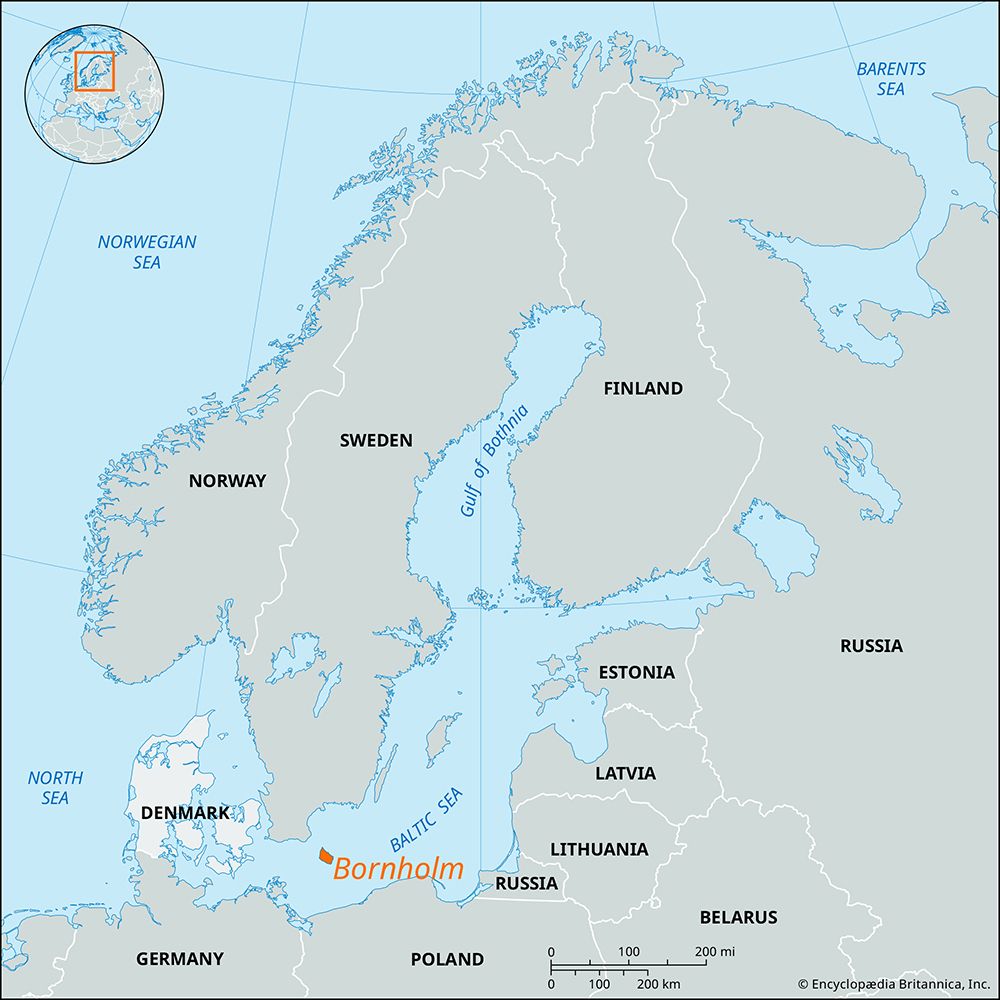
Bornholm is a Danish island situated in the Baltic Sea. It is located approximately 105 miles (169 km) southeast of Copenhagen and 22 miles (35 km) southeast of Sweden.1
The island’s geography is divided into two distinct regions:
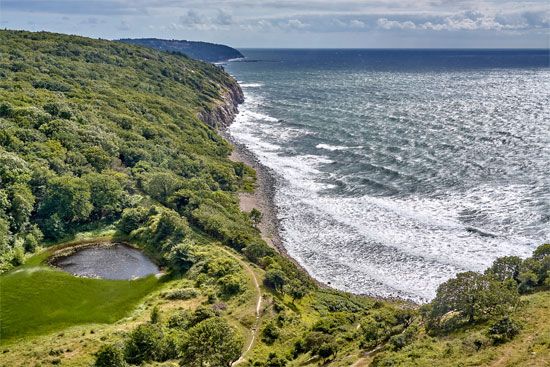
- Northern Region: This area comprises two-thirds of the island and is characterized by granite formations, a rocky cliff coastline, and a high-lying, wooded interior.1
- Southern Region: This more populous area features an undulating surface composed of sandstone, limestone, and shale, complemented by a dune-lined coast.1
The island covers an area of 227 square miles (588 square km) and supports agricultural activities such as grain cultivation, dairy farming, and pig raising, alongside its significant tourism industry.1
How does Bornholm’s climate and environment differ from mainland Denmark?
The provided search results do not contain specific information comparing the climate of Bornholm to that of mainland Denmark. While the sources describe the island’s geographical features—such as its granite northern region and sandy southern coast—and note its location in the Baltic Sea, they do not offer a comparative analysis of environmental or climatic conditions between the island and the mainland.
What is the population of Bornholm island, and how has it changed over time?
As of the 2018 estimate, the population of Bornholm was 39,632.1
The provided search results do not contain historical data regarding how the island’s population has changed over time.
How has Bornholm’s strategic location in the Baltic Sea influenced its development and importance?
Bornholm’s strategic position in the Baltic Sea has historically made it a coveted prize and a center for defense and trade. Located southeast of Copenhagen and near Sweden, the island served as a Viking stronghold before falling under the control of various powers, including the German city of Lübeck and the Hanseatic League, which utilized the Baltic as a primary commercial artery.1
The island’s military importance is evidenced by its 12th-century round fortress-churches and the 13th-century ruins of Hammershus, which served as a stronghold for the bishops of Lund. Its strategic value persisted into the 20th century; during World War II, the island was occupied by German forces and subsequently bombed by the Soviet Union to force a German surrender.1
Today, Bornholm’s location continues to influence its economy. Beyond its traditional reliance on fishing and granite, the island has leveraged its coastal geography to become a popular destination for tourism, with its clear waters and beaches attracting visitors from across Europe.14
Sources
- Bornholm — Encyclopædia Britannica
- Denmark - Land — Encyclopædia Britannica
- Baltic Sea - Hydrology — Encyclopædia Britannica
- Baltic Sea - Economic aspects — Encyclopædia Britannica
Published on · 2 min read