Bikini
Bikini Atoll holds profound historical significance as a primary site for U.S. nuclear testing between 1946 and 1958, which signaled the nation's military…
What is the historical significance of Bikini Atoll in relation to nuclear testing?
Bikini Atoll holds profound historical significance as a primary site for U.S. nuclear testing between 1946 and 1958, which signaled the nation’s military readiness during the early Atomic Age.12
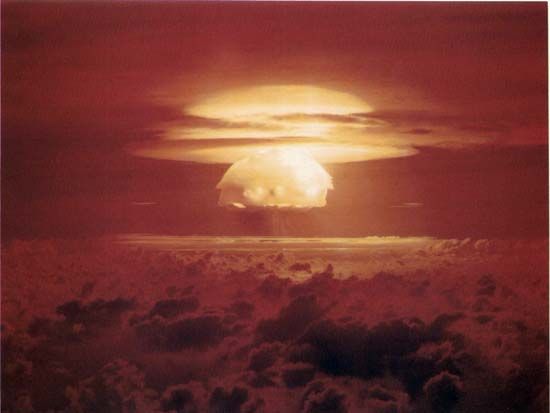
Following the forced relocation of its native inhabitants, the U.S. conducted 67 nuclear tests in the region, including the 1946 Operation Crossroads, which tested the impact of atomic weapons on naval vessels. The most infamous event was the 1954 Castle Bravo test, a thermonuclear bomb that yielded 15 megatons—far exceeding expectations—and vaporized three islands while scattering radioactive fallout across a vast area, causing severe harm to Marshall Islanders and nearby fishing crews.12
These tests left the atoll heavily contaminated with radiation, rendering the land unsafe for human habitation or agriculture despite subsequent cleanup efforts. While the coral reefs have shown remarkable recovery, the site remains a stark reminder of the human and environmental costs of nuclear proliferation.12
How has the nuclear testing at Bikini Atoll contributed to our understanding of nuclear weapons?
Nuclear testing at Bikini Atoll was instrumental in the development and refinement of U.S. nuclear weapons, providing critical data on weapon performance, radiation effects, and strategic utility.
Military and Scientific Insights
- Operation Crossroads (1946): These tests evaluated the impact of atomic weapons on naval fleets. While the “Able” airburst demonstrated that ships might survive the physical blast, the “Baker” underwater test revealed the lethal, persistent nature of radioactive contamination, proving that radiation could render a vessel a “ghost ship” by incapacitating its crew even if the hull remained intact.1
- Thermonuclear Advancement: The testing program facilitated the transition to thermonuclear bombs. The 1954 Castle Bravo test proved the feasibility of using solid lithium deuteride, which eliminated the need for complex cryogenic equipment and allowed for the design of lightweight, deliverable high-yield weapons.2
- Yield and Scale: Testing at the atoll allowed scientists to observe the devastating power of these devices. Castle Bravo, for instance, yielded 15 megatons—1,000 times the size of the Hiroshima bomb—providing sobering data on the scale of radioactive fallout and the environmental consequences of high-yield detonations.32
These experiments were essential for the U.S. military to signal strength and readiness during the early Atomic Age, ultimately shaping the design of the modern nuclear arsenal.31
What is the geographical location and physical characteristics of Bikini Atoll?
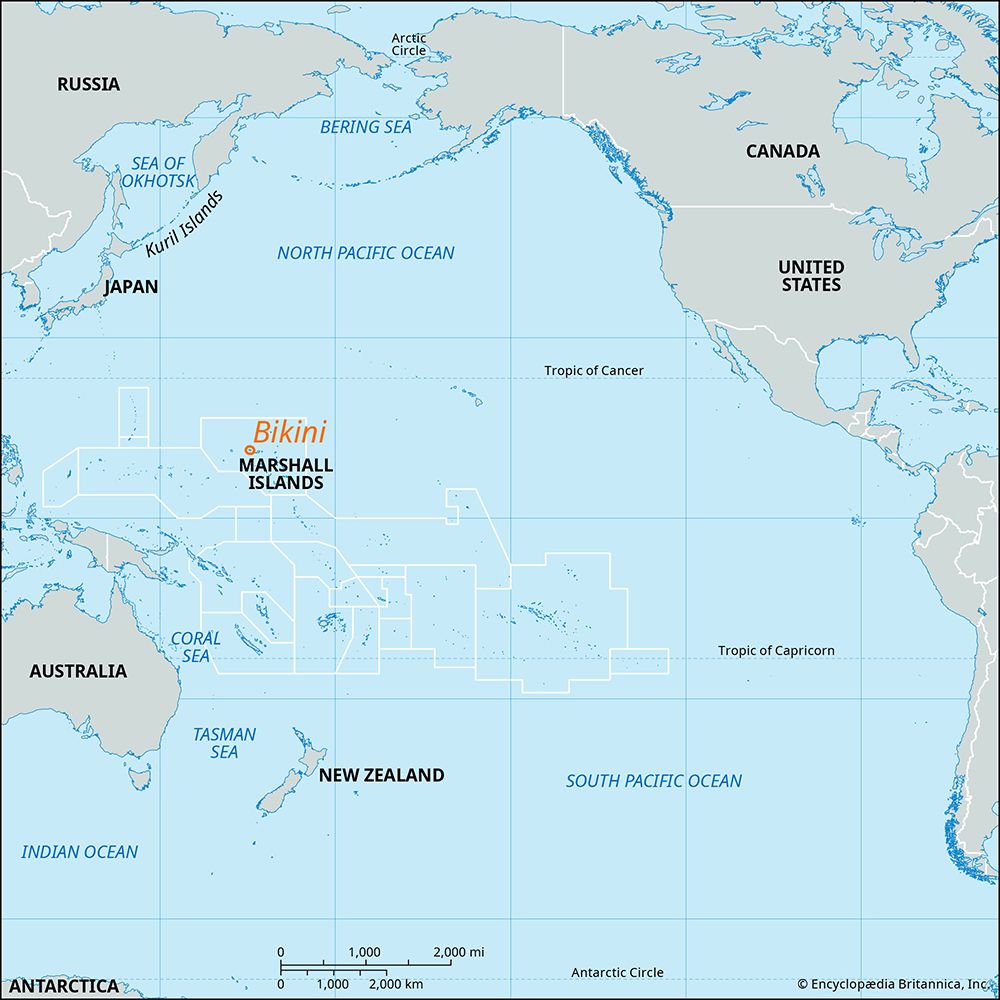
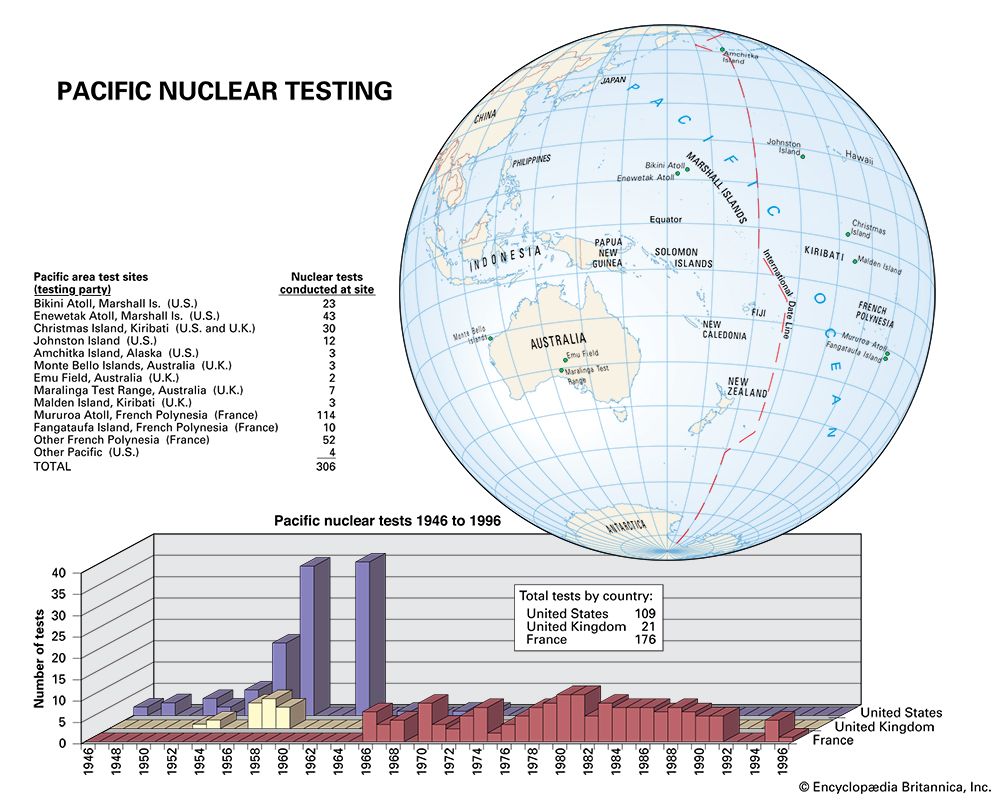
Bikini Atoll is located in the Ralik (western) chain of the Marshall Islands in the central Pacific Ocean. It is situated north of the Equator, approximately 225 miles (360 km) northwest of Kwajalein Atoll and 190 miles (305 km) east of Enewetak.2
Physically, the atoll consists of a ring of about 20 small coral islands distributed around the edges of an oval lagoon that measures 25 miles (40 km) long and 15 miles (24 km) wide. The total dry land area of the group is little more than 2 square miles (5 square km). The islands are low-lying, with an average elevation of only about 7 feet (2.1 meters) above low tide level. The largest islands in the group are Bikini and Enyu (or Eneu).2
How were the indigenous people of Bikini Atoll affected by the nuclear tests?
The nuclear testing program at Bikini Atoll had a profound and devastating impact on the indigenous population. In 1946, the 166 native Micronesians living on the atoll were forcibly relocated to Rongerik and later to Kili island, situated approximately 500 miles away, to facilitate the military’s testing operations.21
The environmental consequences of these tests rendered their homeland uninhabitable. Radioactive fallout from tests, particularly the 1954 Castle Bravo detonation, contaminated the islands and surrounding waters, causing severe burns and sickness among inhabitants of neighboring atolls. Even after the U.S. government initiated cleanup efforts in the 1980s and 1990s, radiation levels remained too high for safe, permanent resettlement. While some islanders attempted to return in the late 1960s, they were forced to evacuate again in 1978 due to persistent, dangerous levels of radioactivity.12
Today, the land remains contaminated, and food grown on the atoll is considered unsafe for consumption. In recognition of the harm caused, the U.S. government has provided hundreds of millions of dollars in compensation to the Marshallese people.1
Sources
- Marshall Islands atomic bomb tests — Encyclopædia Britannica
- Bikini — Encyclopædia Britannica
- nuclear weapon - Further refinements — Encyclopædia Britannica
- Manhattan Project - Operation Crossroads and the end of the Manhattan Project — Encyclopædia Britannica
- Marshall Islands — Encyclopædia Britannica
- Kili — Encyclopædia Britannica
Published on · 4 min read