Corydoras
Corydoras is a genus of small South American catfish belonging to the family Callichthyidae. These hardy, unaggressive fish are popular in aquariums because…
What is corydoras?
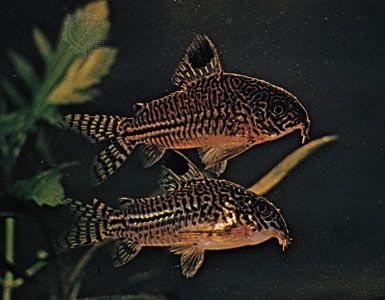
Corydoras is a genus of small South American catfish belonging to the family Callichthyidae. These hardy, unaggressive fish are popular in aquariums because they serve as effective scavengers. Most species reach a length of about 7.5 cm (3 inches) or less and are easily identified by two rows of overlapping armor plates along their sides.1
There are over 100 species within the genus, including:
- Bronze corydoras (C. aeneus): A metallic brown or green fish featuring a large dark patch.1
- Dwarf or pygmy corydoras (C. hastatus): An active, 4-centimeter-long species marked by a black band on each side.1
- Leopard corydoras (C. julii): A silvery fish characterized by black stripes, lines, and spots.1
- Peppered corydoras (C. paleatus): A yellowish-brown fish with dark spots and streaks.1
What do Corydoras eat in their natural habitat?
The provided search results do not contain specific information regarding the natural diet of Corydoras in the wild. While the articles note that Corydoras are generally kept as scavengers in aquariums and that most catfish are scavengers that feed on various animal or vegetable matter, they do not explicitly detail the dietary habits of the Corydoras genus in their natural South American habitats.12
Why are they considered good scavengers for aquariums?
Corydoras are considered excellent scavengers for aquariums primarily due to their natural behavior and physical traits as catfish. As bottom-dwelling fish, they are naturally inclined to forage along the substrate, where they consume various types of animal or vegetable matter that settles at the bottom of the tank.1
Their suitability for home aquariums is further enhanced by several key characteristics:
- Hardy and Unaggressive: They are robust, peaceful fish that coexist well with other species, making them ideal for community tanks.2
- Adaptable Size: Most species are small, typically reaching 7.5 cm (3 inches) or less, which allows them to thrive in various tank sizes.2
- Specialized Anatomy: Like other catfishes, they possess barbels (feelers) around their mouths that help them locate food in the substrate. Additionally, their bodies are protected by two rows of overlapping armor plates, which provide a level of durability.12
By patrolling the bottom of the tank, they help maintain a cleaner environment by consuming leftover food particles.21
How do their armor plates protect them from predators?
The armor plates found on Corydoras are a defining feature of the genus, consisting of two rows of overlapping bony plates along each side of the body. These plates function as a form of external protection, acting as a rigid, defensive shield against potential predators. By providing a tough, physical barrier, this armor helps the small fish survive encounters in their environment that might otherwise result in injury.1
Sources
- corydoras — Encyclopædia Britannica
- catfish — Encyclopædia Britannica
Published on · 2 min read