Catfish
Catfishes, comprising nearly 2,900 species within the order Siluriformes, are found almost worldwide. While the vast majority of species inhabit freshwater…
How widespread are catfish, and in what types of habitats can they be found?
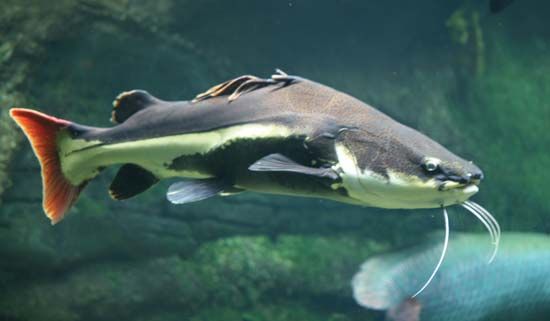
Catfishes, comprising nearly 2,900 species within the order Siluriformes, are found almost worldwide. While the vast majority of species inhabit freshwater environments, a small number of marine species belonging to the families Ariidae and Plotosidae reside in tropical shore waters.12
Catfishes are highly adaptable and occupy a diverse range of habitats:
- Flowing and Stagnant Waters: They are found in environments ranging from slow, sluggish rivers and stagnant pools to fast-moving mountain streams.12
- Benthic Zones: Most catfishes are bottom-dwellers, often possessing a depressed body shape that allows them to live under rocks or on the substrate.132
- Specialized Environments: Some species have adapted to extreme conditions, such as subterranean waters, wells, and caves, where they often exhibit traits like reduced pigmentation and loss of sight.2
- Torrential Currents: Certain mountain-dwelling species have evolved specialized structures, such as suckerlike mouths or adhesive organs, to anchor themselves to surfaces in rapid currents.32
Generally more active at night, these fish demonstrate remarkable environmental tolerance.12
What role do catfish play in aquaculture and commercial fishing industries?
Catfish play a significant role in both the global food supply and the economy, serving as a key species in the aquaculture industry and as a target for commercial fishing.
Aquaculture
Catfish are widely raised through artificial propagation and husbandry. In aquaculture, these fish are cultivated in various controlled environments, including earth ponds, tanks, and concrete pools. This practice allows for the supply of adequate food and protection from natural predators, ensuring a more reliable harvest than wild-caught alternatives.1
Commercial Fishing
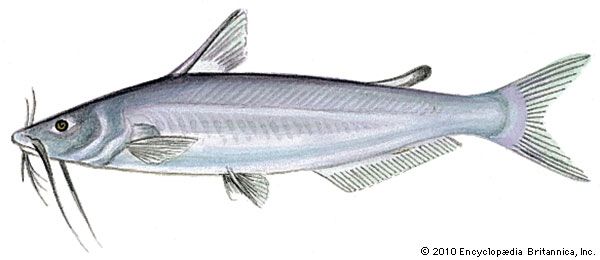
In the context of commercial fisheries, catfish are categorized alongside other freshwater fish as a source of food. While the commercial fishing industry faces challenges such as environmental pollution, high equipment costs, and the risks of overfishing, catfish remain a notable component of the global harvest. Many larger species, particularly those in the family Ictaluridae—such as the blue catfish and channel catfish—are highly valued as edible food and sport fish.678
What are the main feeding habits of catfish, and how do they vary among different species?
Catfishes, which belong to the order Siluriformes, are primarily omnivorous, though their feeding habits vary significantly across the nearly 2,900 known species.1
General Feeding Habits
Most catfishes are bottom-dwellers that function as scavengers, feeding on a wide variety of animal and vegetable matter. They are generally more active at night, utilizing their sensitive barbels—which resemble cat whiskers—to locate food in their environment.1
Variations Among Species
While many species are generalist scavengers, others have evolved specialized diets and behaviors:
- Herbivores: Certain groups, such as the Callichthyidae (armoured catfishes) and Loricariidae (suckermouth armoured catfishes), are primarily herbivorous, often using specialized mouth structures to graze on algae and plant matter.9
- Parasitic Species: The candiru (Vandellia cirrhosa) is a notable exception to typical feeding behaviors, as it is a parasitic catfish that may invade the urogenital openings of bathers.19
- Predatory Species: Larger catfishes, such as the wels, are significant predators capable of consuming large prey.19
These diverse dietary strategies, ranging from scavenging and herbivory to parasitism and active predation, reflect the broad ecological success of the order.19
What are some of the largest and smallest catfish species known to science?
Catfish exhibit a remarkable range in size, spanning from tiny species that measure less than an inch to massive giants that can reach several meters in length.
The Largest Catfish
The wels (Silurus glanis) is widely recognized as one of the largest catfish species and one of the largest freshwater fish in Europe. It can attain a length of approximately 4.5 meters (15 feet) and reach a weight of 300 kilograms (660 pounds). Other notably large species include the shark catfishes of the family Pangasiidae, which can grow up to 3 meters (10 feet) in length.1119
The Smallest Catfish
At the other end of the spectrum, some of the smallest known species include:
- Scoloplacidae: Members of this family, known as spiny dwarf catfishes, reach a maximum length of only about 20 millimeters (less than 1 inch).9
- Dwarf Corydoras: Also known as the micro cat (C. hastatus), these popular aquarium fish typically grow to be only 4 or 5 centimeters (1.5 to 2 inches) long.1
Sources
- catfish — Encyclopædia Britannica
- walking catfish — Encyclopædia Britannica
- ostariophysan - Swimming — Encyclopædia Britannica
- electric catfish — Encyclopædia Britannica
- ostariophysan - Habitat and distribution — Encyclopædia Britannica
- aquaculture - Fish farming — Encyclopædia Britannica
- fishery — Encyclopædia Britannica
- commercial fishing — Encyclopædia Britannica
- ostariophysan - Annotated classification — Encyclopædia Britannica
- perciform - Feeding behaviour — Encyclopædia Britannica
- wels — Encyclopædia Britannica
Published on · 3 min read