Common Clown Fish
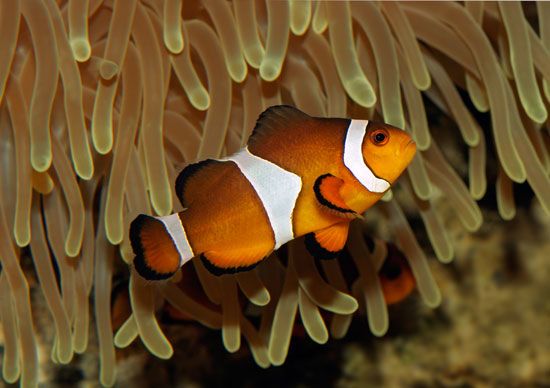
The common clownfish (Amphiprion ocellaris) is characterized by several distinct physical features that help distinguish it from similar species:
What are the distinctive physical characteristics of common clownfish?
The common clownfish (Amphiprion ocellaris) is characterized by several distinct physical features that help distinguish it from similar species:
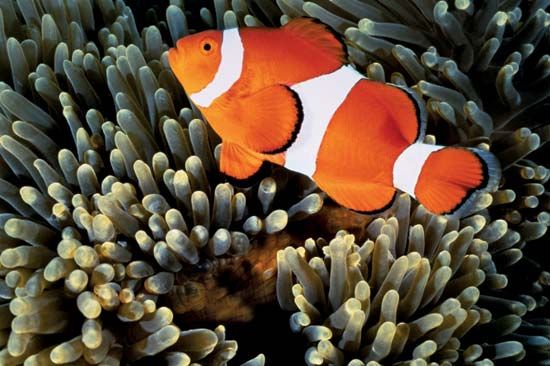
- Coloration: The body features a striking orange hue, which is interrupted by three white bands outlined with thin black borders.1
- Dorsal Fin: Most individuals possess 11 dorsal fin spines, a key diagnostic feature used to differentiate them from the nearly identical orange clown anemone fish (Amphiprion percula).1
- Eye Appearance: A muddy brown ring is present around the pupil of the eye, whereas the corresponding ring in the orange clown anemone fish is clear.1
- Size: These fish typically grow to a maximum length of approximately 11 cm (about 4 inches).1
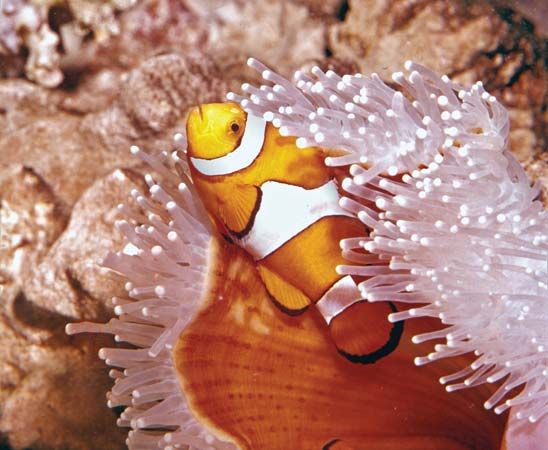
Beyond these physical traits, the species is well-known for its mutualism with sea anemones, which provide the fish with protection from predators via their stinging nematocysts.1
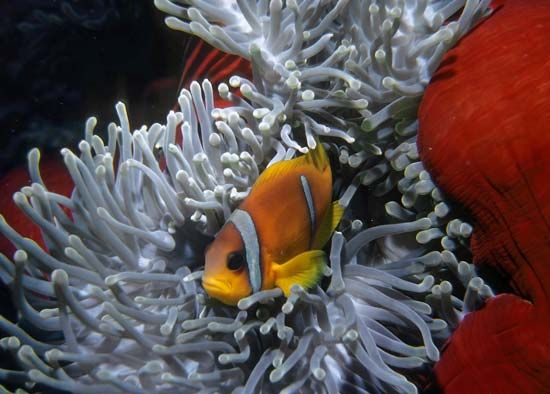
What are the main predators of common clownfish?
While the provided search results do not list specific species of predators that hunt adult common clownfish, they do note that many young clownfish are consumed by various predators while floating on ocean currents after hatching.1
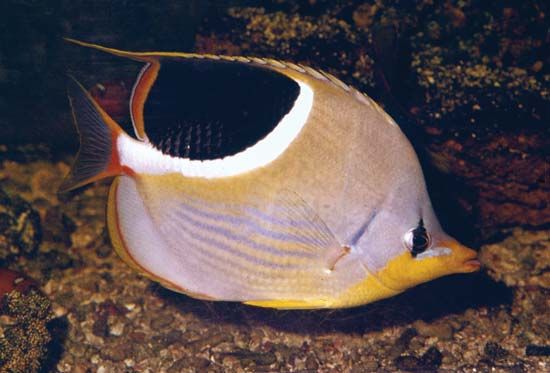
Adult common clownfish rely on a mutualism with sea anemones for protection. The anemone’s tentacles contain nematocysts, or stinging cells, which deter predators from attacking the fish. In exchange for this protection, the clownfish cleans parasites from the anemone and helps defend it against butterfly fishes, which are known to consume anemone tentacles.1
Where are common clownfish typically found in the wild?
Common clownfish (Amphiprion ocellaris) are typically found inhabiting coral reefs located within the tropical waters of the Pacific and Indian oceans. Their natural range is extensive, stretching from northwestern Australia, Southeast Asia, and Indonesia, and extending as far north as Taiwan and Japan’s Ryukyu Islands.1
Within these reef environments, they are almost exclusively associated with specific species of sea anemones, such as Heteractis magnifica, Stichodactyla gigantea, and S. mertensii, which provide them with essential protection.13
How do clownfish form symbiotic relationships with sea anemones?
Clownfish and sea anemones engage in a mutualistic symbiosis that provides significant survival benefits to both partners. This relationship is primarily defined by the protection the anemone offers the fish and the maintenance services the fish provides in return.14
Protective Mechanisms
The sea anemone possesses tentacles armed with nematocysts, or stinging cells, designed to immobilize prey. Clownfish are able to live among these tentacles because they are covered in a specialized mucous coating. This layer prevents the anemone from recognizing the fish as food, thereby inhibiting its stinging behavior. While it is widely accepted that this mucus provides immunity, scientists are still investigating whether the fish produces this substance itself or acquires it through direct contact with the anemone’s tentacles.145
Mutual Benefits
- Protection for the Fish: The clownfish uses the anemone as a safe refuge, retreating into the tentacles whenever a predator threatens.14
- Maintenance for the Anemone: In exchange for shelter, the clownfish cleans parasites from the anemone’s body and actively defends its host by driving away butterfly fishes, which are known to consume anemone tentacles.14
Sources
- common clown fish — Encyclopædia Britannica
- conservation - Pollution — Encyclopædia Britannica
- sea anemone: Top Questions — Encyclopædia Britannica
- cnidarian - Associations — Encyclopædia Britannica
- perciform - Interspecific relationships — Encyclopædia Britannica
Published on · 3 min read