Cos
Cos, an island in the Dodecanese chain, offers several historical and natural landmarks for visitors:
What are the main tourist attractions and landmarks on Cos island?
Cos, an island in the Dodecanese chain, offers several historical and natural landmarks for visitors:
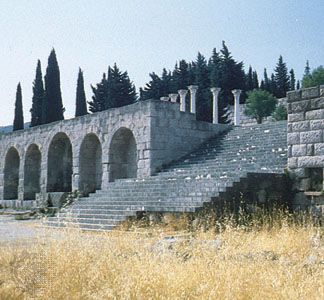
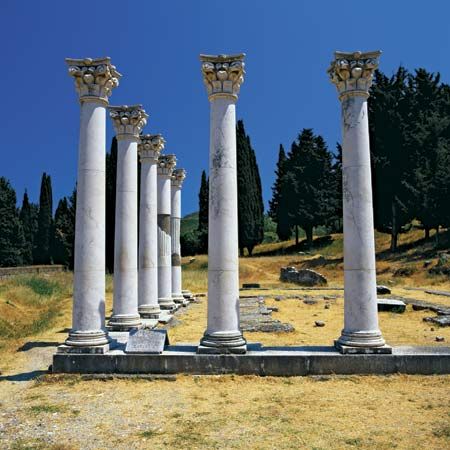
- Sanctuary of Asclepius: Once a renowned health resort and the site of the first school of scientific medicine in Greece, this sanctuary was restored during the Italian occupation of the island.1
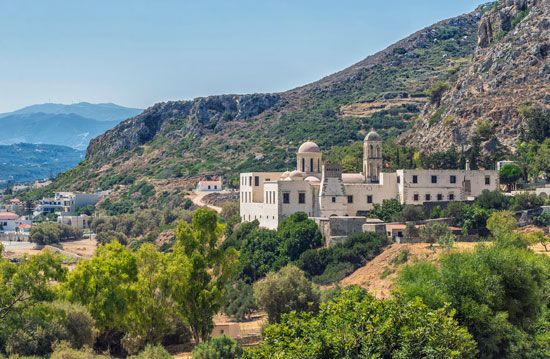
- Fortress of the Knights of St. John: Built in 1215, this fortification was constructed to guard the approaches to the island of Rhodes.1
- Town of Kos: The island’s capital features a mix of history, having been rebuilt following a 1933 earthquake. It serves as the primary harbor and is the center of the island’s tourism and infrastructure.1
- Natural Landmarks: The island features a ragged limestone ridge along its southern coast and the prominent Mount Dhíkaios. Additionally, there are mineral springs and modern bathing installations located in the southern mountains.1
Where is Cos island located in Greece and what are its geographical features?
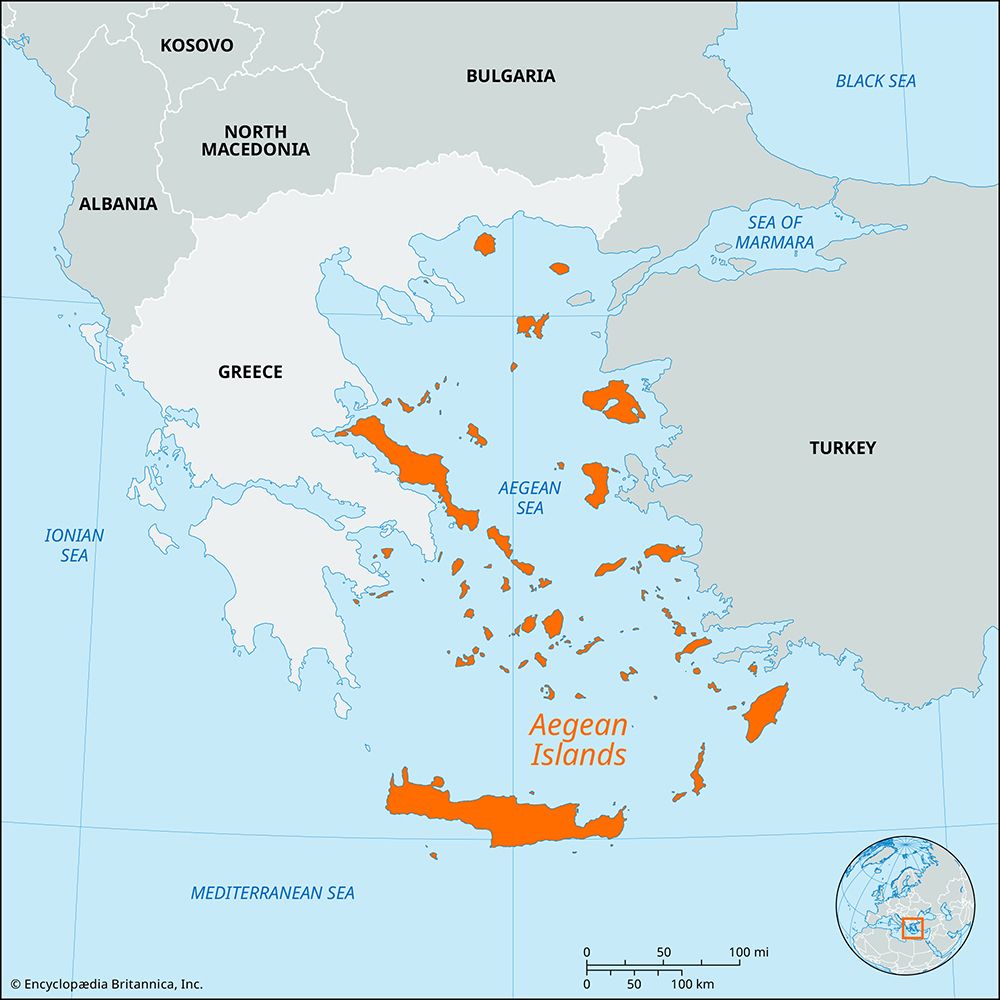
Cos is an island located off the southwestern coast of Turkey and is the third largest of the Dodecanese Islands in Greece.1
The island’s geography is defined by several distinct features:
- Topography: A ragged limestone ridge extends along the southern coast. The island is divided near its center by its highest point, Mount Dhíkaios, which reaches an elevation of 2,776 feet (846 meters).1
- Lowlands and Water: A fertile lowland area stretches along the northern coast. This region is irrigated by deep springs from the Prión Ridge, which also supplies water to the capital city of Kos on the northeast coast.1
- Coastline and Harbors: The coastline is generally regular, with the only suitable harbor located at Mandráki, the port of the capital.1
- Natural Resources: The island features mineral springs in the southern mountains. Its landscape supports agriculture, including vineyards, figs, olives, and vegetables, particularly around the central lowland village of Andimákhia.1
What is the historical significance of Cos island in ancient Greek civilization?
Cos island held significant importance in ancient Greek civilization, serving as a hub for culture, medicine, and intellectual life. Inhabited since prehistoric times, the island was resettled by Dorian colonists from Epidaurus before 900 BCE. By the 5th century BCE, it had become a member of the Delian League of the Delian League.13
The island’s most enduring legacy is its contribution to the development of scientific medicine. The sanctuary of Asclepius on Cos evolved into a renowned health resort and the site of the first school of scientific medicine in Greece. This institution was closely associated with the physician Hippocrates, who is widely considered the father of medicine and is believed to have taught there frequently.14
Beyond medicine, Cos was a center for the arts and literature, counting the painter Apelles and the poets Philetas and Theocritus among its famous citizens. Following its occupation by Alexander the Great in 336 BCE, the island passed to the Ptolemies, who utilized its schools extensively, further cementing its role as an intellectual center in the ancient world.1
How did the island of Cos play a role in ancient Greek mythology?
The provided search results do not contain information regarding the role of the island of Cos in ancient Greek mythology. While the sources detail the island’s historical significance, its association with the sanctuary of Asclepius, and its colonization by Dorian settlers from Epidaurus, they do not describe specific mythological narratives or legends linked to the island itself.17
Sources
- Cos — Encyclopædia Britannica
- Cyprus - Cultural institutions — Encyclopædia Britannica
- Hippocrates: Top Questions — Encyclopædia Britannica
- Epidaurus — Encyclopædia Britannica
- Dodecanese — Encyclopædia Britannica
- Anatolia - Greek colonies on the Anatolian coasts, c. 1180–547 bce — Encyclopædia Britannica
- Greek religion - Cosmogony — Encyclopædia Britannica
Published on · 3 min read