Craters of the Moon National Monument and Preserve
There are no active volcanoes or geothermal features in the Craters of the Moon National Monument and Preserve. While the region is defined by its extensive…
Are there any active volcanoes or geothermal features in the Craters of the Moon area?
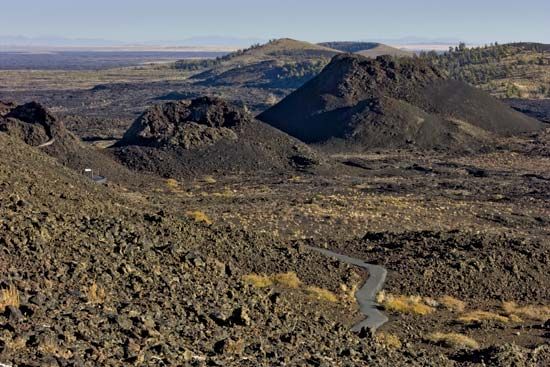
There are no active volcanoes or geothermal features in the Craters of the Moon National Monument and Preserve. While the region is defined by its extensive lava flows, volcanic cones, and craters, these features have likely been extinct for several millennia.1
The area is part of the Snake River Plain, a volcanic region in southern Idaho. The landscape was shaped by fissure eruptions that created unique geological structures, including lava tubes containing lava stalactites and stalagmites, but there is no current volcanic or geothermal activity reported in the monument.12
How did the Craters of the Moon get its name, and when was it designated as a national monument?
The Craters of the Moon National Monument and Preserve received its name because the terrain bears a striking, superficial resemblance to the surface of the Moon.1
The region was first established as a national monument in 1924 to protect its unique volcanic landscape, which includes numerous craters, cinder cones, and extensive lava flows. The protected area was significantly expanded in 2000, and a portion of the site was designated as a national preserve in 2002.1
What is the Great Rift, and how is it related to the formation of Craters of the Moon?
The “Great Rift” at Craters of the Moon National Monument and Preserve refers to a series of volcanic fissures that cross the monument from the northwest to the southeast. This rift is the primary geological feature responsible for the area’s formation, as it served as the conduit for the fissure eruptions that created the vast lava fields.1
These eruptions occurred as magma rose through the crust along the rift, resulting in the accumulation of lava flows and the development of approximately two dozen volcanic cones scattered along the rift’s path. The process also formed lava tubes—tunnels created by the cooling of the outer crust of flowing lava—which are characteristic of the monument’s unique landscape.1
It is important to distinguish this local volcanic rift from the Great Rift Valley (or East African Rift System), which is a massive, 4,000-mile-long tectonic feature in Africa and Asia associated with the separation of continental plates.3
Where is the Craters of the Moon National Monument and Preserve located in Idaho, and how large is it?
Craters of the Moon National Monument and Preserve is located in south-central Idaho, situated near the foot of the Pioneer Mountains, approximately 18 miles (29 km) southwest of the town of Arco.1
Following a significant expansion in 2000, the monument covers an area of 1,117 square miles (2,893 square km). Within this total area, 476 square miles (1,233 square km) were designated as a national preserve in 2002.1
Sources
- Craters of the Moon National Monument and Preserve — Encyclopædia Britannica
- Craters of the Moon National Monument — Merriam-Webster
- volcano - Rift volcanoes — Encyclopædia Britannica
- volcano - Fissure vents — Encyclopædia Britannica
- East African Rift System — Encyclopædia Britannica
Published on · 2 min read