Crozet Islands
The Crozet Islands are a volcanic archipelago located in the southern Indian Ocean, situated approximately 1,500 miles from the coast of Antarctica.…
What is Crozet Islands?
The Crozet Islands are a volcanic archipelago located in the southern Indian Ocean, situated approximately 1,500 miles from the coast of Antarctica. Administratively, they are part of the French Southern and Antarctic Territories.12
Discovered in 1772 by Captain Nicolas-Thomas Marion-Dufresne, the islands span 195 square miles (505 square km). The terrain is rugged and characterized by steep cliffs, with the highest point reaching 6,560 feet (2,000 m) on the Île de la Possession. Due to their treacherous geography, the islands have historically been the site of numerous shipwrecks. Today, the archipelago is largely uninhabited and has been designated as a national conservation area to protect its unique environment.1
What are the French Southern and Antarctic Territories?
The French Southern and Antarctic Territories (TAAF) comprise a collection of remote, largely uninhabited lands in the southern Indian Ocean and on the Antarctic continent.3
The territory includes the following regions:
- Island Groups: The islands of Saint-Paul and Nouvelle Amsterdam, as well as the Kerguelen and Crozet archipelagos.3
- Antarctic Territory: The Adélie Coast, an ice-covered plateau in eastern Antarctica discovered by Jules-Sébastien-César Dumont d’Urville in 1840, which serves as the basis for France’s claim on the continent.345
These lands were administratively linked to Madagascar until 1955, when they were established as a distinct French territory governed by a senior administrator. While the regions are barren, they have been effectively occupied since the late 1940s and early 1950s by scientific personnel who operate various weather and research stations.34
What kind of wildlife lives on subantarctic islands?
Subantarctic islands, located north of the Antarctic Convergence, support a more diverse range of life than the Antarctic continent due to their milder maritime climate and lack of permanent ice cover.67
Wildlife and Biodiversity
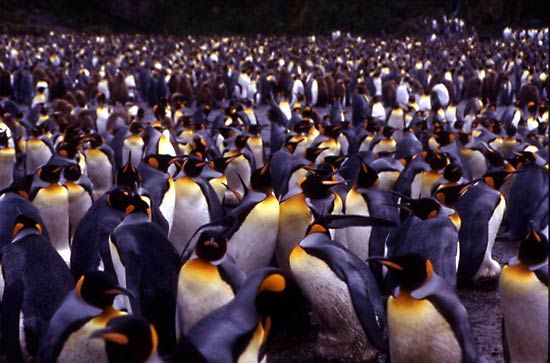
- Birds: These islands are vital breeding grounds for numerous seabirds. Species include penguins—such as the king, gentoo, rockhopper, and macaroni—as well as albatrosses, petrels, cormorants, gulls, and sheathbills.38
- Marine Mammals: The surrounding waters and shorelines are frequented by pinnipeds, including the southern elephant seal and various fur seals. Whales and dolphins are also common in the nutrient-rich offshore waters.910
- Flora: Unlike the Antarctic continent, subantarctic islands feature an abundance of vascular plants, including tussock-forming grasses and mosses. However, these ecosystems have been significantly altered by the introduction of alien species like sheep and rabbits, which have decimated native plant communities.67
The presence of these species highlights the importance of these islands as unique ecological refuges in the Southern Hemisphere.36
How do volcanic islands form in the middle of the ocean?
Volcanic islands in the middle of the ocean are primarily formed through three distinct geological processes:
Hotspots
Some volcanic islands form far from plate boundaries due to hotspots—regions where mantle plumes melt through the crust. As a tectonic plate moves over a stationary hotspot, a chain of volcanoes is created. The active volcano is located over the hotspot, while older, extinct islands in the chain increase in age with their distance from the active site. The Hawaiian Islands are the classic example of this process.1213
Subduction Zones
When two oceanic plates converge, one is forced beneath the other into the mantle. This process, known as subduction, generates magma that rises to the surface to form a curved line of volcanoes called an island arc. These islands, such as the Mariana Islands, are built up from the seafloor by the extrusion of basaltic and andesitic magmas.1314
Oceanic Ridges
Volcanic activity also occurs along oceanic ridges, where tectonic plates move apart and magma wells up to create new seafloor. While most of this activity is underwater, some ridges are elevated enough to emerge above sea level, forming islands like Iceland or parts of the Mid-Atlantic Ridge.1315
Sources
- Crozet Islands — Encyclopædia Britannica
- Crozet Islands — Merriam-Webster
- French Southern and Antarctic Territories — Encyclopædia Britannica
- Adélie Coast — Encyclopædia Britannica
- Antarctica - Early geographic discoveries — Encyclopædia Britannica
- Antarctica - Birds — Encyclopædia Britannica
- gentoo penguin — Encyclopædia Britannica
- Antarctica - Sea life — Encyclopædia Britannica
- Antarctica - Plant life — Encyclopædia Britannica
- Polar ecosystem - The Antarctic region — Encyclopædia Britannica
- What Is a Marine Mammal? — Encyclopædia Britannica
- hotspot — Encyclopædia Britannica
- volcanism — Encyclopædia Britannica
- plate tectonics - Island arcs — Encyclopædia Britannica
- volcano - Submarine volcanoes — Encyclopædia Britannica
- oceanic ridge - Principal characteristics — Encyclopædia Britannica
- Mid-Atlantic Ridge — Encyclopædia Britannica
- Indian Ocean - Seamounts of the Indian Ocean — Encyclopædia Britannica
Published on · 3 min read