Cumberland Gap National Historical Park
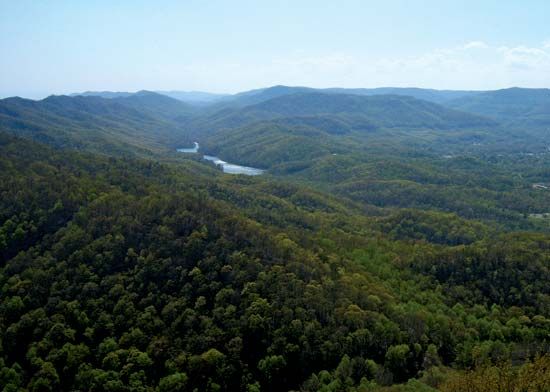
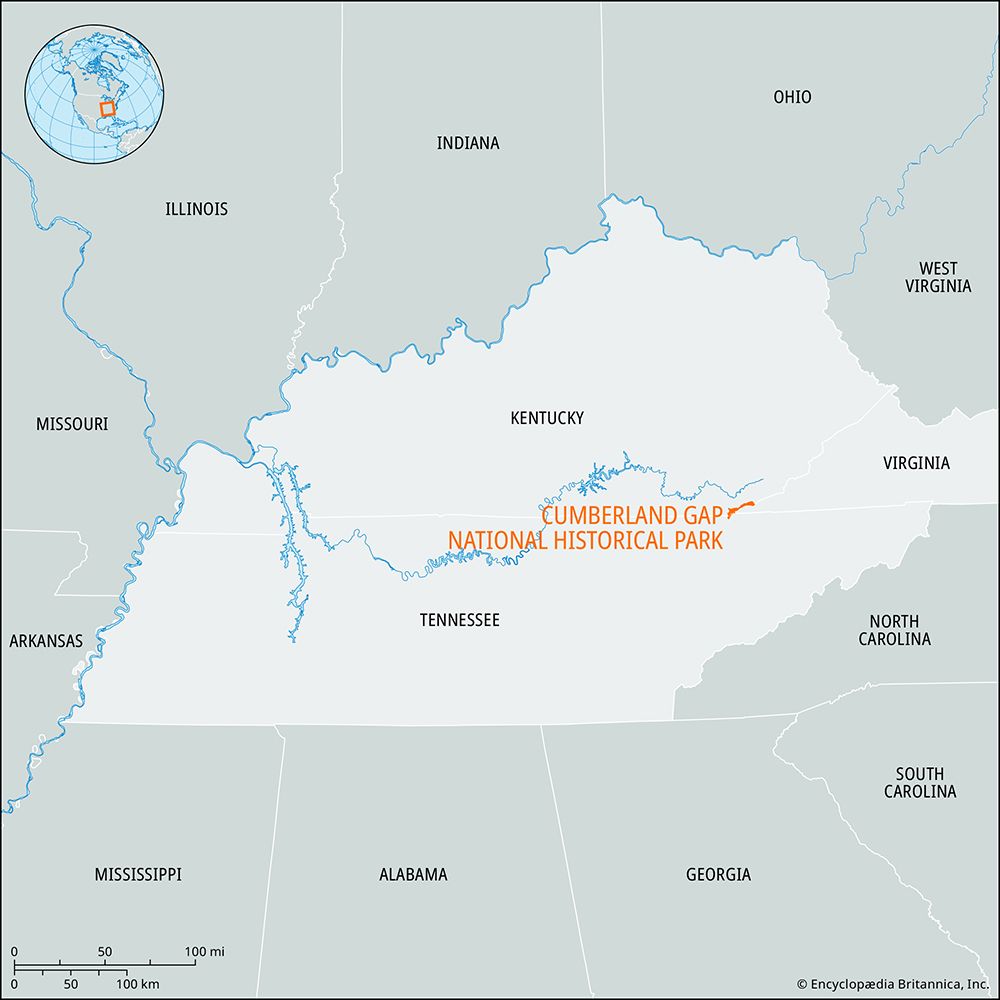
Cumberland Gap National Historical Park is a 32-square-mile (83-square-km) protected area established in 1940 to preserve the Cumberland Gap, a natural…
What is Cumberland Gap National Historical Park?
Cumberland Gap National Historical Park is a 32-square-mile (83-square-km) protected area established in 1940 to preserve the Cumberland Gap, a natural mountain pass located at the intersection of Kentucky, Virginia, and Tennessee.12
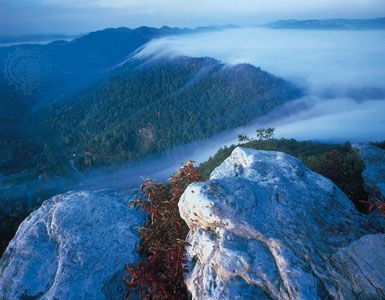
The park centers on this 1,640-foot (500-meter) pass, which was carved through the Cumberland Plateau by ancient stream activity. Historically, the gap served as the primary artery for trans-Allegheny migration, facilitating the settlement of the Northwest Territory and the westward expansion of the original colonies. The park includes the Wilderness Road, a famous trail blazed by Daniel Boone that became essential to American westward movement. Additionally, the site holds strategic significance from the American Civil War, during which it was contested by both Union and Confederate forces.12
Who was Daniel Boone and why is he famous?
Daniel Boone (1734–1820) was an American frontiersman, hunter, and explorer who became a legendary hero of the early American frontier. While he was not the first person to traverse Kentucky, he is famous for his pivotal role in opening the region to settlement.3
His fame stems from several key achievements:
- The Wilderness Road: In 1775, Boone and his companions were hired to blaze the Wilderness Road through the Cumberland Gap. This route became the primary artery for westward migration, enabling the establishment of early settlements like Boonesborough.3
- Frontier Leadership: During the American Revolution, he served as a militia captain and successfully defended Boonesborough against Shawnee attacks. His reputation was further bolstered by his daring rescue of his daughter and two other girls from captors in 1776.3
- Cultural Icon: His status as a folk hero was cemented internationally when Lord Byron featured him in the poem Don Juan. He remains a fixture in American literature, art, and media.3
How did the Wilderness Road impact westward expansion?
The Wilderness Road was a vital component of early American westward expansion, serving as a primary artery that connected the eastern seaboard to the frontier. Blazed by Daniel Boone and his men in 1775, the trail ran from southwestern Virginia through the Cumberland Gap and across Kentucky to Louisville.45
By providing a navigable path through the mountains, the road facilitated the migration of settlers from the Old South and Pennsylvania into Kentucky and Tennessee. It functioned as part of a broader system of wagon roads that linked eastern regions to the “promised lands” of the west, helping to shape the character and development of these territories. Although these early roads were often primitive—frequently becoming impassable in wet weather—they were essential for tying the eastern states to the expanding frontier and supporting the movement of people and goods that fueled the nation’s growth.4
What role did the gap play during the Civil War?
During the American Civil War, the Cumberland Gap served as a highly significant strategic location. Because of its position as a natural pass through the mountains, the gap was held alternately by both Confederate and Union troops throughout the conflict.2
Early in the war, the gap functioned as an anchor for a long defensive line established by Confederate forces under Albert Sidney Johnston. This line stretched across Kentucky, intended to protect Confederate interests in the region. Control of the pass was vital for both sides, as it provided a gateway for troop movements and supply lines between the eastern states and the interior of the country.6
Sources
- Cumberland Gap National Historical Park — Encyclopædia Britannica
- Cumberland Gap — Encyclopædia Britannica
- Daniel Boone — Encyclopædia Britannica
- American frontier - Early roads — Encyclopædia Britannica
- Wilderness Road — Merriam-Webster
- American Civil War - Operations in Kentucky and Tennessee — Encyclopædia Britannica
Published on · 3 min read