Deadliest Hurricanes in the U.S.
The deadliest hurricane in United States history is the Galveston hurricane of 1900, which struck Texas and resulted in at least 8,000 deaths, though some…
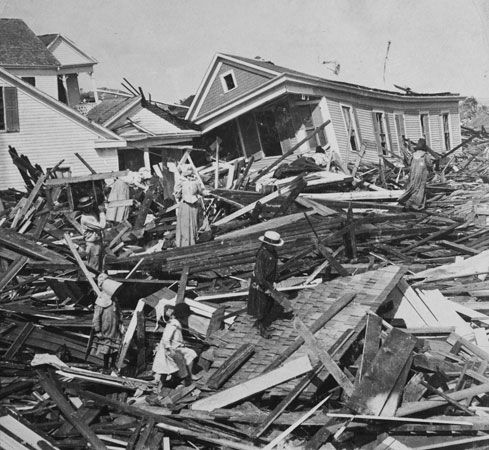
What is Deadliest Hurricanes in the U.S.?
The deadliest hurricane in United States history is the Galveston hurricane of 1900, which struck Texas and resulted in at least 8,000 deaths, though some estimates suggest the toll may have reached 12,000.123
Hurricanes are the most lethal weather-related disasters in the U.S.. Below are some of the most significant events by death toll:3
Rank
Location / Name
Year
Deaths
1
Galveston, Texas
1900
8,000+
2
Puerto Rico (San Ciriaco)
1899
3,400
3
Puerto Rico (
Hurricane Maria
)
2017
2,975
4
Lake Okeechobee, Florida
1928
2,500
5
Chenière Caminada, Louisiana
1893
2,000
6
Hurricane Katrina
2005
1,400
These figures include U.S. territories and, in some cases, account for individuals lost at sea. The high mortality rates in these historical events underscore the critical importance of early warning systems and infrastructure resilience, such as the seawall constructed in Galveston following the 1900 disaster.132
How does the Saffir-Simpson scale measure hurricane intensity?
The Saffir-Simpson hurricane scale classifies tropical cyclones based exclusively on their maximum sustained wind speeds. Developed in 1971, the scale assigns storms to one of five categories to help officials and the public assess potential property damage and risks.4
Classification Categories
Category
Wind Speed (mph)
Wind Speed (km/hr)
Damage Potential
1
74–95
119–153
Very dangerous; some roof and siding damage.
2
96–110
154–177
Extremely dangerous; major roof and siding damage.
3
111–129
178–208
Devastating; major damage to well-built homes.
4
130–156
209–251
Catastrophic; severe structural damage.
5
157
252
Catastrophic; destruction of most frame homes.
While early versions of the scale incorporated central atmospheric pressure and storm surge, these metrics were removed in 2009 to avoid classification inconsistencies. Because the scale lacks an upper limit for Category 5, some scientists have proposed adding a sixth category to account for storms with wind speeds exceeding 191 mph (307 km/hr) in the context of global warming.4
What is a storm surge and why is it so dangerous?
A storm surge is an abnormal rise in sea level that occurs when high-velocity winds from tropical cyclones or tropical storms push water toward the coast. While changes in atmospheric pressure contribute slightly to the phenomenon, the primary driver is the friction between the storm’s intense winds and the ocean surface, which piles water up in the direction of the wind.567
This phenomenon is considered the deadliest aspect of tropical cyclones because it causes extensive flooding that can reach several meters in height. The destructive power of a surge is influenced by the storm’s intensity, speed, and path, as well as local coastal features like shore slope and orientation. When these surges strike, they can inundate low-lying areas, often exacerbating flooding already caused by heavy rains. Because of the severe risk to life and property, weather services prioritize monitoring these events and issuing evacuation warnings for vulnerable coastal regions.758
How do scientists name hurricanes and track their paths?
The naming and tracking of tropical cyclones—known as hurricanes or typhoons depending on their location—are coordinated by the World Meteorological Organization (WMO) to ensure clear communication and public safety.1011
Naming Systems
Storms are identified by numbers while they are developing disturbances. Once a system reaches tropical storm strength, it is assigned a name from pre-established, rotating lists.8
- Atlantic Basin: The WMO maintains six alphabetical lists of 21 names each, which cycle every six years. If a season exceeds 21 named storms, the Greek alphabet is used.1011
- Other Regions: In basins like the Western Pacific, countries in the region contribute names that reflect their local languages and cultures.108
- Retirement: If a storm is exceptionally destructive, its name is retired from the list to avoid future confusion and out of respect for the victims.10118
Tracking and Forecasting
Meteorologists track storms using a combination of satellite imagery and direct reconnaissance:1213
- Satellites: Geostationary satellites monitor cloud-top temperatures and patterns to estimate a storm’s location and intensity.13
- Aircraft: In the Atlantic, U.S. reconnaissance aircraft fly directly into storms to deploy instruments called dropsondes, which measure atmospheric pressure, humidity, and wind speed.13
- Computer Models: Forecasters use statistical and dynamic models to predict a storm’s future path and intensity. These models solve complex equations regarding large-scale circulation and the storm’s interaction with its environment.12
Sources
- tropical cyclone - Deadliest hurricanes in the United States — Encyclopædia Britannica
- Galveston hurricane of 1900 — Encyclopædia Britannica
- Deadliest Hurricanes in the U.S. — Encyclopædia Britannica
- Saffir-Simpson hurricane scale — Encyclopædia Britannica
- surge — Encyclopædia Britannica
- tropical cyclone - The storm surge — Encyclopædia Britannica
- What Is the Difference Between a Meteotsunami, a Seiche, and a Storm Surge? — Encyclopædia Britannica
- tropical cyclone - Landfall forecasts — Encyclopædia Britannica
- What Causes Tsunamis? — Encyclopædia Britannica
- How Are Hurricanes and Typhoons Named? — Encyclopædia Britannica
- How Do Hurricanes Get Their Names? — Encyclopædia Britannica
- tropical cyclone - Naming systems — Encyclopædia Britannica
- tropical cyclone - Use of satellites and aircraft — Encyclopædia Britannica
Published on · 3 min read