Denali National Park and Preserve
Visitors to Denali National Park and Preserve can engage in a variety of recreational activities depending on the season. During the summer months, which run…
What recreational activities are available for visitors to Denali National Park?
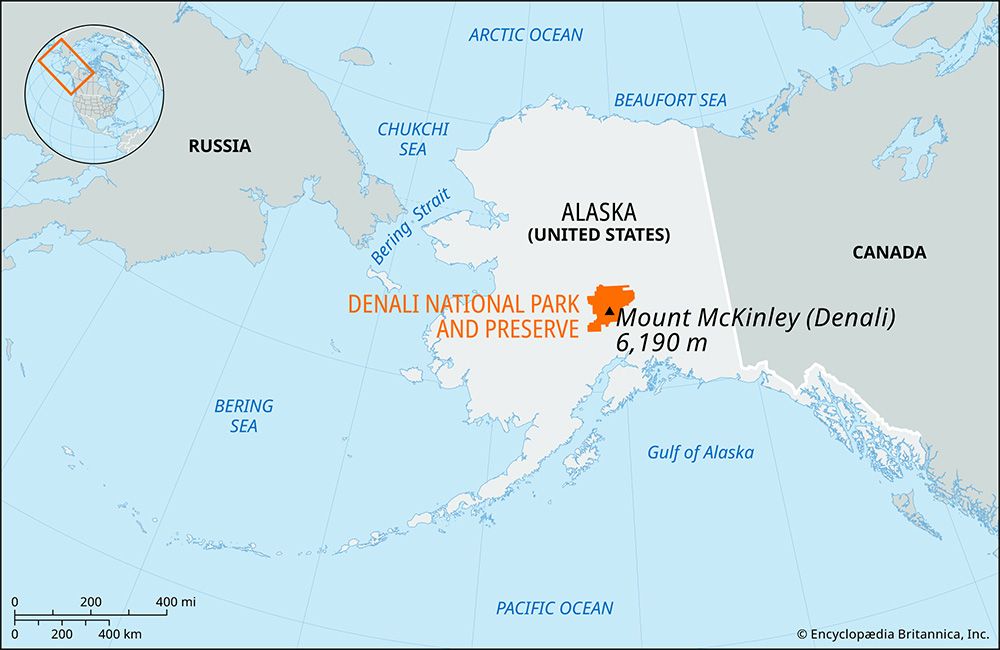
Visitors to Denali National Park and Preserve can engage in a variety of recreational activities depending on the season. During the summer months, which run from late May to mid-September, popular pursuits include wildlife viewing and air tours. For those interested in exploration, the park offers extensive opportunities for cross-country hiking, as there are very few marked trails outside of the area near the park entrance.1
Mountaineering is a significant activity in the park, with hundreds of climbers attempting to scale the mountain annually. For overnight stays, visitors may utilize several campgrounds or privately operated lodges located at the end of the park’s access road.1
In the winter, when the main access road is closed, the park transforms into a destination for cold-weather recreation, including:
Access to the park during the summer is primarily facilitated by shuttle buses, as private motor vehicles are largely prohibited.1
How does the park manage human-wildlife interactions to ensure visitor safety?
Sorry, the Britannica knowledge base does not contain this information.
What is the geographical location and size of Denali National Park and Preserve?
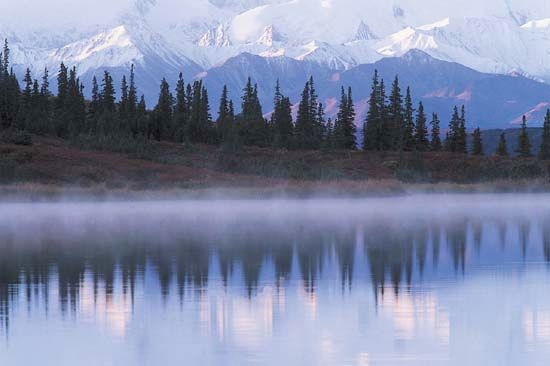
Denali National Park and Preserve is located in south-central Alaska, U.S., situated roughly equidistant between Fairbanks to the northeast and Anchorage to the south-southeast. It lies approximately 200 miles (320 km) south of the Arctic Circle and encompasses the heart of the rugged Alaska Range.
Regarding its size, the region is divided into two primary designations:
- The Park: Covers an area of 7,408 square miles (19,187 square km).
- The Preserve: Adds an additional 2,085 square miles (5,400 square km), adjoining the park in two units to the northwest and southwest.
Combined, the total area of the park and preserve is vast, featuring an environment of alpine tundra and boreal forest.
How did Denali National Park and Preserve get its name, and what is its historical significance?
The name “Denali” is derived from the Athabaskan language, meaning “The High One” or “The Great One,” and refers to the mountain at the heart of the park. While the mountain was officially named Mount McKinley in 1896 to honor U.S. President William McKinley, the name Denali remained in use by many, and efforts to restore the original title gained momentum in the 1970s. The name Denali was officially adopted for the national park and preserve upon its creation in 1980.31
Regarding its historical significance:
- Establishment: The current park and preserve were created in 1980, incorporating the former Mount McKinley National Park, which had been established in 1917.1
- Conservation: In 1976, the region was designated by UNESCO as a biosphere reserve, recognizing its value as an unspoiled natural environment.1
- Naming Controversy: The mountain’s name has been a subject of political debate for decades. Although it was officially renamed Denali in 2015, an executive order issued by President Donald Trump on January 20, 2025, reverted the mountain’s name to Mount McKinley, a change subsequently enacted by the Board on Geographic Names. The park itself retained the name Denali National Park and Preserve.31
Sources
- Denali National Park and Preserve — Encyclopædia Britannica
- Alaska Range — Encyclopædia Britannica
- Mount McKinley — Encyclopædia Britannica
Published on · 3 min read