Enewetak
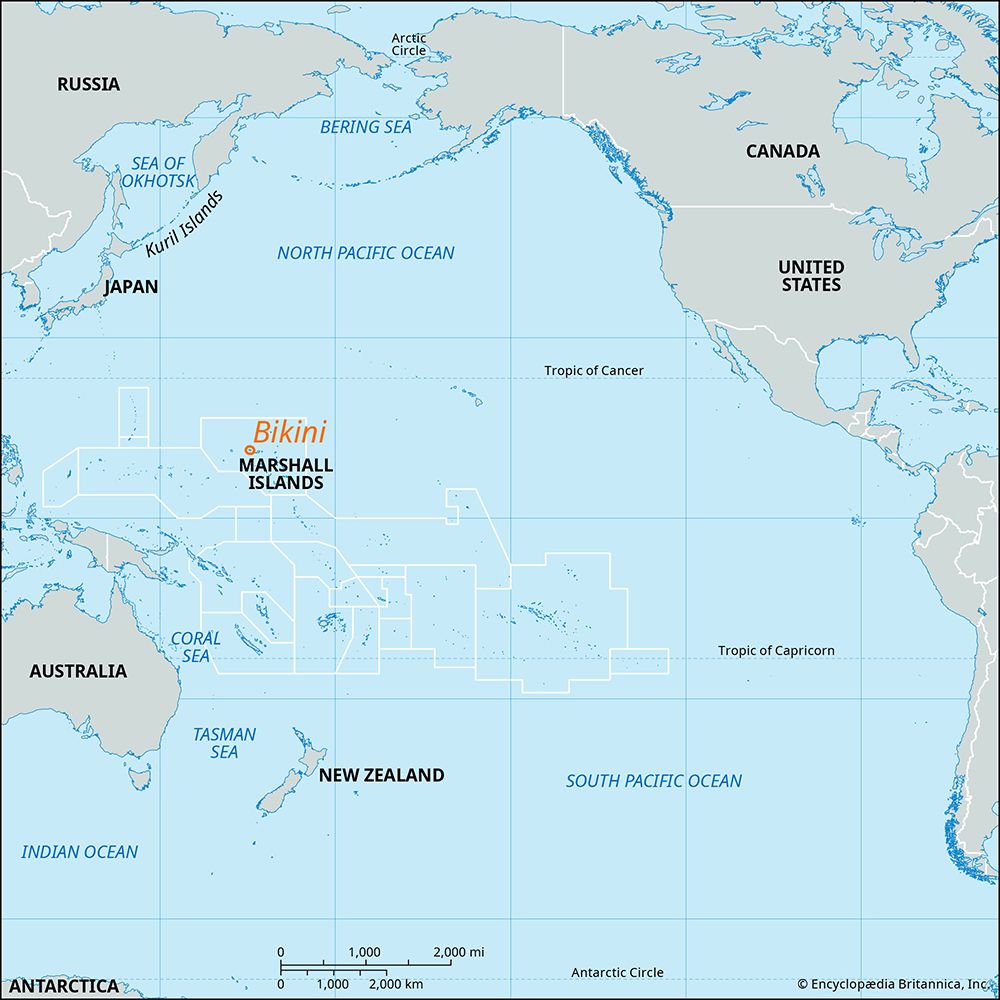
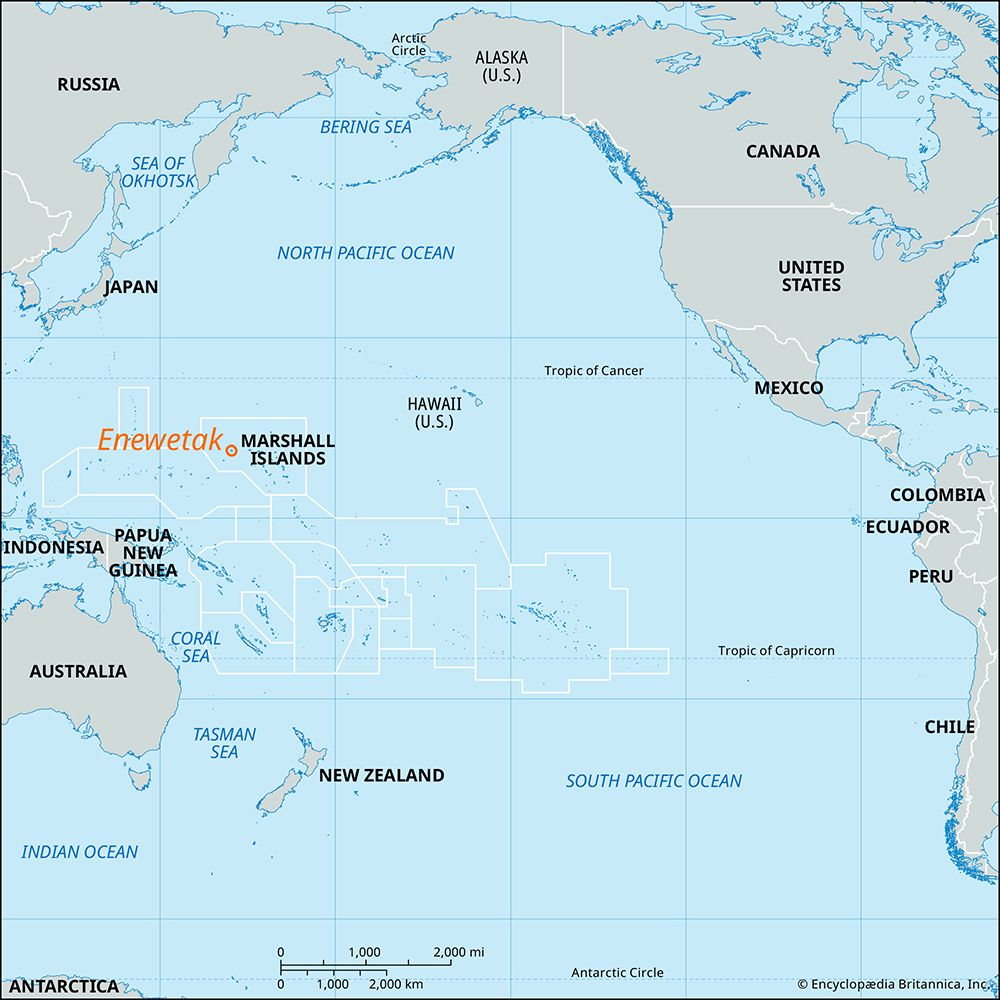
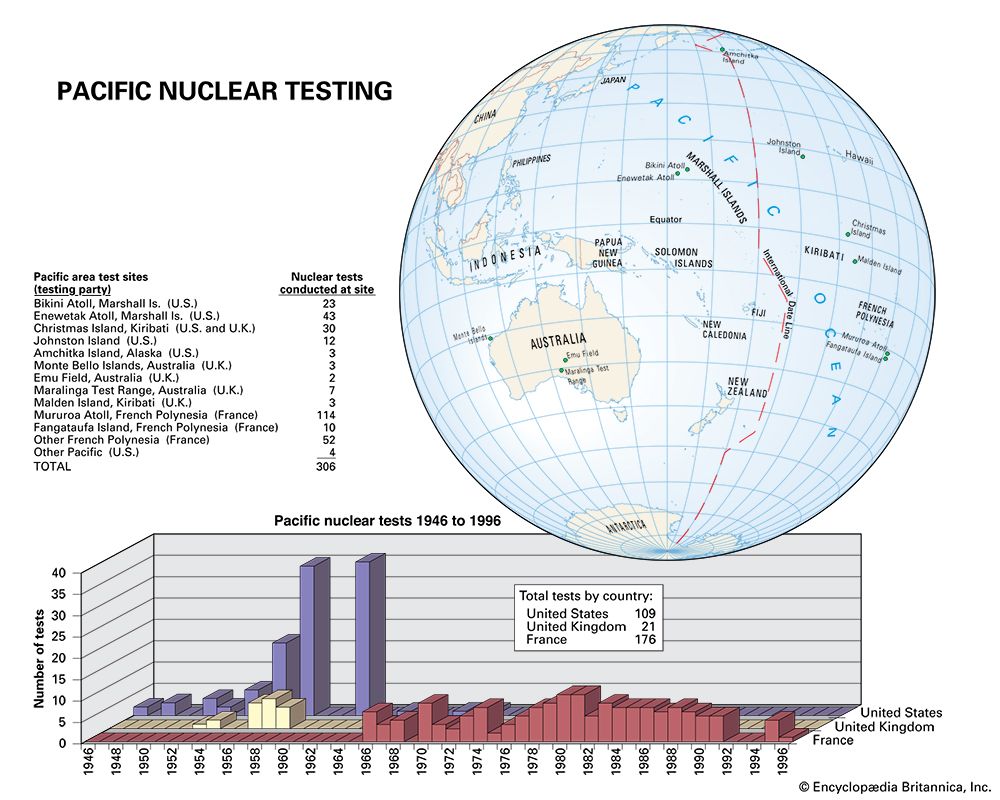
Enewetak Atoll served as a primary site for the United States nuclear testing program between 1946 and 1958, functioning alongside Bikini Atoll as part of…
How was Enewetak Atoll involved in the United States nuclear testing program?
Enewetak Atoll served as a primary site for the United States nuclear testing program between 1946 and 1958, functioning alongside Bikini Atoll as part of the Pacific Proving Ground. Following the capture of the atoll from Japanese forces during World War II, its inhabitants were forcibly evacuated to allow for the testing of nuclear weapons.123
The atoll was the site of numerous tests, including the detonation of the first thermonuclear bomb, code-named Ivy Mike, on November 1, 1952. Testing continued periodically throughout the 1950s, resulting in severe and lasting radioactive contamination of the environment.13
Efforts to decontaminate the atoll were undertaken, and in 1980, it was declared safe for the return of its people. However, subsequent attempts to cultivate the land revealed that the soil remained too contaminated for safe habitation, necessitating further displacement. Today, the atoll remains affected by the legacy of these tests, highlighting the profound and enduring impact of nuclear experimentation on both the environment and local populations.314

What is an atoll and how was Enewetak Atoll formed?
An atoll is a ring-shaped coral reef that encloses a lagoon. These structures typically consist of ribbons of reef that form a closed shape, often featuring low, flat islands along the rim that rise from the deep ocean floor to just beneath the high-tide level.5
The formation of Enewetak Atoll, like many others, is explained by the subsidence theory originally proposed by Charles Darwin. According to this model, an atoll begins as a fringing reef growing around a volcanic island. As the island gradually subsides, the reef continues to grow upward to remain in shallow, sunlit waters. Eventually, the volcanic peak sinks entirely below the surface, leaving behind a circular reef structure that encloses a central lagoon.657
Geologic evidence for this process at Enewetak was confirmed through drilling in 1952, which revealed volcanic rock approximately 1,400 meters (4,600 feet) beneath the modern reef surface, proving the atoll was built upon the remains of a sunken volcanic foundation.5
How has the history of Enewetak Atoll influenced international policies on nuclear weapons and testing?
The history of Enewetak Atoll, as part of the U.S. nuclear testing program in the Marshall Islands, significantly influenced international policy by highlighting the devastating humanitarian and environmental consequences of nuclear weapons.
The 1954 Castle Bravo test, which scattered radioactive debris over a vast area and affected both Marshallese inhabitants and a Japanese fishing crew, served as a stark demonstration of the global reach of nuclear fallout. These events underscored the ethical necessity for international oversight, contributing to the development of frameworks for compensation and long-term monitoring of affected populations.12
Furthermore, the testing program occurred within the context of the Trust Territory of the Pacific Islands, a United Nations trusteeship administered by the United States. The international community’s involvement through the Trusteeship Council provided a forum for addressing the rights of indigenous peoples and the responsibilities of administering powers. The subsequent Compact of Free Association between the Marshall Islands and the U.S. formalized these obligations, establishing funds for personal injury claims and environmental remediation, which remain critical precedents in international nuclear policy.2910
How does the ecosystem of Enewetak Atoll differ from other atolls in the Marshall Islands?
The ecosystem of Enewetak Atoll is fundamentally defined by its history as a site for U.S. nuclear testing between 1948 and 1958. While many atolls in the Marshall Islands share similar natural characteristics—such as low-lying coral structures, sandy, low-fertility soils, and vegetation like coconut and pandanus palms—Enewetak remains distinct due to the lasting environmental impact of the Pacific Proving Ground.214
The primary difference lies in the pervasive radioactive contamination that persists on the atoll. Although coral reefs in the lagoon have shown a remarkable recovery in the decades since testing ceased, the land environment remains compromised. Unlike other inhabited atolls in the region where subsistence farming and traditional agriculture remain viable, nothing grown on the contaminated land at Enewetak is considered safe for human consumption. Consequently, while other atolls support traditional village life and local food production, Enewetak’s ecosystem continues to be managed under the shadow of its nuclear legacy, rendering it unsuitable for permanent, self-sustaining habitation.12
Sources
- Marshall Islands atomic bomb tests — Encyclopædia Britannica
- Enewetak — Encyclopædia Britannica
- Micronesian culture - Contemporary Micronesia — Encyclopædia Britannica
- Bikini — Encyclopædia Britannica
- atoll — Merriam-Webster
- coral reef - Origin and development of reefs — Encyclopædia Britannica
- atoll — Encyclopædia Britannica
- lagoon - The effect of time — Encyclopædia Britannica
- history of the Marshall Islands — Encyclopædia Britannica
- Trust Territory of the Pacific Islands — Encyclopædia Britannica
- Trusteeship Council — Encyclopædia Britannica
- Marshall Islands — Encyclopædia Britannica
Published on · 4 min read