Ericales
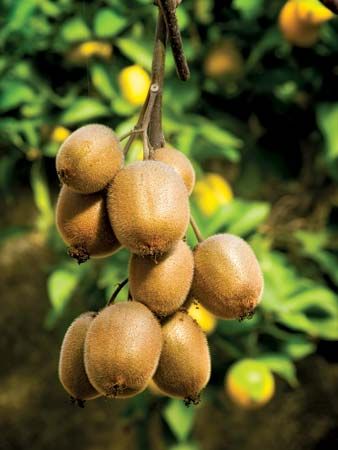
Humans have utilized plants from the Ericales order for millennia, primarily for their nutritional, medicinal, and ornamental value.

How have humans used plants from the Ericales order throughout history?
Humans have utilized plants from the Ericales order for millennia, primarily for their nutritional, medicinal, and ornamental value.
Food and Beverages
The most significant human use of Ericales involves the cultivation of edible fruits and beverage crops. The genus Vaccinium (family Ericaceae) is widely prized for its fruits, including blueberries, cranberries, and bilberries. Blueberries, in particular, are recognized as a “superfood” due to their high content of antioxidants, vitamins, and dietary fiber. Additionally, the tea plant (Camellia sinensis) has been used since at least 2700 BCE. Initially consumed as a medicinal beverage in China, it evolved into a daily drink by the 3rd century CE, eventually sparking a massive global trade network that spread cultivation from Asia to Africa and South America.1234
Horticulture
Many members of the Ericaceae family, such as rhododendrons and azaleas, are highly valued in horticulture for their showy, conspicuous flowers, making them staples in temperate-region landscaping.1
How are the flowers and fruits of Ericales plants typically structured?
The flowers and fruits of plants in the Ericales order exhibit several generalized structural characteristics, though there is variation across the 22 families within the order.
Flower Structure
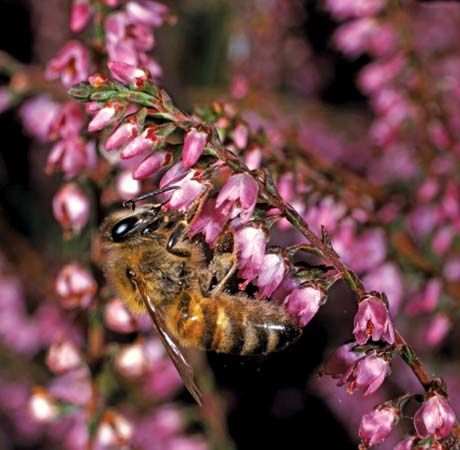
- Symmetry and Petals: Most members possess radially symmetric flowers with petals that are at least weakly fused.1
- Reproductive Parts: Flowers typically feature a superior ovary that is 3- or 5-locular. They commonly have 5 or 10 stamens, which are often borne free from the petals.1
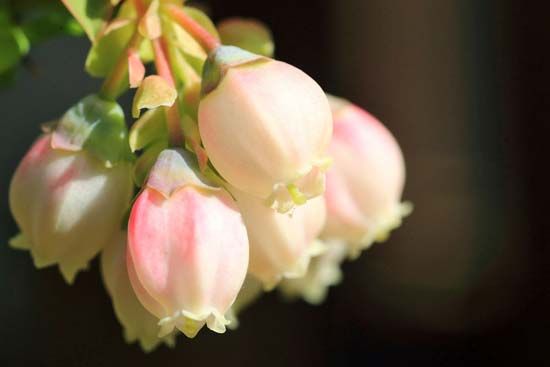
- Family-Specific Variations: In the Ericaceae family, the corolla is frequently tubular or urn-shaped. Some species, such as those in the genus Kalmia, hold their anthers under tension, releasing them only when a pollinator lands.2
Fruit Structure
- Primary Types: The most common fruit type across the order is a capsule. However, depending on the specific species, fruits may also manifest as berries or drupes.16
- Dispersal Mechanisms: Fruits that are capsular often contain seeds dispersed by wind, sometimes aided by wings or tails. Fleshy fruits are typically dispersed by birds or mammals, which consume the fruit and excrete the hard seeds.2
What are the main characteristics of plants in the Ericales order?
The Ericales order is a diverse group of flowering plants comprising 22 families, 346 genera, and over 12,000 species. Botanically, the order is considered a basal asterid, characterized by a relatively generalized and unspecialized morphology.1
Key Characteristics
- Floral Structure: Most members feature radially symmetric flowers with petals that are at least weakly fused. They typically possess a superior ovary that is 3- or 5-locular, along with 5 or 10 stamens that are often free from the petals.1
- Fruit and Seeds: The most common fruit type is a capsule, though berries and drupes also occur. Seeds generally have a thin coat.1
- Chemical Defense: The order is noted for the presence of iridoids, which are chemical compounds that may serve to protect the plants against herbivores.1
- Ecological Diversity: The order includes a wide range of ecological strategies. For instance, the Ericaceae family—the largest in the order—often thrives in acidic, nutrient-poor habitats through close associations with fungi that facilitate nutrient uptake.2
Which important plant families are included in the Ericales order?
The Ericales order is a diverse group of flowering plants containing 22 families and over 12,000 species. Molecular studies suggest these families are organized into eight distinct groupings, plus one isolated family.1
Major Family Groupings
- Ericaceae Group: Includes Ericaceae (the largest family in the order), Clethraceae, and Cyrillaceae.1
- Balsaminaceae Group: Contains Balsaminaceae, Marcgraviaceae, and Tetrameristaceae.1
- Polemoniaceae Group: Comprises Polemoniaceae and Fouquieriaceae.1
- Pentaphylacaceae Group: Includes Pentaphylacaceae and Sladeniaceae.1
- Styracaceae Group: Contains Styracaceae, Symplocaceae, and Diapensiaceae.1
- Primulaceae Group: Includes Primulaceae, Sapotaceae, and Ebenaceae.1
- Sarraceniaceae Group: Contains Sarraceniaceae, Actinidiaceae, and Roridulaceae.1
- Lecythidaceae Group: Includes only the family Lecythidaceae.1
- Isolated Family: Theaceae is considered an isolated family within the orderTheaceae](https://www.britannica.com/plant/Theaceae) is considered an isolated family within the order.1
The Ericaceae family is particularly notable for its ecological diversity and horticultural importance, including plants such as rhododendrons, azaleas, and blueberries. Similarly, the Primulaceae family includes well-known garden ornamentals like primroses and cyclamen.689
Sources
- Ericales — Encyclopædia Britannica
- Ericales - Ericaceae — Encyclopædia Britannica
- tea — Encyclopædia Britannica
- Blueberry — Encyclopædia Britannica
- tea - History of the tea trade — Encyclopædia Britannica
- Ericaceae — Encyclopædia Britannica
- Ericales — Merriam-Webster
- Theaceae — Encyclopædia Britannica
- Primulaceae — Encyclopædia Britannica
Published on · 3 min read