Clethraceae
Clethraceae is a family of flowering plants within the order Ericales, consisting of two genera: Clethra and Purdiea.
What is Clethraceae?
Clethraceae is a family of flowering plants within the order Ericales, consisting of two genera: Clethra and Purdiea.12
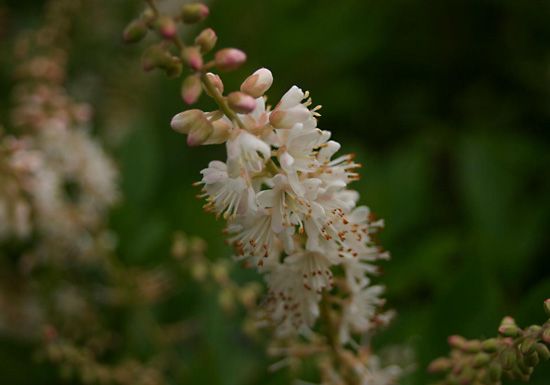
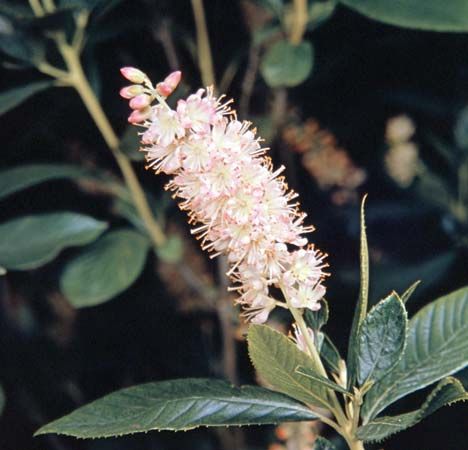
- Clethra: Comprising about 65 species, these woody deciduous or evergreen plants are found in East Asia, the southeastern United States, and throughout the Americas along the Andes. They typically feature spiral, toothed leaves and small, fragrant flowers arranged in terminal inflorescences.12
- Purdiea: This genus includes approximately 12 species of shrubs or small trees native to the Caribbean, Central America, and northern South America. Unlike Clethra, these plants have alternately arranged leaves and produce significantly larger, showier flowers.12
Members of the family are characterized by their woody growth habit and fruit structures containing three compartments. While some species are found in the wild, certain varieties, such as the lily of the valley tree (C. arborea), are cultivated as ornamentals.132
What are the main characteristics of the order Ericales?
The order Ericales is a diverse group of flowering plants comprising 22 families, 346 genera, and over 12,000 species. While its evolutionary relationships remain somewhat unclear, it is classified as a basal asterid in the APG IV system.
Morphologically, the order is considered generalized and unspecialized for the asterids. Key characteristics include:
- Floral Structure: Most members feature radially symmetric flowers with at least weakly fused petals. They typically possess a superior 3- or 5-locular ovary and 5 or 10 stamens that are often free from the petals.
- Fruit and Seeds: The fruit is most commonly a capsule, and the seed coat is generally thin.
- Chemical Defense: Many members contain iridoids, which are distinctive chemicals believed to protect the plants against herbivores.
The order is organized into several family groupings, including the Ericaceae group, which contains Clethraceae and Cyrillaceae, as well as groups containing families like Primulaceae, Sarraceniaceae, and Polemoniaceae.
How do deciduous plants differ from evergreen plants?
The primary difference between deciduous and evergreen plants lies in their leaf-retention strategies, which are adaptations to their specific environments.7
Deciduous Plants
Deciduous plants shed their leaves at the end of every growing season. In temperate regions, this is a self-protective mechanism against winter conditions. Because thin leaves are susceptible to freezing—which can cause water within the cells to expand and rupture them—deciduous plants drop their foliage to avoid damage and prevent water loss. This process is highly controlled: as day length shortens, the plant forms an abscission layer between the leaf stalk and the twig, allowing the leaf to fall without leaving an open wound.78
Evergreen Plants
Evergreen plants retain their leaves throughout the year and into the following growing season. Their leaves are typically thicker and more leathery than those of deciduous plants, often appearing as needles or scales in conifers. These leaves are equipped with waxes and resins that protect them from freezing and fracturing, allowing the plant to survive in cold climates or other challenging environments. A single leaf may remain on an evergreen tree for two years or longer.98
What is the function of an inflorescence in flowering plants?
An inflorescence is a cluster of flowers arranged on a branch or a system of branches. Its primary function is to facilitate efficient pollination by grouping flowers closely together.12
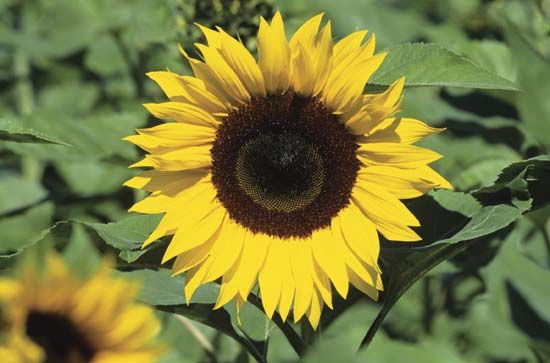
By concentrating multiple flowers in a single area, plants can increase their visibility and attractiveness to pollinators. In some species, this condensation is so extreme that the entire inflorescence appears to be a single flower, such as in the head characteristic of the aster family.1213
Inflorescences are categorized by their growth patterns:
- Indeterminate: The growing region of the axis remains active for extended periods, allowing younger buds to continue developing into flowers at the apex while older flowers mature near the base.1213
- Determinate: The apical meristem produces a flower, causing the entire axis to cease growth at the onset of flowering.1213
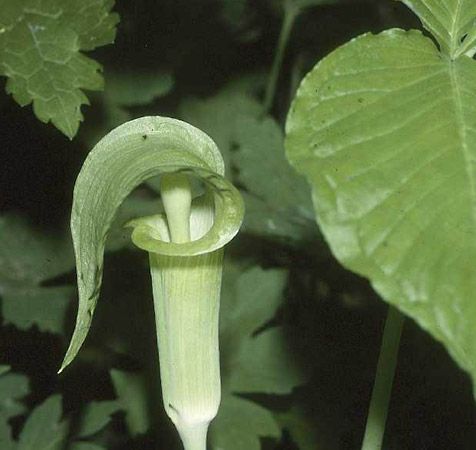
Beyond simple arrangement, some inflorescences have evolved specialized mechanisms to ensure cross-pollination, such as generating heat or scent to trap insects, as seen in the titan arum and certain Araceae.1214
Sources
- Ericales - Clethraceae — Encyclopædia Britannica
- Clethraceae — Merriam-Webster
- Clethra — Merriam-Webster
- Clethraceae — Encyclopædia Britannica
- Ericales — Encyclopædia Britannica
- Ericales - Ericaceae — Encyclopædia Britannica
- evergreen — Encyclopædia Britannica
- plant development - Seasonal adaptations — Encyclopædia Britannica
- Why Do Leaves Fall in Autumn? — Encyclopædia Britannica
- Temperate forest - Flora — Encyclopædia Britannica
- plant - Classification of angiosperms — Encyclopædia Britannica
- angiosperm - Inflorescences — Encyclopædia Britannica
- inflorescence — Merriam-Webster
- pollination - Beetles and flies — Encyclopædia Britannica
- plant reproductive system - Angiosperms — Encyclopædia Britannica
Published on · 3 min read