Euonymus
The Euonymus genus is a group of approximately 130 species of shrubs, woody climbers, and small trees that occupies a specific position within botanical…
How does the Euonymus genus fit into the broader plant taxonomy?
The Euonymus genus is a group of approximately 130 species of shrubs, woody climbers, and small trees that occupies a specific position within botanical classification.12
Taxonomic Hierarchy
Euonymus is categorized within the following levels of the plant kingdom:
- Order: Celastrales, a small order of flowering plants placed within the Rosid I clade of the angiosperm group.2
- Family: Celastraceae, also known as the bittersweet family. This family comprises about 90 genera and 1,300 species of trees, lianas, and herbs found primarily in tropical and temperate regions.2
Characteristics and Distribution
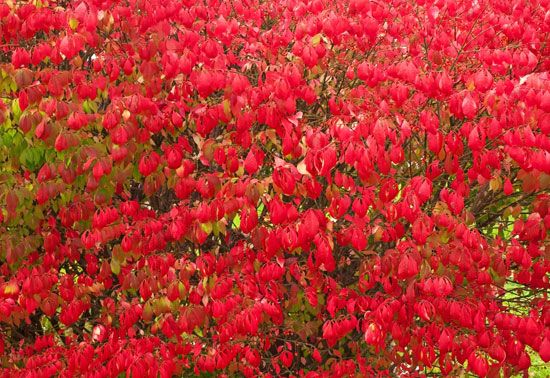
Unlike many other members of the Celastraceae family that are pantropical, Euonymus species are primarily native to temperate regions of Asia, North America, and Europe. Members of this genus are widely recognized for their ornamental value in landscaping, often noted for their vibrant fall foliage and unique fruit structures. The family as a whole is characterized by features such as the secretion of gutta (latex) and specific floral structures, including small flowers with stamens borne on a prominent nectary disc.12
Where are Euonymus plants typically found in nature?
Euonymus plants are native to temperate regions across the Northern Hemisphere, specifically throughout North America, Europe, and Asia.1
Within these broad geographic ranges, different species occupy distinct habitats:
- East Asia: This region is the native home of species such as the winter creeper euonymus (Euonymus fortunei) and the winged spindle tree (E. alatus).1
- Eastern North America: This area hosts native species including the wahoo (E. atropurpureus) and the strawberry bush (E. americanus).1
- Europe: The European spindle tree (E. europaeus) is a notable native species found in this region.1
These plants generally thrive in temperate climates, where they grow as shrubs, woody climbers, or small trees.1
What are the main characteristics of plants in the Euonymus genus?
The Euonymus genus, a member of the Celastraceae family, consists of approximately 130 species of shrubs, woody climbers, and small trees. These plants are primarily native to temperate regions across Asia, North America, and Europe.12
Key characteristics of the genus include:
- Growth Habits: Species range from ground-covering shrubs to woody climbers—such as the winter creeper euonymus, which utilizes aerial rootlets—and small trees.1
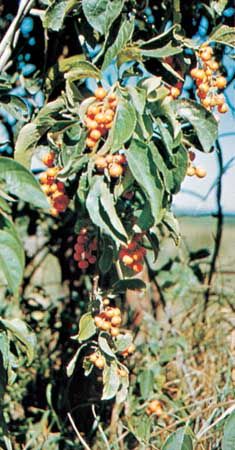
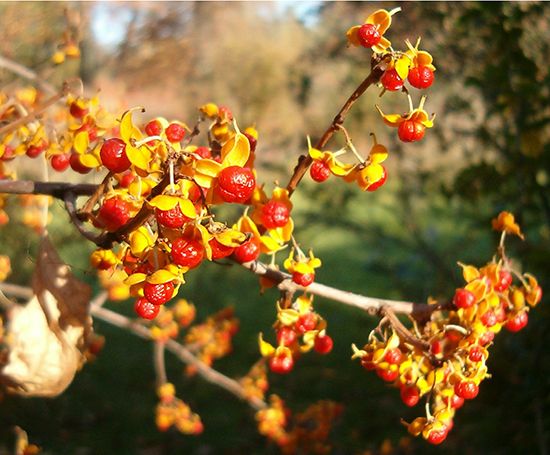
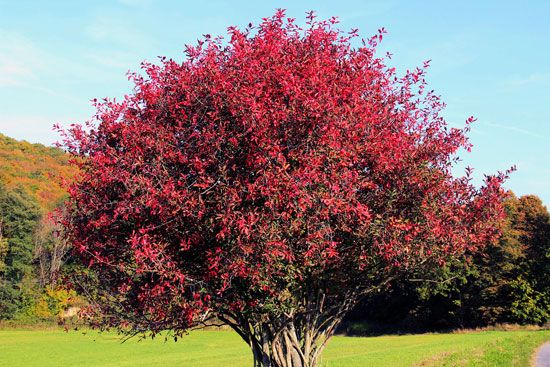
- Ornamental Features: They are widely cultivated for their aesthetic appeal, particularly their vibrant fall foliage and distinctive, often colorful, fruits.12
- Stem and Leaf Structure: Some species, like the winged spindle tree, are noted for unique corky, winged stems. Leaves are typically glossy and can be evergreen or deciduous.1
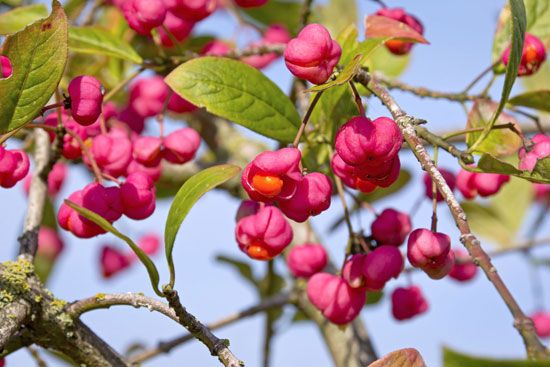
- Reproductive Traits: The genus produces small flowers, often followed by fleshy, sometimes poisonous, fruits in shades of pink, orange, or red.1
- Chemical Properties: Like many members of the Celastraceae family, these plants may secrete gutta (latex), which can be observed as thin strands when a leaf is pulled apart.12
What role do Euonymus plants play in their native ecosystems?
In their native ecosystems, Euonymus plants play a significant role as a food source for wildlife, particularly through their specialized fruit production. These plants produce fleshy, often brightly colored fruits—typically in shades of red, orange, or pink—that are highly attractive to fruit-eating birds.13
This relationship is a primary driver of the genus’s ecological success and distribution. Because these birds consume the fruits and subsequently excrete or regurgitate the seeds elsewhere, they act as essential agents of seed dispersal. This process, known as ornithochory, explains the widespread and abundant presence of Euonymus across temperate regions in Europe and Asia.3
The fruits themselves are adapted to this interaction; they often contain poisonous compounds that protect the seeds from premature digestion, ensuring that the seeds remain viable after passing through a bird’s digestive system. By providing a reliable food source, Euonymus species help sustain local bird populations while simultaneously utilizing those same birds to expand their own range and colonize new areas.13
Sources
- Euonymus — Encyclopædia Britannica
- Celastrales — Encyclopædia Britannica
- seed dispersal - Birds — Encyclopædia Britannica
Published on · 3 min read