Euphorbiaceae
Yes, several plants within the Euphorbiaceae family have been utilized for medicinal purposes, though it is important to note that many members of this…
Are there any medicinal uses for plants in the Euphorbiaceae family?
Yes, several plants within the Euphorbiaceae family have been utilized for medicinal purposes, though it is important to note that many members of this family are also highly poisonous due to their milky latex.123
Medicinal applications include:
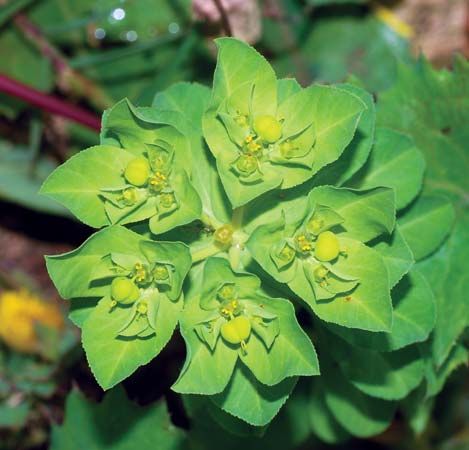
- Purgatives and Laxatives: Croton oil, derived from Croton tiglium, has been used as a strong purgative. Similarly, the seeds of the caper spurge (Euphorbia lathyris) were historically used for their laxative effects.1234
- Wound Healing: The sap of certain South American species related to Croton lechleri, known as sangre de drago or “dragon’s blood,” is used in traditional medicine for wound healing.12
- Antidiarrheal: Sangre de drago is also marketed as an antidiarrheal treatment for AIDS patients.2
While these plants have historical and contemporary medicinal uses, their toxicity requires extreme caution. Always consult with a qualified medical professional before considering the use of any plant-based remedy.
What are some common garden or houseplants that belong to the Euphorbiaceae family?
The Euphorbiaceae family includes several popular garden and houseplants, many of which are prized for their unique forms or colorful bracts. It is important to remember that many members of this family contain a milky latex that can be irritating or poisonous, so handle them with care.261
Common garden and houseplants include:
- Poinsettia (Euphorbia pulcherrima): An iconic holiday plant known for its vibrant, colorful bracts.261
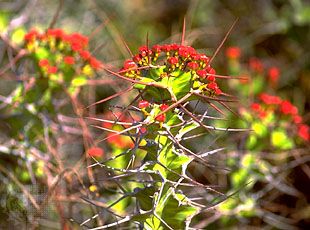
- Crown of thorns (Euphorbia milii): A popular, thorned, and woody-stemmed houseplant that provides color in both indoor and tropical garden settings.24
- Croton (Codiaeum variegatum): A widely grown houseplant valued for its colorful foliage; note that it is distinct from the genus Croton that produces medicinal oils.14
- Copperleaf (genus Acalypha): Often grown for its attractive, colorful leaves.14
- Redbird cactus (genus Pedilanthus, including E. tithymaloides): Also known as devil’s backbone, this is a common succulent.14
- Snow-on-the-mountain (Euphorbia marginata): An annual often grown in gardens for its variegated foliage.24
How has the classification of Euphorbiaceae changed over time with advancements in plant taxonomy?
The classification of the Euphorbiaceae family has undergone significant revisions due to advancements in plant taxonomy, particularly the shift from traditional morphological-based systems to those driven by molecular evidence.37
From Morphology to Molecular Phylogeny
Historically, classification systems like that of Arthur Cronquist relied on similarities in morphological, chemical, and anatomical characters. However, since the 1990s, the Angiosperm Phylogeny Group (APG) has utilized DNA sequencing from chloroplasts and nuclei to create more robust, testable models of plant relationships.7
Dramatic Reclassification
Molecular studies have revealed that the traditional, broadly defined Euphorbiaceae was not a natural (monophyletic) group. Consequently, it has been split into five or six distinct families. Key changes include:37
- Family Splitting: Groups such as Putranjivaceae and Pandaceae were removed from the family as they were found to be distinct.3
- Recognition of Peraceae: The family Peraceae was established as a separate entity, identified as the sister group to the combined lineage of Rafflesiaceae and the core Euphorbiaceae.3
- Genus Consolidation: Within the genus Euphorbia, molecular data led to the absorption of several formerly separate genera, such as Chamaesyce, Pedilanthus, and Poinsettia, into the single, large genus Euphorbia.35
These updates, reflected in the ongoing revisions of the APG system (from APG I to APG IV), demonstrate how modern technology continues to refine our understanding of plant evolution.7
What unique features or compounds are found in Euphorbiaceae plants, and how are they used by humans?
Plants in the Euphorbiaceae family are characterized by several distinct features, most notably the presence of a milky latex in their stems, which is often poisonous. Many species also contain potent toxins, such as the chemical phorbol, which can cause severe skin irritation, blistering, or blindness upon contact.183
Humans have utilized these plants in diverse ways:
- Food Sources: The roots of cassava (Manihot esculenta) are a vital source of starch, processed into products like tapioca.18
- Industrial Materials: The rubber tree (Hevea brasiliensis) provides high-quality latex for natural rubber, while the tallow tree yields fats and waxes used in candles and soap.18
- Medicinal Applications: Certain species are used for their pharmacological properties, such as croton oil from Croton tiglium, which acts as a strong purgative, and the sap of C. lechleri, known as “dragon’s blood,” which is used in traditional wound healing and as an antidiarrheal.18
- Ornamental Use: Many species are cultivated for their unique forms or colorful bracts, such as the poinsettia and copperleaf.18
Sources
- Euphorbiaceae — Encyclopædia Britannica
- spurge — Encyclopædia Britannica
- Malpighiales - Euphorbiaceae , Peraceae, and Rafflesiaceae — Encyclopædia Britannica
- list of plants in the family Euphorbiaceae — Encyclopædia Britannica
- Euphorbiaceae — Merriam-Webster
- poinsettia — Encyclopædia Britannica
- angiosperm - Annotated classification — Encyclopædia Britannica
- manchineel — Encyclopædia Britannica
Published on · 4 min read