Eupteleaceae
Eupteleaceae is a family of dicotyledonous flowering plants within the order Ranunculales. This family consists of a single genus, Euptelea, which includes…
What is Eupteleaceae?
Eupteleaceae is a family of dicotyledonous flowering plants within the order Ranunculales. This family consists of a single genus, Euptelea, which includes two species of trees or large shrubs.1
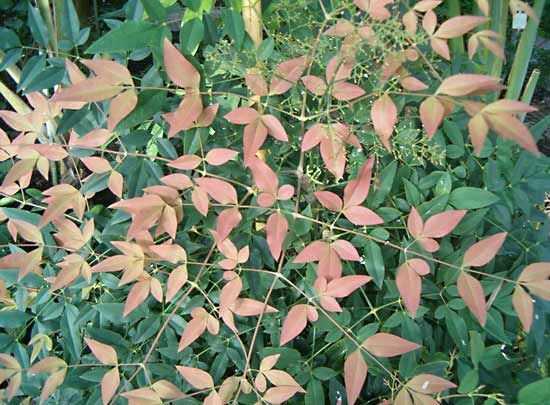
These plants are often cultivated as ornamentals for their foliage, which transitions from red in its youth to green at maturity, eventually turning vibrant red or yellow in the autumn. Botanically, they are characterized by simple, toothed leaves and bisexual flowers that lack petals or sepals, instead featuring numerous stamens and several pistils. Their fruits are dry, winged samaras.1
What are the defining characteristics of the order Ranunculales?
The order Ranunculales is a group of flowering plants classified as basal eudicotyledons. Unlike the more stereotyped “core eudicots,” which typically exhibit a consistent floral pattern of five sepals, five petals, and fused carpels, the members of Ranunculales display a broader range of morphological diversity.2
The order comprises several distinct families, including:
- Ranunculaceae (the buttercup family)
- Papaveraceae (including poppies)
- Berberidaceae
- Menispermaceae
- Lardizabalaceae
- Circaeasteraceae
- Eupteleaceae2
While characteristics vary across these families, many members are recognized for having alternate leaves and flowers that may be either radially symmetrical or irregular. Some members are also noted for possessing colorless, acrid juice. Because this order represents a basal eudicot lineage, it lacks the ethereal oils commonly found in many of the more primitive, basalmost angiosperm groups.342
How do samaras help in the dispersal of plant seeds?
A samara is a specialized type of winged fruit that facilitates the dispersal of plant seeds through the wind. Its unique structure, often characterized by a one-winged propeller shape, allows the fruit to function as an aerodynamic landing device.567
When a samara detaches from its parent tree—such as a maple, ash, or elm—its shape causes it to spin like a helicopter rotor as it falls. This spinning motion slows the descent of the fruit, enabling it to drift away from the parent plant and cover a greater distance than it would if it simply dropped straight to the ground. By utilizing these aerodynamic properties, the plant increases the likelihood that its seeds will reach favorable growth habitats away from the competition of the parent tree.567
What are some other examples of ornamental trees with changing foliage?
Many trees are prized for their ornamental value, particularly those that exhibit dramatic foliage changes as the seasons shift. While the maple genus is perhaps the most famous for its diverse autumn displays—ranging from the yellow of the field maple to the pink, scarlet, and orange hues of the Amur, vine, and bigleaf maples—many other deciduous trees undergo similar transformations.9
These color changes occur as trees prepare for winter dormancy. As temperatures drop and daylight hours decrease, the green pigment chlorophyll breaks down, revealing underlying pigments that were previously masked.1011
- Carotenoids: These pigments are responsible for the vibrant yellows and oranges seen in many species as the green chlorophyll fades.1011
- Anthocyanins: In some trees, the accumulation of these pigments produces deep reds and purples.1011
Some species are particularly noted for their showy progressions, where leaves may transition through multiple colors before eventually falling. Beyond foliage, some trees, such as the paperbark maple, are also valued for unique features like peeling bark, which provides visual interest even after the leaves have dropped.10119
Sources
- Eupteleaceae — Encyclopædia Britannica
- Ranunculaceae — Encyclopædia Britannica
- angiosperm - Annotated classification — Encyclopædia Britannica
- Ranunculaceae — Merriam-Webster
- Did you know? — Merriam-Webster
- seed - Dispersal by wind — Encyclopædia Britannica
- fruit - Wind dispersal — Encyclopædia Britannica
- seed - The shape of dispersal units — Encyclopædia Britannica
- maple — Encyclopædia Britannica
- Why Do Leaves Change Color in the Fall? — Encyclopædia Britannica
- coloration - Seasonal changes — Encyclopædia Britannica
- Why do leaves change colors in the fall? — Encyclopædia Britannica
Published on · 3 min read