Giant’s Castle
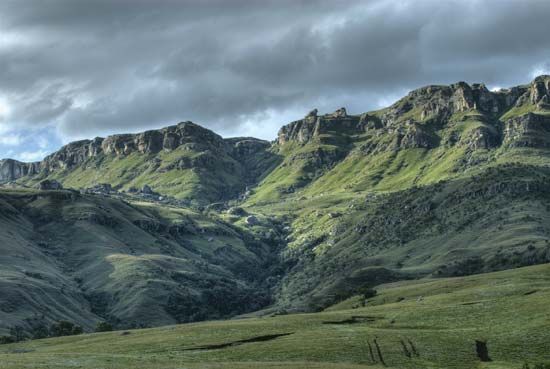
Giant’s Castle is a prominent peak located in the Drakensberg mountain range within the KwaZulu-Natal province of South Africa.
What is Giant’s Castle?
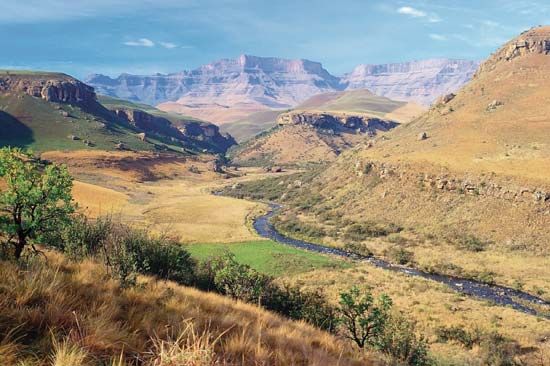
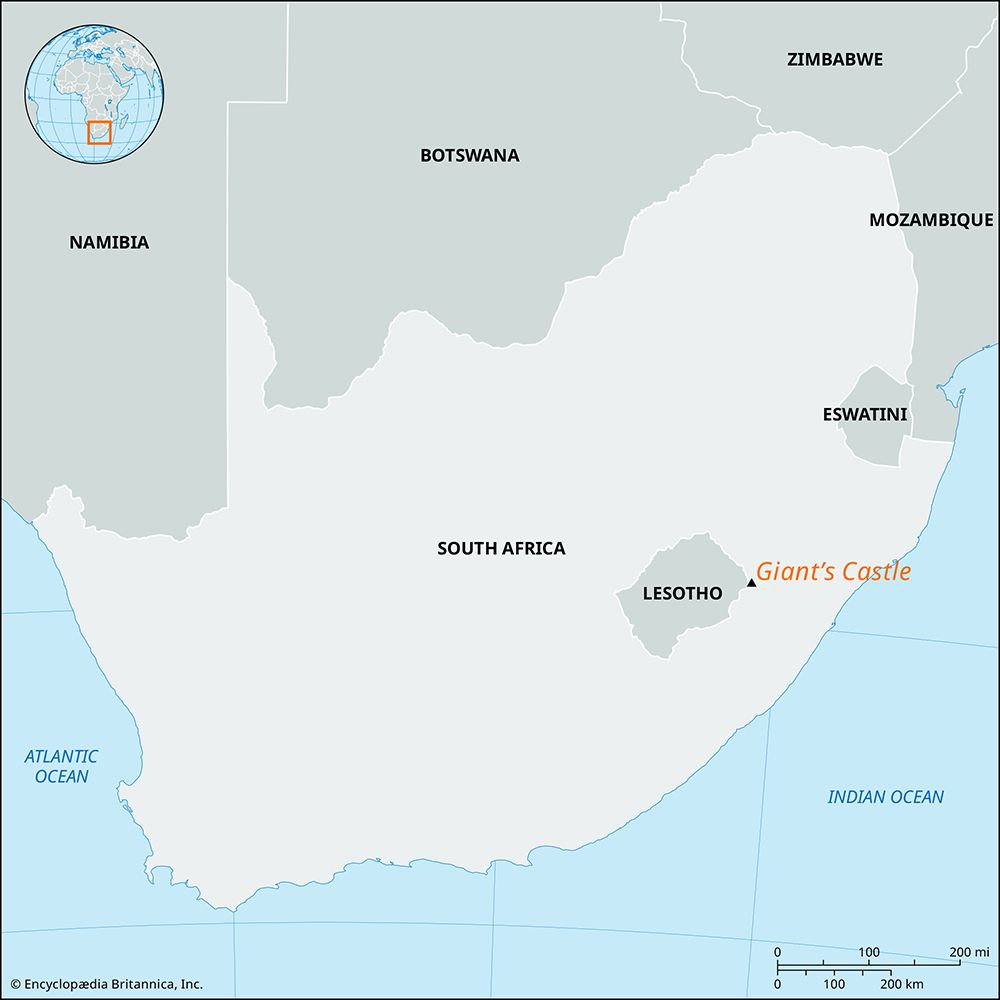
Giant’s Castle is a prominent peak located in the Drakensberg mountain range within the KwaZulu-Natal province of South Africa.1
Rising to an elevation of 10,869 feet (3,313 metres), the peak is situated inside the Giant’s Castle Game Reserve. This reserve is a key component of the uKhahlamba/Drakensberg Park, which is recognized as a UNESCO World Heritage site for its significant natural beauty and cultural heritage.1
What makes the Drakensberg mountain range unique?
The Drakensberg is a unique and significant mountain range in Southern Africa, distinguished by several key features:
- Geological Structure: As part of the Great Escarpment, it acts as the primary watershed for South Africa and serves as the source of the Orange River. Its most elevated sections consist of severely eroded basalt capping a sandstone base, creating dramatic, steep scarps.2
- Cultural Significance: The range is home to thousands of years of cave art. Much of this was created by the San people, with paintings depicting both traditional life—such as hunters with bows—and later contact with European settlers through images of wagons, ships, and steam trains.23
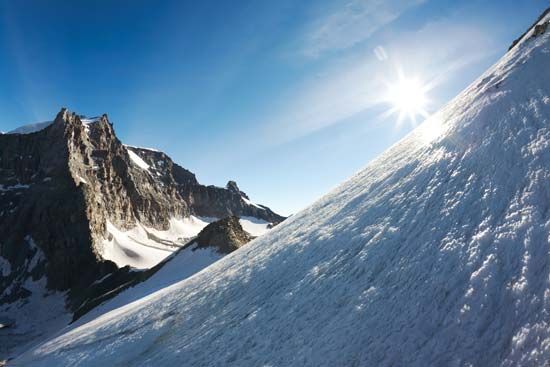
- Physical Landscape: Known to the Zulu as Quathlamba (“barrier of pointed spears”), the range features rugged peaks exceeding 11,400 feet (3,475 metres). It is a UNESCO World Heritage site recognized for its exceptional natural beauty, including deep gorges, waterfalls, and snowcapped winter summits.24
What animals can be found in the Giant’s Castle Game Reserve?
Sorry, the Britannica knowledge base does not contain information regarding the specific animals found in the Giant’s Castle Game Reserve.
Why is the uKhahlamba/Drakensberg Park a UNESCO World Heritage site?
The uKhahlamba/Drakensberg Park was designated a UNESCO World Heritage site in 2000 primarily due to its exceptional natural beauty and its profound cultural significance regarding ancient human history.25
The park is internationally recognized for housing the largest and most concentrated collection of rock art in Southern Africa. These paintings, created by the San people over thousands of years, provide a vital record of their spiritual life and historical experiences. The imagery depicts a wide range of subjects, including human figures and various animals such as elands, elephants, cattle, and horses, as well as later depictions of contact with European settlers.652
Beyond its cultural heritage, the park is celebrated for its dramatic physical landscape. As part of the Great Escarpment, it features rugged peaks exceeding 11,400 feet, deep gorges, and significant geological formations that serve as the primary watershed for South Africa.2
Sources
- Giant’s Castle — Encyclopædia Britannica
- Drakensberg — Encyclopædia Britannica
- Rock art - Africa — Encyclopædia Britannica
- South Africa: Top Questions — Encyclopædia Britannica
- Twyfelfontein — Encyclopædia Britannica
- South Africa - Art of South Africa — Encyclopædia Britannica
Published on · 2 min read